Jennifer Gregson

Young Adult Indie Author

Menu
  • Home
Menu

Blog

Friendship

Posted on April 7, 2023April 4, 2023 by Jennifer Gregson

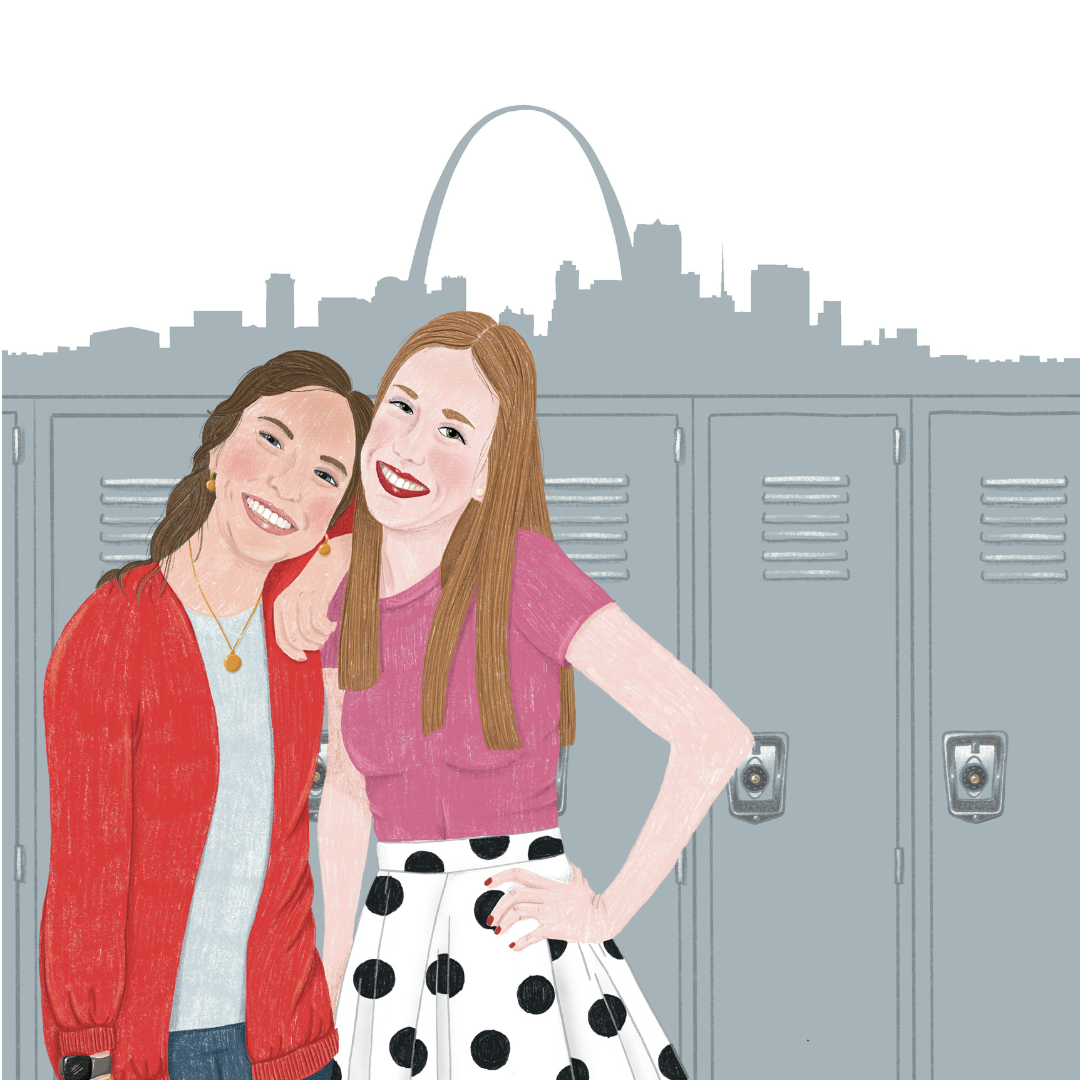
It’s one of the big themes in my latest novel, Etta and Gina, and one that I loved exploring as a writer, because it’s something I’ve thought about a lot with my life on this planet.

Growing up, I had a small but mighty group of girls that were almost always together – either at school or at someone’s house for sleepovers.  Dealing with older siblings, annoying teachers, and even death – I knew I had people that were going to be there for me. 

As I moved into college, I lost touch a little bit with those grade school friends, and had to navigate new relationships that included significant others, different priorities, mental health issues, and drama. For some odd reason, there’s always drama when it comes to friendships – and that’s not just with girl friendships, I’ve seen this with guys too.

The concept of what it means to be a friend changes over the course of one’s life and over the course of the friendship itself.  We can fight, break up, make up, try again, lose touch, reconnect, and end things all together.  We can be there to hold their hands, celebrate, hold their hair back when they’re sick, and laugh so much it feels like you can’t breathe.

Every relationship looks different and that’s one of the reasons I love writing about friendship, especially in the young adult stage – when you’re dealing with not only trying to figure out who you are and where you fit in, but also how to be a friend to others. AND what you need out of others when it comes to friendship.  It’s complicated, complex, and just cool to think about.

How have you dealt with changing friendships in your life?


Can two best friends thrown onto two very different paths learn to grow together or will they fall apart?

My latest young adult novel, Etta and Gina, is now exclusively available via Amazon’s Kindle Unlimited!!

Read Etta and Gina today and jump right into this entertaining look at suburban high school life.

How to stop feeling like YOU are not good enough

Posted on December 15, 2022December 15, 2022 by Jennifer Gregson

Does your inner critic say really mean things to you? And has this stopped you from writing because you’re afraid that your inner critic is telling the truth? 


Who or what is the inner critic exactly?

It’s that inner negative voice that tells you things like: You can’t, you shouldn’t, why bother, don’t, what are you thinking? You call yourself a writer? It feeds off of our own internal fears and amplifies them.  It can go by other names as well – the inner editor, the inner mean girl, gremlins, or even just a pain in the butt.  

These fears – fear of success, fear of failure, fear of internet trolls or bad reviews, and the fear of being found out aka imposter syndrome – can all cause that inner voice to be very very loud, feeding off our fears and making us feel like crap. And they can cause us to stop writing – even going so far as to cause writer’s block, because when we don’t feel good about our own writing, why are we going to sit down and do it?

Something I hear writers say a lot is that they don’t feel like they are good enough to write the story idea they have and I’m here to tell you that that is simply NOT TRUE – that’s just the inner critic being very loud and vocal and there are ways to stop being haunted by this voice, and work with them – even becoming friendly with them. 


Personifying the inner critic

The act of personifying that inner negative voice puts the inner critic outside of ourselves rather than inside ourselves. It gives you a focal image, which I’m gonna talk about in a minute, so that you can talk to them, find out a little bit more about why they’re there, why they’re talking to you in this manner, what the fear is all about, and how to work with them rather than against them. Because once we put that inner critic out here away from us, not in our own head, then we can deal with them without shame. We basically create a character and then it’s not about our voices, it’s about their voices. 


Tools you can use to personify the inner critic

First, grab a notebook or journal and start writing down things the inner critic says to you, how it makes you feel, and what they might look like. Be very, very gentle with yourself during this process and give yourself ample time. Don’t rush this process, really sit with it and let things come up organically as you go about your writing life. 

Once you have some stuff written down, look over what they might look like and decide how you want to personify them? I like to choose a Tarot card, but you can also use Oracle cards, Goddess cards, pictures from magazines, or even Pinterest. Choose an image that resonates with you and give them a name.  I call mine Dude, so no need to be super serious here with this step. 

Now you have someone you can talk to. Create a character worksheet – like you do with your novel’s characters – and then write them a letter asking them why they are here, what they want you to know, and why they talk to you the way they do.  Once you have your letter, allow yourself some time to write a letter from their point of view answering you. This is the start of forming a friendship, a relationship, with your inner critic. 


Need help with this?

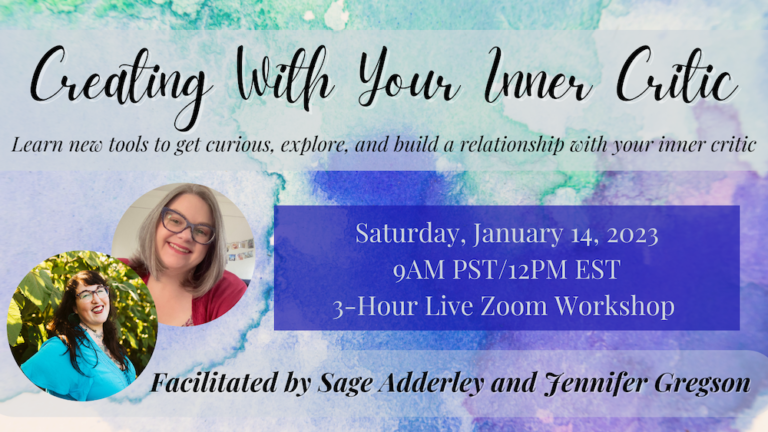
I am co-teaching a live Zoom workshop with my friend and fellow book coach, Sage Adderley, in January all about Creating With Your Inner Critic. 


Sage will be teaching you how to process emotions, thoughts, feelings and limiting beliefs using an intentional creativity process called Cosmic Smash Booking. She’ll be taking you on a journey with the relationship you currently have with your inner critic, that voice that tells you that you are no good, why bother, you’ll never be a writer. Cosmic Smash Booking goes beyond journaling to a spiritual release of emotions so you can move through them, work with them, and move past them.


For my portion of the workshop, I’ll be teaching how to use Tarot, Oracle, or other images to personify that inner critic so you can start talking to them, building a healthy relationship with them rather than reacting to them, so you can start writing without the inner critic stopping you from the brilliant words that I know are inside you. 


Creating With Your Inner Critic
will allow you to trust your own intuition so you can get unstuck and start that book that’s sitting on your heart and in your soul. 


Join us on Saturday, January 14, 2023 at 9 AM PST / 12 PM EST for a 3-hour Live Zoom workshop – valued at $597, it’s yours for $147 until December 31st so sign up below!!

Join Creating With Your Inner Critic Workshop HERE

NaNoWriMo 2022: You Wrote 50,000 words! Or Did You?

Posted on November 30, 2022December 15, 2022 by Jennifer Gregson

As we finish up another round of National Novel Writing Month, I’m here to answer some of your most burning (and frequently asked) questions.


I didn’t hit 50,000 words, now what?


It’s okay, you didn’t hit NaNo’s goal, but guess what? You probably created a writing habit this month, you probably wrote more this month that you might have all year.  The big question to ask yourself here is what did you learn about yourself as a writer?   And then you should celebrate what you did accomplish – seriously, I don’t care if you wrote 100 words or 49,999 you should celebrate. I know I’m proud of you, and you should feel proud of yourself too.


I did hit 50,000 but I’m nowhere near the end of my story, now what?


If you are feeling burnt out from this past month of frenzied writing, it’s okay to take a short break – maybe a week – and then come back and keep writing. If you do need that time off, make sure you schedule your next writing session so you can keep up your momentum. 


If you aren’t feeling burnt out, you are rocking and rolling, continue writing and finish your story.  Most books aren’t complete at 50,000 words. I write Young Adult and that’s usually my first draft goal, but my books end up being closer to 70K by the time I’m done.  It’s totally genre specific. 

I hit 50,000 and my story seems complete, now what?


Celebrate!  I know I’m big on celebrations, but for good reason – we need to take time to acknowledge how awesome we are, and writing 50,000 words in one month is huge so plan something that will make you feel amazing and put it on the calendar now!


Then, you can make revision plans.  Personally, I like to give my first draft a rest before I revisit it so if you can, take at least 2-3 weeks off (a month is even better) and then come back and read through what you wrote. 


Just a side note here, but I’ll be doing a whole REvision series starting in January so if you’d like to wait until then, please do.


As you read through your first draft, make sure you have somewhere to take notes about what changes you’d like to make, questions you might have for me, or new ideas you want to incorporate based on what happened during the writing process.


Those are the big three questions I get about the ending of NaNoWriMo, but I have a question for YOU – tell me in the comments below, how did you feel this month and what are your next steps? I would love to know so I can best support you with my blog posts and YouTube videos. 


Seriously, go celebrate yourself – buy a book or a coffee or take yourself out to dinner – you did something great this month and I’m very, very proud of you!!

The form you have selected does not exist.

NaNoWriMo 2022: Five (Unexpected) Ways to Increase Your Word Count

Posted on November 23, 2022December 15, 2022 by Jennifer Gregson

How’s your word count looking as we round into the final week of NaNoWriMo? Is it a little lower than you’d like? Here are five unexpected (and fun) ways to increase your word count to help you reach your 50,000 word goal. 


Tarot Cards

Of course, this is my number 1 thing to grab when I need to up my word count. Choose your favorite deck, give it a shuffle and flip over 1-3 cards. Then just start describing the cards – starting with things like:

  • What is the figure doing?
  • What are they wearing?
  • What action are they taking? Or not taking?
  • What’s happening in the background?
  • What’s happening in the foreground?

Now, challenge yourself to use these aspects in the scene you are writing. For example, you pull a knight card and the figure is on a horse.  Can you add horseback riding to the chapter you are writing? Can you have your main character find a horse? To see more examples, make sure you watch the YouTube video below, I pulled two cards from the Modern Witch Tarot deck and had some fun figuring out what I could add to a story.


Describe all the things

If I sit down to write, and have no idea how to start, I spend anywhere between 200-500 words describing the room that my characters are in. I’ll start with things like curtains, couches or other furniture, how the room smells, the temperature, and then move on to how the characters themselves are dressed.  If I’m still stuck, I’ll finally move on to how the characters are feeling about the story so far, and how they’re feeling about each other.  Usually at this point, I’m off and running with new ideas for what to write. 


Use all 5 senses

In a similar vein, I will write down various ways to use the five senses on a piece of paper.  Say, losing one’s glasses for sight or having them find a new pair of sunglasses. For sound, they could be listening to the news or dealing with construction noise that makes it hard to concentrate.  Then once I have my list, I’ll randomly choose one from each category and challenge myself to include those in the scene or chapter that I’m writing.  You can also do this with feelings, body parts, actions, locations.  Come up with the category types, fill in the blanks, randomly choose, and get to writing.  It becomes a fun game that you play with yourself.


Element of surprise

Grab your favorite, or closest book, and flip open to a random page.  Read and find a piece of dialogue and challenge yourself to use that dialogue in your book and make it make sense.  You can do this with other elements on the page, random description or just any line – regardless of what type it is.  You can also do this with your playlist, the first song that comes on, look up the lyrics and choose one line to add to your own novel.  You can do this every time the songs change too…which is harder, but more fun!


Lean into your character’s obsessions

What is one thing that your main character is really into? Spend 10 minutes researching the thing, sport, activity, song, book, TV show, etc. – and Wikipedia totally works for this, it isn’t school – and then try to use all that information in the scene you are writing. For example, the main character of my NaNoWriMo novel is into swimming, so I could look up info about chlorine, types of strokes, who won various Olympic swim meets, and then have her info dump to someone else all the information.  Want even more words? Have your character talk to someone who’s on the opposite side and let them argue.  So say your main character is into video games and the other character hates video games – let them fight it out for a while. You get character development, some fun dialogue, and extra words.  It’s a win-win!

So those were five unexpected ways to increase your word count, while having some fun writing. Which one was your favorite? Which one are you going to try this week? Let me know in the comments below and I hope you’ve enjoyed NaNoWriMo this year, and that you can finish strong!

NaNoWriMo 2022: 10 Ways I Encourage Myself to Keep Going 

Posted on November 16, 2022 by Jennifer Gregson

Has your NaNoWriMo novel lost its luster? Are you feeling a little frustrated by your word count or lack thereof? No you’re wondering if you should just quit?


Please don’t!!


Instead use these ten ways to encourage yourself, give yourself some much needed motivation, and incentive to keep going.


The word bribery usually gets a bad rap because it usually means you’re doing something illegal, right? You’re bribing someone you shouldn’t. But self bribery, I think, works really well, especially when you get to the point in your novel writing where it starts to feel a little drudgery, a little drudging through just to get through.


Music


I love writing with music. I create a playlist for almost every single manuscript I write, but if you don’t like writing to music or you don’t need that interference when you write, then you can do music after the fact and have a dance party. Getting to listen to your favorite jam – whether it be Lizzo or Taylor Swift – and dance around your living room can motivate you to finish writing. Of if you do create a playlist, listen to it before you start writing to hype yourself up, giving your brain a clue that you’re about to write something amazing.


Movies and TV


I’m assuming you have at least one streaming service, or a stack of DVDs and Blu-rays somewhere so pick a few and use them to reward yourself after each writing session.  You could do one TV show after each session and a longer movie after several sessions in a row. Do what works best for you and your schedule, but having something to look forward to really helps when you don’t want to sit down at your computer. 


Video Games, Books, and Magazines


This tip also works for other things – not a TV or movie person, that’s fine. Use the same concept with making time to read or play your favorite video game. Say, I’m going to write for 30 minutes, then play for 30 minutes.  We don’t always make time during our day for the things we enjoy, so use those things as rewards for all your hard work. 


Food & Beverages


You can always have something to drink or eat when you write – your favorite tea in your favorite mug or something crunchy to snack on OR you can use food as a reward for after you write.  I like to have a little chocolate after each session. You can also go to your local coffee place and write there, getting a holiday drink to sip on. Whatever you think is yummy is going to work – want to have a fancy yogurt or fruit salad, go for it!


Milestone Rewards


The first few things on this list were smaller rewards, things you can gift yourself after each writing session, but I also want you to think about Milestone rewards. This year for NaNoWriMo I’m doing larger items for every 10,000 words written. I’ll be buying books, a new sweater, and some new nail polish from my favorite company as my rewards but you can also do fancy clickety keyboards, new video games, or anything that makes you happy. If your budget won’t allow that – trust me, I get that! – then combine some of the smaller items and have a longer reward where you watch a movie and spend time reading. 

Surprise!


If you’d like to add an element of fun to your rewards, grab a D20 or 12 sided die and create a list of all rewards you could give yourself. Then after each writing session, you roll the die and surprise, you get a fun reward.  If you don’t have any dice, you can also put each reward on a small piece of paper and pull one each day.  Seeing what you get each day can be some excellent motivation to keep writing.


Plan a day off


This might be a bit controversial, but plan for a whole day off from your writing. If you are in the US and celebrate Thanksgiving, you could use that day but seriously any day will work.  Grab your calendar and plan a day off right now.  This works especially well if you are starting to feel burnt out, as we don’t want you to just give up right before the end. 


Share online


If you are active on social media, you can share your journey online, find some new writer friends and connect with your community.  And sharing gives you some accountability. You can get online and say you’re sitting down to write, then come back afterwards to let people know how you’re doing. If you are not on social media, or don’t feel like sharing, find a friend who will let you text them for accountability.


Join my FREE accountability group


If you don’t have any writer friends who will understand what you’re doing, then join my FREE accountability group – it’s not too late – I can help keep you on the right path, offer advice and guidance, or just be there for you when you get stuck. 


Which item above was your favorite? What is something you’re going to try?


Week 3 of NaNoWriMo can really be frustrating – it’s the week where either things are going so well you’re flying high or they suck so bad you want to hide under your covers. If things are terrible right now, please don’t hesitate to reach out for help. And just know that things will be better next week!

NaNoWriMo 2022: 6 Questions to Ask When You Lose the Plot

Posted on November 9, 2022November 8, 2022 by Jennifer Gregson

Did you follow a plot bunny? And now you are completely off track? 


Plot bunnies can be fun, they can be exciting, they can lead us to amazing discoveries, but sometimes they can also leave us lost, confused, and frustrated. Let me share with you 6 Questions that you can ask yourself when this happens so you can get back on track.


My favorite way to do this is via a Tarot spread, but you can also just ask yourself the questions as well. To see me go through this spread with my own NaNoWriMo novel, watch the YouTube video below.


You might be asking yourself, what is a Plot Bunny?  It’s an idea that refuses to leave you alone until you’ve actually followed it. And even though it does predate NaNoWriMo, they can happen a lot during those November writing sessions.


Before you tackle the six questions, ask yourself first how far off your outline you got and if there’s anything from your detour you want to keep.  Do you think you need to start completely over with where you got off track, or can you merge some of your ideas and have a better story?


Once you have that all figured out, you are ready to pull some Tarot cards or grab your journal, and find out what your Plot Bunny and Main Character are trying to tell you.


Plot Bunnies Tarot Spread

  1. What’s your bunny trying to tell you?
  2. What is your Main Character trying to tell you?
  3. How would the bunny solve this?
  4. How would the Main Character solve this?
  5. What’s one creative solution you can try?
  6. How can you move forward and get back on track?


Tips & Tricks

If you decide you need to start over and basically trash what you’ve written DO NOT DELETE those words, at least not yet. During NaNoWriMo, those words you wrote count toward your final 50,000 word count goal. I suggest moving them to the end of your document or writing at the head of each chapter that’s going to eventually get tossed: PLOT BUNNY, DON’T USE or something like that.  Then when you come back to edit, you can put those in a separate document just in case.


It’s okay to have some strong emotions around this process, getting off track and seeing that you’re going to need to rewrite 5,000 or more words can be devastating, but trust me, that wasn’t wasted effort.  Like I said above, the words still count toward your goal this month, and two it gave you some things to explore, to try out, to discover and that’s never bad – you learned what doesn’t work, sometimes writing them out needs to happen before you can see the right way to go. But be kind to yourself, remember that writing is a process, and sometimes it’s messy and painful.


Plot Bunnies can be really fun and take you to some cool places you might not have thought to explore, but if you do get off track, just ask yourself these six questions and get back to writing the story you want to write. 

NaNoWriMo 2022: My Favorite Technique for Starting a Novel

Posted on November 2, 2022November 2, 2022 by Jennifer Gregson

Do you fear the blank page when you sit down in front of a new document? Starting a new novel can be terrifying, but I have something that might just make the process less scary – even, dare I say it, fun!


Let me introduce you to one of my favorite Tarot spreads for starting a novel.  I created it a few years back and it’s been super helpful for me and my own writing. It allows me to get clear on my main character’s actions and motivations, who else is in the scene and what their motivations are, and any conflict or problems that need to be addressed within the scene.


If you’d like to see me go through the process using my own NaNoWriMo novel, click here to watch this week’s YouTube video.


Before you start, grab your outline and notes so you have that information handy. Grab your favorite Tarot deck, something to write on, and a beverage!!  Let’s go…


Once Upon A Time Tarot Spread

  1. What is your main character doing in this scene?
  2. What is your main character’s motivation in this scene?
  3. What is the problem or conflict that your main character is going to encounter in this scene?
  4. Who else is in this scene?
  5. What is their motivation?


Things to think about


If you already know who’s going to be in your scene, you could skip over question 4 and pull multiple cards for question number 5, one for each other character in the scene – that totally works!


And the beauty of this spread, it can be adapted to work with other scenes.  Yes I created it as a beginning your novel spread to help with that blank page issue, but if you get to a point in your outline or writing and you don’t know what to do, grab your cards and ask who’s in the scene, what’s their motivation, and what’s the overall conflict or problem and see what comes up

NaNoWriMo Preptober: My 8 Step Process for Outlining My Novel

Posted on October 27, 2022October 27, 2022 by Jennifer Gregson

Plotters, Pantsers, and everyone in between…November 1st is just around the corner and that means we need to do a little outlining.  

Don’t freak out!!

Let me give you my 8 step super simple process for outlining. And when I say outlining I mean a totally flexible, workable, fun plan that will help you write your first draft, expanding on the Beginning, Middle, and End that we created a few weeks ago. 

The fun part about this is you can do it many different ways.  You can do it via index cards or post-it notes – very analog, very messy desk, wild and free and fun.  You can do it via Scrivener or another writing app – very organized, a little structured and fun.  OR you can do a mixture and use a digital app like Goodnotes on your iPad, digital sticky notes and your Apple pencil to do this process.  Try a few and discover what feels most like YOU!

8 Steps To Outlining Your Novel

  1. Grab your card, note, or doc and write down your Beginning
  2. Grab another one and write down your Middle
  3. Finally, grab one more and write down your Ending
  4. Now, map out the steps that need to happen between your Beginning and MIddle – I like to do anywhere between 3 and 5 cards/notes
  5. Read through everything. Make sure things make sense, make sure any short hand you are using is written down somewhere so future you knows what past you means and once you are happy, move on to the next step
  6. Now, map out the steps that need to happen between your Middle and Ending. You can either do this start with the ending and work backwards or from your middle forward.  Then, read through everything you’ve just written.
  7. TAKE A BREAK….seriously, before you do anything else, go take a break.  Watch your favorite TV show or movie, eat something yummy, hang with friends and family, or take a nap.  Leave it for at least 24 hours if you can.
  8. Read through the entire outline in one sitting and adjust as necessary.  Are you missing plot points? Do things make sense? Do things need to be moved around a little?


Tips & Tricks

I like to write about 3-5 scenes between my Beginning and Middle and then again between my Middle and End, but this is not a hard and fast rule.  If you have a ton of ideas and you want to get them all out of paper, great!  If you are comfortable with less, leaving yourself lots of room to explore, that’s also great!  This really is a flexible plan that makes you feel ready to write so whatever that looks like for you is going to be perfect!

Allow this process to be a little messy.  No one needs to see this outline, so let yourself scribble, write in shorthand, use multiple colors, use numbers, etc. You can always import the notes into a digital system and organize it later.

If you are writing multiple points of view, make sure you know which cards are for which character.  Either use different colors, different index cards, different types of fonts, etc. You can also just write the character name on top of the index card or post-it note if that’s easier.  If you’re not sure yet, that’s fine – you can figure that out once you have your basic outline figured out. 


Want to see my process with my own NaNo novel? Watch this week’s YouTube video above where I take you through the process using my digital notebook in GoodNotes. 


Are you ready for National Novel Writing Month? 

Would you like some accountability, support, and free Zoom writing sessions? 

Then join my FREE group where I’ll be sending out weekly emails both Monday and Friday with writing exercises, tarot spreads, things to try and then check-in emails where you can reply and ask me any and all questions by clicking here.

NaNoWriMo Preptober: Use This Activity to Get into Your World (Without Cheating!)

Posted on October 20, 2022October 20, 2022 by Jennifer Gregson

How are we in week three of Preptober already? 


You have your cast of characters, you have your beginning, your middle, and your end (your little bit of story structure) and you are itching to start writing. BUT if you’re following the NaNoWriMo rules, writing actual words is cheating.


Today, I have a really fun activity that helps you get into the world of your story and gets you excited about your story before outlining, which is next week. 


So how do we keep that momentum going? How do we keep excited? How do we get into the world of our story a little bit without writing too much? 


Let’s draw a map!


Are you creating a fantasy novel? Draw the entire new land, with towns, castles, dragon’s lairs, and that river that gives your hero his magical powers.


Sci-Fi? Chart a course through the stars so you know where the alien races are that are hostile and the ones that will let you band of star voyagers respite.


Contemporary romance? A map of the city they live in and where they have their first date, first fight, and other “firsts” depending on how spicy your book is – wink


The beauty of this exercise is you can do it in a bunch of different ways. You can use a giant piece of paper and draw with markers, crayons, water colors, stickers, and doodles. OR you can do this digitally using an app like GoodNotes or Procreate. You can even use real life maps – print them out or buy them and mark all kinds of info.  


To see how I’m using my iPad, Apple pencil, and the app GoodNotes to create my NaNo project maps, watch the YouTube video below.

If you want to annotate on actual maps or your finished hand-drawn map, you can use colored post-it notes to distinguish different characters or points in your book.  You can make floor plans of houses, research how cities looked in different historical points in time and map out where things happen within your world, or you can just write bullet points of info and start writing some descriptions. 


Be careful with this though, try to keep the bullet points short and sweet so you don’t start actually writing – but you do YOU! I invite you to try this activity, I think it’s super fun, helps you get into your character’s world, and allows you some time to be creative before the hard work of NaNoWriMo comes around. 


So now that you have your characters, you have that beginning, that middle, that end, and you have some world building done – you are in an excellent position to do outlining, which is next week. Just a few short weeks and we’re gonna start writing. It’s exciting, it’s exhilarating. And if you are thinking of doing NaNoWriMo then I invite you to join my free accountability group. 


I am sending weekly emails and check-ins starting in November. We’re gonna have weekly Zoom writing sessions so that we can up our word count together. And don’t worry if you think you’ve missed anything because as soon as you get started, I will send you a link to the Dropbox folder that has all of the workbooks that I have sent so far. Let me know if you have any questions, leave them down in the comments below and let me know –  what kind of map did you draw this week?  I’d love to know!!

NaNoWriMo Preptober: Does Your First Draft Need Story Structure?

Posted on October 13, 2022October 13, 2022 by Jennifer Gregson

You have your cast of characters ready and you’re all excited about your story idea, right? But maybe you started doing research on Story Structure and now you’re super confused.  Save the Cat, Hero’s Journey, Three Act vs Four Act?!  It’s all so overwhelming and my not so popular opinion is I don’t think you need to worry about structure right now.

Listen, I think structure is fine, overall, but I feel like if you try to shoehorn your book into a specific structure now you’re going to box yourself in and not have room to grow or explore as you write.  Trying to put your story into beats or acts before you even know what your story is about is going to cause problems, and be a complete waste of time.

So…what do I think you need? I’m so glad you asked…just the basics!  Beginning, middle, and end. 

If you have a deck of Tarot cards, you can do the simple three card spread I show below in my YouTube video or you can just start asking yourself the following questions;

Beginning

  • How do you want your story to start? 
  • Who is the main character and what are they doing? 
  • How are they feeling? 
  • What’s happened right before we start our story?
  • What do you need to know to start writing your book?


Middle

  • What do I need to know about my main character right now?
  • What does the reader need to know?
  • What do I need to know about the antagonist or antagonistic force?
  • What kinds of conflict do I need to be aware of, or need to add to further the plot?
  • How can I continue to move the story forward?


End

  • How do you want your story to end?
  • How has your main character changed?
  • How have they stayed the same?
  • What lessons did they learn?
  • What’s different in your world?
  • How does the ending relate to the beginning?
  • What plotlines might need to be resolved?


Once you do this, if you’d like to pull more Tarot cards or think about how your characters go from Beginning to Middle or Middle to End, feel free, but you can also just stop right now and do more exploration when we get to Outlining during Week 4 of Preptober, where I’ll show you how I flesh this out into a workable, flexible plan. 

If you’re doing National Novel Writing Month this year and would like some extra accountability, writing exercises, tarot spreads, and more – then join my FREE group and receive a workbook of fun ideas right away!! And in November I’ll be hosting weekly Zoom writing sessions so we can up our word count together. 

>> Sign up here: https://bit.ly/3U48yGw

  • Previous
  • 1
  • 2
  • 3
  • 4
  • 5
  • 6
  • 7
  • …
  • 21
  • Next
  • July 25, 2025 by Jennifer Gregson How to Use Headings and Flourishes in Book Formatting: A Fun Guide for Indie Authors
  • July 18, 2025 by Jennifer Gregson Book Formatting Terms Every Indie Author Should Know: Lingo 101 for Self-Publishing
  • July 18, 2025 by Jennifer Gregson Don’t Leave Your Reader Hanging: What to Include in the Back Matter of Your Self-Published Book
  • June 27, 2025 by Jennifer Gregson Front Matter 101: What Every Self-Published Author Needs Before Chapter One
  • June 20, 2025 by Jennifer Gregson How to Pick the Perfect Trim Size for Your Print Book (with Examples!)
© 2026 Jennifer Gregson | Powered by Minimalist Blog WordPress Theme