Jennifer Gregson

Young Adult Indie Author

Menu
  • Home
Menu

Category: Non-Fiction

best trim size for self-published print books

How to Pick the Perfect Trim Size for Your Print Book (with Examples!)

Posted on June 20, 2025June 20, 2025 by Jennifer Gregson

When you hear the word “trim size,” your first thought might be…a haircut? But in the world of self-publishing, trim size refers to the dimensions of your book—and it’s one of the most important decisions you’ll make when preparing your print edition.

📏 What is Trim Size?

Trim size is the final size of your printed book after it’s been trimmed during the binding process. It affects how your book feels in the reader’s hands, how it looks on the shelf, how many pages it has—and yes, even how much it costs to print.

Choosing your trim size early in the formatting process is key. It impacts the design, the page count, and even how your book will be priced through print-on-demand platforms.

📚 The 3 Most Popular Trim Sizes (with Examples)
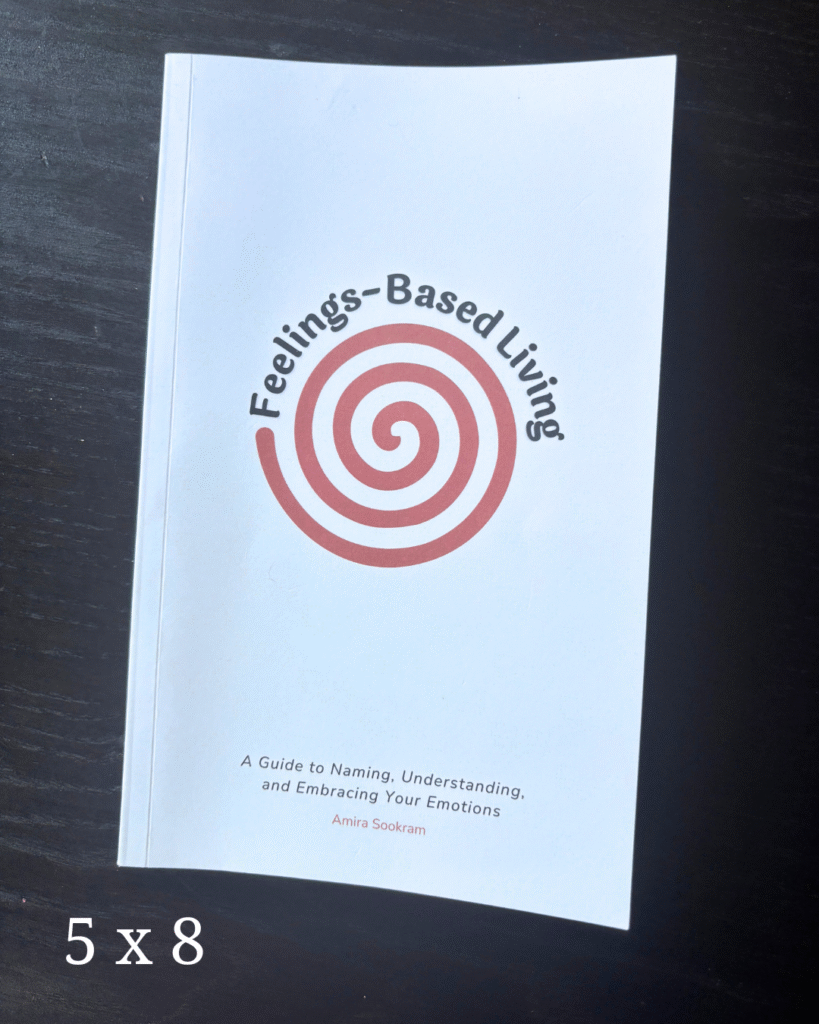
Here are the most common trim sizes for fiction and nonfiction books:

5” x 8”

Often referred to as a “pocket-size” novel. This trim size is great for:

  • Middle grade and early YA fiction
  • Nonfiction books under ~70,000 words
  • Cozy genres that benefit from a smaller, more portable format

It fits nicely in bags and feels “just right” for shorter, focused reads.

5.5” x 8.5”

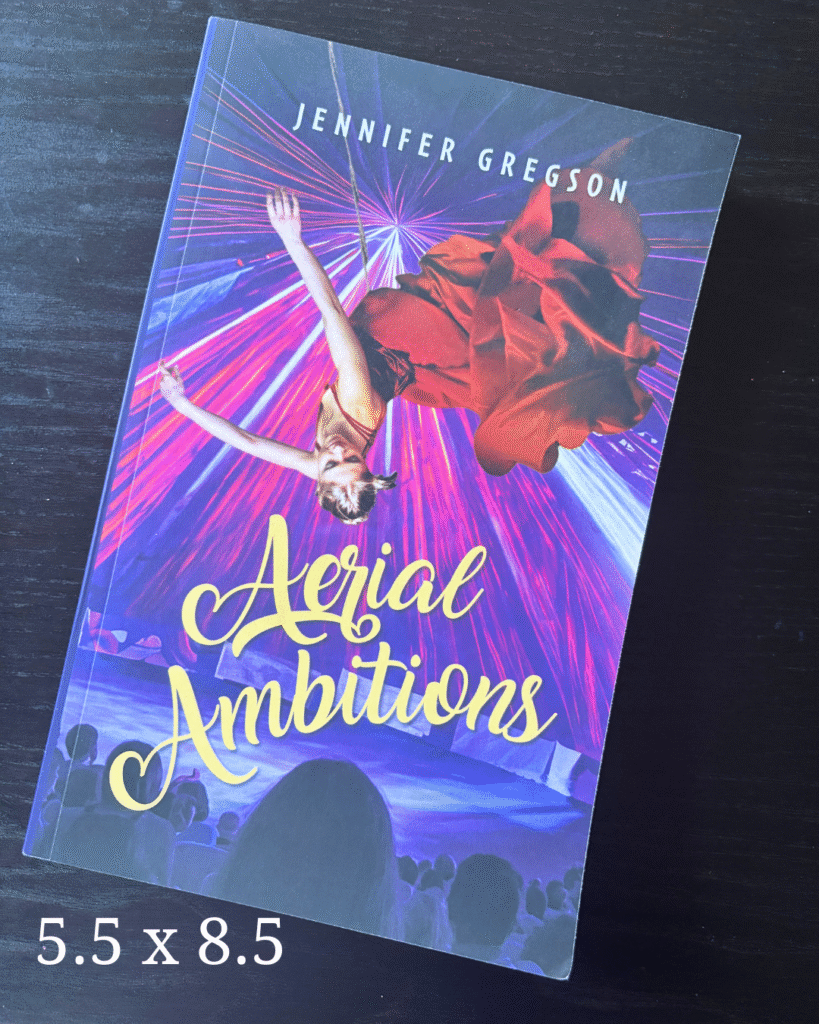
This is my personal favorite—and the size I use for all of my YA novels.

It’s:

  • Perfect for young adult, women’s fiction, and general contemporary books
  • Visually pleasing with more room on the back cover for your blurb
  • A middle-of-the-road option for page count and cost

If you’re unsure, check the trim size of your favorite books in your genre—it’s likely many of them use this size.

6” x 9”

A popular choice for:

  • Memoirs
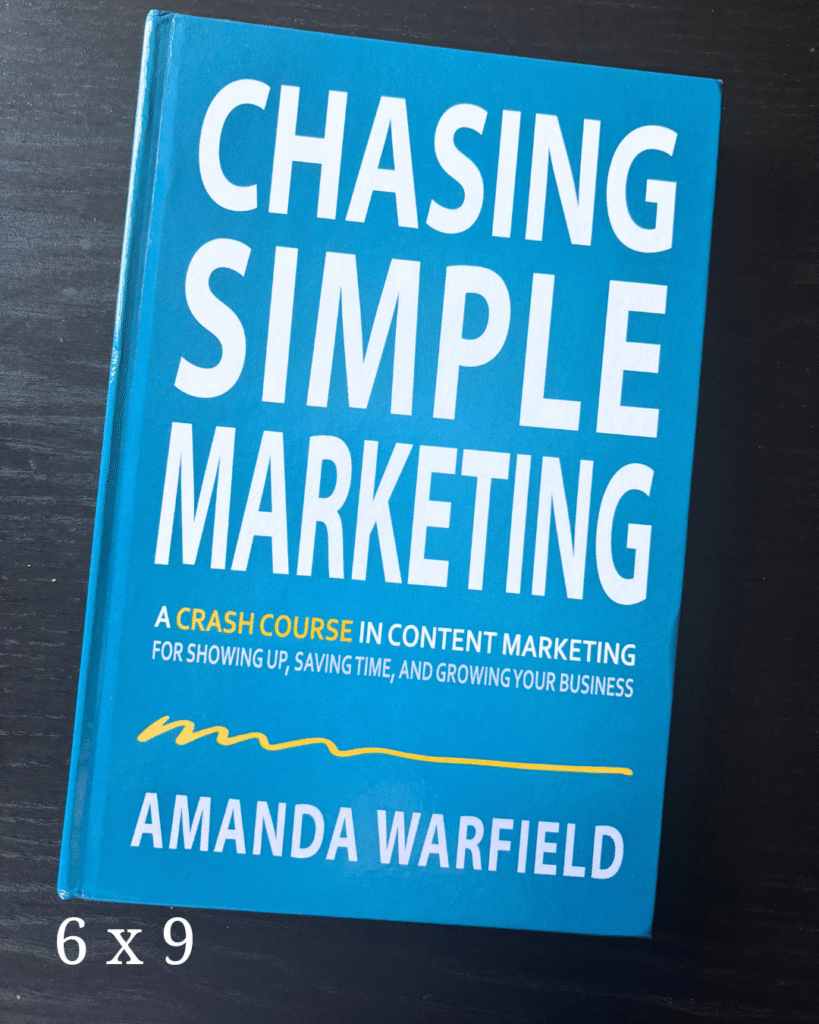
  • Nonfiction with charts, diagrams, or room for note-taking
  • Fantasy or sci-fi novels that tend to run longer

This size is also ideal for hardcover versions of your book—it gives you space and a polished, professional feel.

🎨 Consider Genre & Aesthetic

Different genres often lean toward different trim sizes. Do a bit of research:

  • Visit your local bookstore and check what size books in your category use
  • Measure books you already own and love
  • Think about how you want readers to experience your book—is it cozy and portable or bold and immersive?

Also consider series consistency: if you’re planning a multi-book series, you probably want all the books to match on your shelf. Readers do notice!

💸 Trim Size Affects Cost

Print-on-demand pricing varies depending on trim size and page count. Larger trim sizes can increase printing costs—especially if you’re publishing in both paperback and hardcover.

For example:

  • A smaller book (like 5×8) typically costs less to produce
  • A larger trim size (like 6×9) may cost more but allow fewer total pages, which can balance the pricing

Always check the print pricing tools on Amazon KDP, IngramSpark, or your preferred POD platform before finalizing your choice.

✍️ When Should You Decide on Trim Size?

You don’t need to think about this during your first draft—but once you’re preparing for formatting (whether DIY or hiring help), trim size needs to be locked in. It affects layout templates, page setup, and even design choices.

🤔 What Trim Size Should You Choose?

Ask yourself:

  • What’s common in my genre?
  • How long is my book?
  • Do I want my series to have a uniform look?
  • What aesthetic am I going for?

I write YA coming-of-age fiction and use 5.5 x 8.5, but my upcoming urban fantasy might push me toward 6 x 9 for those longer word counts. I’ll decide once I’m closer to formatting!


📣 Let’s Chat

What trim size are you using? What genre do you write in? Have you found any surprising favorites while researching?

Drop a comment or send me a message! And if you’re stuck choosing or can’t find the info you need, I’d be happy to help.
Grab your free Indie Author Formatting Checklist here

Overcoming Impostor Syndrome as a Writer: How to Keep Creating Despite Self-Doubt

Posted on February 3, 2025February 11, 2025 by Jennifer Gregson

If you’re an indie author, chances are you’ve asked yourself: Am I good enough? Will readers figure out I’m a fraud?

Impostor syndrome is something almost every writer experiences at some point. It can be paralyzing, making it difficult to sit down and do the work. But the good news? You can overcome it. Here’s how I deal with impostor syndrome and keep writing.


Acknowledge Your Fears

The first step in overcoming impostor syndrome as a writer is to acknowledge it. Ignoring or pushing it away won’t make it disappear—it’ll just creep up when you least expect it. Instead, try these methods:

  • Journal about it – Write down your fears and get them out of your head.
  • Talk it out – Share your thoughts with a trusted friend, spouse, or (better option) a therapist.
  • Personify your inner critic – Give it a name, have a conversation, and take away its power over you.

When you sit with your fears rather than fight them, you can process them and move forward.

Take Action to Counteract Fear

The best way to silence impostor syndrome? Take action. Fear thrives on inaction, but even small steps forward can help you break free.

1. Use Accountability Groups

Writing alongside others keeps you motivated. I have three accountability groups throughout the week where I write with other people. This method, often called “body doubling,” can be especially helpful for neurodivergent writers.

2. Set Timers for Short Writing Sessions

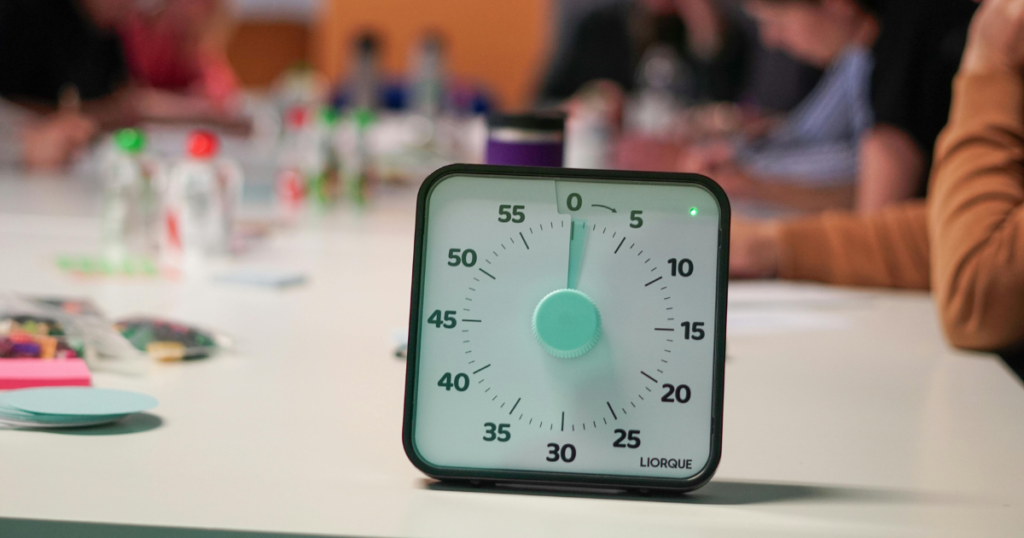
When fear stops me from writing, I set a five-minute timer. I tell myself I only need to write a few sentences, maybe just 25 words. This simple trick helps my brain relax, and I almost always end up writing more than I expected.

3. Focus on Your Why

Why did you start writing in the first place? For me, it’s the art of discovery. Even though I outline, I love when unexpected characters or plot twists appear in my drafts. That excitement keeps me coming back to the page. When impostor syndrome starts whispering doubts, remind yourself why you love to write.

Shift from External to Internal Motivation

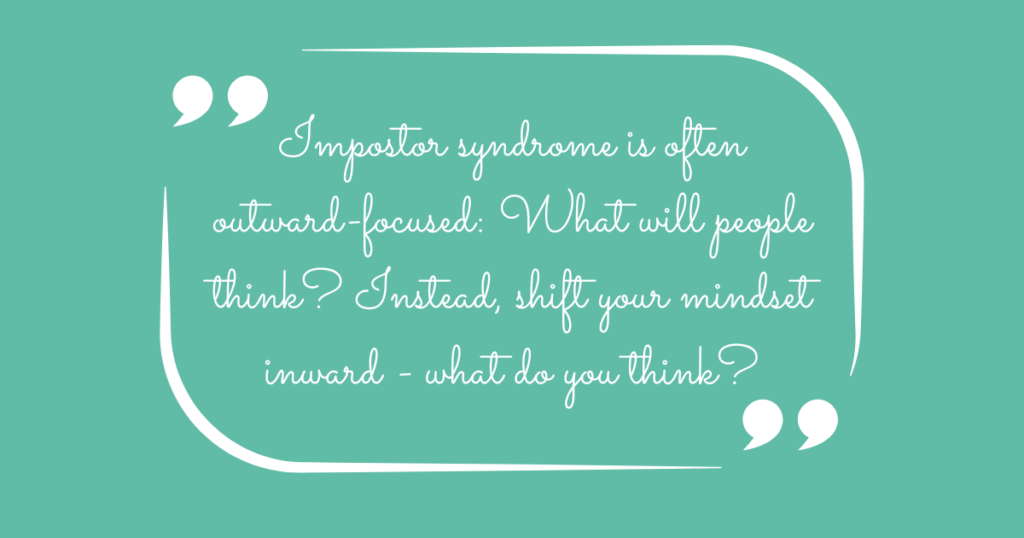
Impostor syndrome is often outward-focused: What will people think? Will they like my book? Instead, shift your mindset inward. During the drafting phase, allow yourself to be selfish. What excites you? What scenes make you eager to keep going? Make sure you keep your why somewhere you can see it before each writing session to remind you.

Later, during revisions, you can shift focus to your audience, but for now – give yourself permission to write for you first.


Final Thoughts

Overcoming impostor syndrome as a writer is an ongoing process. Some days, it’s louder than others. But by acknowledging your fears, taking small actions, and remembering your motivation, you can keep writing despite self-doubt.

If you have any questions or topics you’d like me to cover in future posts, drop them in the comments below. 

The Ultimate Writing Toolbox: My Favorite Analog & Digital Writing Tools

Posted on January 31, 2025February 11, 2025 by Jennifer Gregson

Whether you’re a new or seasoned writer, finding the right tools can help boost creativity and streamline your process. Let’s dive in!

My Go-To Analog Writing Tools

Sometimes, nothing beats the feel of pen and paper. Here are my top three must-haves for brainstorming and planning:

1. Spiral-Bound Notebooks

I stock up on these during back-to-school sales, but Amazon also has great deals. I use them for brainstorming, outlining, and keeping track of ideas. For my current urban fantasy series, I dedicated an entire notebook to jot down initial thoughts, asking myself what if questions to spark creativity, and for keeping track of character names and descriptions.

2. Index Cards

These are a lifesaver for outlining! I love that I can move them around, shuffle ideas, and visualize my story structure. Using different colors helps me track changes during revisions—sometimes I even highlight corners or use washi tape to categorize sections.

3. Tarot Cards

If you’ve been following me for a while, you know tarot is a big part of my writing process. I use it for character creation, conflict development, and even as a daily writing prompt. I’ll be sharing more about this in an upcoming post, so stay tuned!

My Favorite Digital Writing Tools

While I love analog tools, I also rely heavily on digital ones. Here are the writing programs I can’t live without:

1. Scrivener

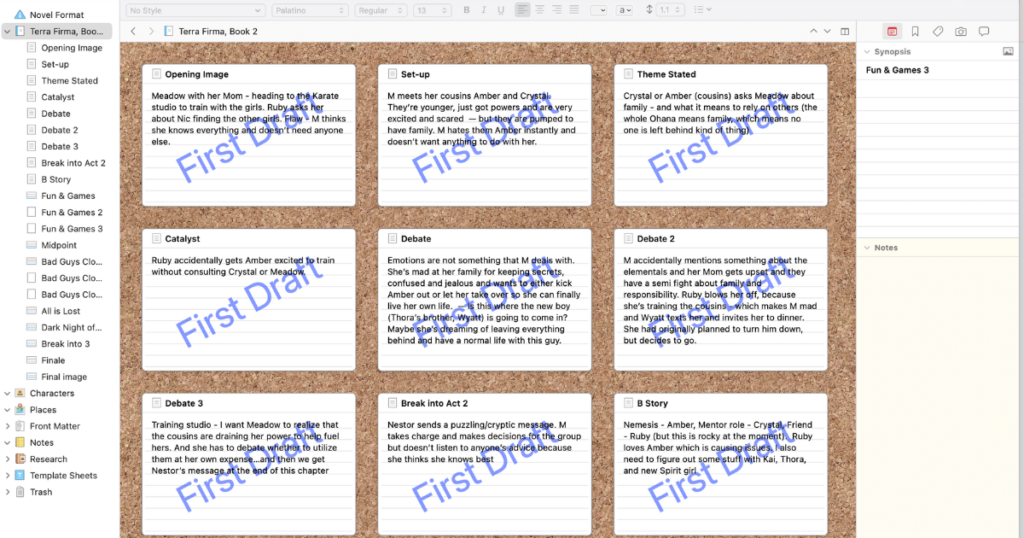
I’ve been using Scrivener for years, transferring it across multiple laptops. The digital corkboard allows me to move my scenes around effortlessly, which is a game-changer compared to cut-and-paste in Google Docs. While Scrivener can be overwhelming at first, taking a course or reading a tutorial helps unlock its full potential.

2. Google Docs

Though I don’t draft in Google Docs, I am currently using it to create a series bible to track characters, settings, and major plot points across the five books I have planned. It’s free, accessible, and great for collaboration – I can share the file with my editor or beta readers easily and track comments across multiple people.

3. Amazon Music & Spotify

I have to have music to write – at this point, it’s non-negotiable. I love being able to choose playlists, radio stations, or whole albums on various music websites. It allows me to groove to the many genres I adore like 90s hip-hop, Broadway soundtracks, or modern day pop music. 

4. Vellum

This is a Mac-only software that I use to format my books beautifully for both print and digital publishing.  It’s pretty magical, since none of my books have images, I can format my entire novel in 2 days and have files ready for the eBookstores in a flash.

My Final Thoughts

At the end of the day, all I really need to write is my laptop. But my notebooks, index cards, and digital tools make the process smoother and more enjoyable.

I’d love to hear about your favorite writing tools! Share them in the comments or connect with me on Instagram.


Kickstart Your Creativity Using Multiple Tarot Cards

Posted on May 3, 2022May 3, 2022 by Jennifer Gregson

Let’s say you’ve been dabbling with using Tarot cards for your writing and you’ve been pulling one card at a time – great!!  Looking at one card can help you gain insight, get you out of your own head, and spark ideas but by adding a second (or even third) card, you can take your writing from pretty awesome to freaking amazing! 


Look at each card individually first

Grab your favorite Tarot deck, shuffle and pull one card at random.  Spend some time looking at that card and see what comes up for you.  Look at the background, foreground, what the “character” of the card is doing, colors, animals, etc. Note or write down everything you can think of.

Now, pull the next card and do the same thing.  Spend some time and note all the things about this card as it stands without thinking about the first card.  Again, look at the background, the foreground, and the character.  Write it all down. 

Watch the video below to see real world examples using one of my favorite Tarot decks for creative writing.

Look at the cards together

Here’s where the magic comes in.  Put the two cards together and start looking at what’s the same about each card.  Do they both have water elements? Are there similar colors? Does each card have animals? Are they both in the same suit? Is the character facing the same direction? Anything and everything that’s the same gets noticed first.

Then take note of what’s different.  Is one card more warm tones while the 2nd card is more cool tones? Does one have lots of animals while the other is pretty barren? You can notice anything that catches your eye that’s different about the cards.

You can then assign meaning to those things based on your writing style or genre or just what strikes your fancy.  If you’re trying to get help writing a scene, let that guide you to what’s more important.  Like I tell people, there is no wrong answer – there is just YOUR answer.  So write everything down and start connecting the dots.


Have fun

Here’s where the fun comes in – start writing by putting them into a scene together.  They can be attending the same party, waiting for the bus, be co-workers, sitting at a bar – seriously the sky’s the limit here.  Pick something that works for your genre or a setting you like and start from there.  You can type all of this, handwrite, or turn on your phone and record yourself and then get it transcribed or type it up later.

OR another fun writing activity is to start the action on one card and finish it on the other.  For example, let’s say you pulled a Queen and a King card.  You could start with whatever’s happening  


Try adding more cards

This is something you can do with multiple cards as well.  Just follow the same steps – look at each card individually, then look at them together – what’s the same, what’s different, and then group them together and start writing! 


Things to think about

If you pull a card that doesn’t have a person or character on it, can you still use the card?  Sure, just use elements from the card to either create a character or add to the scene – you can combine the elements of both cards to create one perfect setting, one weird character, or one conflict that you can then use.  

It’s usually helpful, before you start, to decide if you want to write a scene, create a character, or if you just need some inspiration to get around writer’s block.  It’s helpful, but not needed if you just want to have some fun and see what comes up for you – again, there is no wrong answer, there is only YOUR answer and your answer is beautiful – and so are you!

Did you find this helpful? You might enjoy my signature course, Turn on the Tap, happening this June – so join the waitlist by clicking here to find out more ways to use Tarot with your writing, especially for ways to deal with and get unstuck if you are dealing with writer’s block.

The form you have selected does not exist.

There Is Power In Numbers

Posted on July 11, 2021 by Jennifer Gregson

Why community is important, even if you are between writing projects

Writing can be lonely, and most of the time that’s exactly what we like about our chosen career, the solitude of talking to our imaginary friends.

But when those friends stop talking to us it’s helpful to have real life people, other writers, around to talk to us, offer advice, and provide feedback. This is why I believe that having a community of other writers is helpful, even if you are between writing projects.

I mean, are we ever truly not writing?

Even when I’m between projects – say my draft is with my editor and I don’t have time to start fully working on a second book – I’m still thinking about, dreaming about, and possibly planning that next book. We can say we are on a break all we want, our brains are usually pretty busy coming up with names, small details, or just getting excited about that next new shiny thing.

And having a community of like-minded writers, who understand the ups and downs of writing a full-length novel, non-fiction book, or scripts can be so vital during our down times to help motivate us, inspire us with their amazing projects, and let us remember why we started writing in the first place.

Yes, writing communities are very important when blocks pop up, but they can also be super important when things are going well to have that on-going, day to day support because writing can be lonely and knowing others are out there struggling to get words on the page each day with everything else going on in the world is the most amazing feeling.

You are not alone!

If this sounds like something you need in your writing life, join my newsletter today so you’ll be the first to know about my upcoming membership for writers where I’ll be hosting mini courses each month, co-writing sessions, Q&A calls, and so much more!

The form you have selected does not exist.

How To Use Tarot Cards to Brainstorm New Ideas

Posted on May 3, 2021May 3, 2021 by Jennifer Gregson

Using Tarot cards to come up with ideas is one of my favorite ways to use the cards and it’s a fairly easy process.

Decide what you need ideas for

Are you writing a YA novel, a series of Science Fiction books, or blog posts? Seriously, this concept can be used for just about any kind of writing or anything you need ideas for but having some direction will help you narrow down ideas during brainstorming.

Grab your trusty deck

While shuffling your cards, think about what you need ideas for.  Not just what you came up with in number one above, but also specifics. For example, I want ideas for a new YA novel that includes a Mother-Daughter relationship. This helps get your intuition and your cards on the same page. 

Pull cards

Once you feel comfortable, stop shuffling and start pulling your cards – however you like.  You can cut the deck or pull from the top.  You can fan the cards on the table and randomly pull or create a “spread” of sorts.  You can pull one card at a time or flip up two or three at a time.  There is no wrong way to do this part! 

Start brainstorming

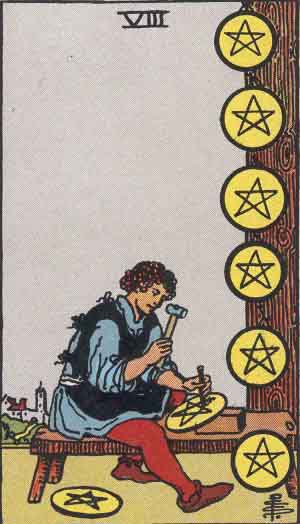
Now it’s time to start looking at the card or cars and write down any and all pings that come to you right away. For example, say you need ideas for blog posts and you pull the 8 of pentacles – the first thing you might think of is skill versus mastery which makes you think of a conversation you had with a friend about whether writing can be taught.  Boom, idea number one! Write it down and keep going.  If you need to set a timer, do that.  If you know you have time, then relax and enjoy the process.  

Keep going!

Keep pulling cards and writing down ideas. It’s really that simple.  But for some extra help – look at the people in the cards, what are they doing? Look at the background and the foreground – sometimes I get random ideas based on boats, hills, mountains, and cities.   Look at the colors in the card for inspiration.  And if nothing else works, how do you feel when you look at the card? Does it remind you of anyone? Or a situation you’ve been in before?

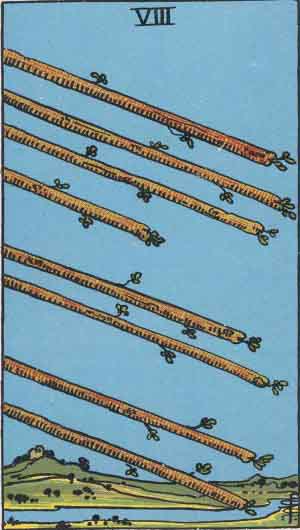
Here’s one more example, let’s say you want to write a romance novel and you pull the 8 of Wands.  What are you going to do with that? It’s just some wands flying through the air. Well, maybe you think of air travel – your couple could meet on a plane or in the airport, or maybe they’re saying goodbye because they’re going to do long distance. 

The card is also about communication so maybe there’s some miscommunication and your new lovers meet at the wrong movie theatre. While at the wrong one, your heroine starts talking to a young man waiting for his friends and BOOM – love triangle and conflict can start.  

Have you ever used Tarot cards to help you brainstorm new ideas?

Here’s Why You Shouldn’t Be Ashamed If You Are Suffering From Writer’s Block

Posted on March 30, 2021November 3, 2021 by Jennifer Gregson
Shouldn't be ashamed if you are suffering from writer's block

Feeling stuck or suffering from Writer’s Block is not fun, but it’s nothing to feel ashamed of. You know what I’m talking about. Someone asks how the book writing is going and you say things are good even though you haven’t technically sat down in days (or months) and actually written or edited anything.  You feel terrible, guilty, and some shame but you don’t have to.

What exactly is Writer’s Block anyways?  

Maybe you’re not writing at all and totally avoiding sitting down at your computer at all costs – your kitchen has never been more clean and organized though.

Maybe you are writing some, but you hate every minute of it and you’re starting to want to avoid that computer, the bathroom mold is calling your name. 

Maybe you’re feeling a bit icky about the words you are producing as nothing sounds right, nothing feels right, and you’d rather spend your precious writing time researching one tiny detail in your novel, make another mood board or playlist, and reading that new book that might help you write yours. Yes, all of those things are fun and very much needed (at least to me) but there’s a fine line between research and procrastination.

Creative Fatigue

We are all feeling wiped out – Pandemic, lockdowns, online school for our kids, Zoom meetings all day, no coffee shops to write at, no aimlessly wandering Target listening to other people’s conversations – it’s been hard and we are all feeling dry and burnt out so luckily, you are not alone.

Why do I say luckily? Because when we’re having writer’s block and we starting feel ashamed we think we alone are suffering, but the truth is we are all feeling degrees of this pandemic pickle (a phrase I coined because I hate pickles but love alliteration – and pickles are sour and that’s the feeling I sometimes get when blocks rear their ugly head) but we can do some things to help.

Change Your Routine

You probably can’t go to Starbucks or other coffee houses to write, but you can go to a different location in your house.  You can try hand writing a few pages if you’re used to typing (or vice versa) or go totally nuts and use the voice memo on your smartphone to speak aloud a passage, scene, or whole chapter.  Or use the voice memo feature to talk through issues you are having with your novel like a talk therapy session.

Journal

Like I mentioned a few blog posts back you can journal as if you are one of all of your characters which does help unlock some fun dialogue and patterns of speech for each of them, but you can also just journal about your book. What do you like about your story? What are you not liking right now? What do you love about your main character? What do you hate about them? What do you love about your antagonist? What makes them the perfect villain? Sometimes we get so wrapped up in the day to day grind of writing that we forget why we started writing our current WIP in the first place. Why do you love your story? What was the inspiration? 

Talk It Out

Do you have another writing friend? Ask them how they’re feeling and let them know what you’re feeling and see if you can help each other out.  If none of your friends are writers, turn to Facebook or another group online (Discord has quite a few) to share what you’re feeling and let others offer advice.  Being honest and authentic with others allows them to be open and honest back and to let them see that they are not alone either.  

Don’t Beat Yourself Up

It’s hard right now. Writer’s Block is always hard (even without being in lockdown) but please don’t beat yourself up that won’t help anything and will only make you feel worse. Instead, give yourself some grace.  Talk to yourself the way you would your child or your best friend if they were having this issue.  Make your favorite hot beverage and tell that beautiful writer in the mirror that tomorrow will be better. 

Do Something

Write something…even if it’s one sentence.  Edit something…even if it’s one paragraph.  In fact, it’s better to restart slowly.  Make a plan to write for 1 minute and then stop. Do that for a few days and see if you’re itching to get back to it. If not, great – keep up with the one minute a day until you do feel better.  One minute a day is better than not writing at all for months on end. I know it seems silly, but trust me it will keep you connected to your novel, your story and your characters without driving yourself crazy.  It really is a win-win.

Celebrate

Look back at how far you’ve come.  Did you write one chapter before writer’s block? Great! Did you get through a whole draft but editing is causing you problems? Awesome!  Celebrate what you’ve done and see that you can and will write again.  Celebrate that you are aware of your problem and you are taking steps to fix them. Smile at that beautiful writer in the mirror and celebrate that you are a Writer – own it, claim it, call it, shout it out loud and proud. You are a beautiful writer and I never want you to forget it!

Which one of these tips and tricks are you going to try first? I would love to know.

The form you have selected does not exist.

How To Create An Editing Plan

Posted on November 16, 2020October 30, 2020 by Jennifer Gregson

I took a break from my manuscript and now I’m ready to dive back in for what I’m hoping will be the fourth and final round of edits.  If you read my last blog post you know I had some feedback from my editor, so I sat with that for awhile and then made an appointment to speak with my editor about a plan.

We talked about being methodical with the draft so I don’t miss anything – because I’m serious, I’m ready for this book to be out in the world – and really going as slow as I need to accomplish that goal. We also came up with some really good guidelines that I think will help other writers.

Read and create a Reverse Outline

And while you read, take notes – lots and lots of notes. I plan on doing this right in the Word doc I sent to my editor and making my notes and comments in a different color than her notes so I can see them both.  As I’m reading I will create a Reverse Outline – which is my editor’s favorite thing – and for good reason, it helps you see all the big problems right away.  A reverse outline is simply an outline you make after you’ve written your book – instead of mapping out where you want to go, it helps you see where you’ve been (or where you haven’t been). 

Once I’ve read through my book, read through all of her notes and made all of mine, and created a new reverse outline – it will be time for the next step.

Priority Checklist

Since a lot of my editor’s notes were about things that I need to fix book-wide, I’m going to make a checklist of all of those things and look over them while I’m editing.  Things like – are we in a white room or is there description? Do my characters sound the same or different? Is everyone mad or angry or is there variety?  Having one checklist to look over will keep me organized and on track to fixing those book-wide issues that I seem to be having this round.  I call it my priority checklist because these are things that NEED TO BE FIXED!!  Like major attention needs to be paid. 

Planning

Now comes the somewhat fun part, planning my writing sessions. I will look at my calendar and my digital planner and I will start working out how much time I’m going to have each week for editing.  2-3 sessions a week is usually my average with some weekend times thrown in there.  And I usually average one chapter per session so I can plan on having 30-35 days of work to get everything done.  OK! 

Side tip! Get yourself a reward system — use stickers for each day you do your writing and after so many stickers give yourself a treat – either a day off, or a fancy coffee, or time with YouTube.  Make this part fun!

Start working and writing

Once I have my notes, my general checklist, and my plan it’s time to actually start. I will open up the Word Doc and my Scrivener file and  get to work – little by little, fixing each chapter. I read through the notes from me and my editor and fix those first.  Then I’ll go through the checklist and make any and all changes to make sure my chapters are near perfect.  I’m hoping I can get one chapter done per editing session but some chapters might need more sessions so I can adjust as I go.  Try to remain flexible with your own plan – things happen.

Final read through

Since I would like this to be my last major edit, I will do a final read through at the end and run a spell check to catch any glaring errors before sending it back to my editor.  Whew!  That was a lot of steps, but when you want to do something right you need to buckle down and do the work, right?  Right!

Have you ever edited a major project? A book, or large term paper perhaps?  What were your steps?  What are you still curious about in terms of editing?  Let me know in the comments below or email me and I’ll get back to you with my answers.

Unpacking The Privilege I Have In Being Able To Say I’m Not Political

Posted on June 15, 2020 by Jennifer Gregson

After weeks of watching protests, listening to people on my Instagram feed, and reading articles and books I have realized how privileged I’ve been to be able to say I’m not political, or I don’t like to discuss politics – or the even more cringe-y worthy one, I hate politics, how boring. 


I have been thinking long and hard over these past few quiet weeks about where I stand, what values I hold, and how I think about the world…and I just assumed you, my lovely readers, would know some of these things but that’s not necessarily true. So, let me say very clearly – I stand in solidarity with Black people and I truly believe that all lives can’t matter until Black Lives Matter in this country (and in larger part, all over the world). 


What is happening to innocent black men, women, and children in this country is very wrong.  If all lives mattered, as I have heard people say time and time again, then we should have cared so much earlier about our citizens getting gunned down while driving, while sleeping, while jogging, or while playing in the park. 


Saying I’m not political or I don’t like to discuss politics shows my privilege. I should have cared sooner, I should have paid more attention, I should have been doing this reading and listening much, much sooner and for that I’m sorry.  But, I know better and from now on I will do better.


Writing these truths and being this honest is scary, because I don’t know if I’m going to say the right thing, but I also know that I didn’t want to say nothing at all. I am not a front line person – although I think the protests are needed, but I have been signing petitions, sending emails, adding new authors to my TBR list, reading books, listening to people’s stories, and sitting with how I can make a difference.


For starters, I’m going to get more involved in my local elections. I have always voted in the big Presidential elections every four years since I was old enough to vote, but I’ll be honest – I very often skip the little elections because I assumed they didn’t mean that much to everyday people.  Again, I was very wrong.  They affect my neighbors, they affect my friends, and they affect me and my family.


I vow to start researching how my tiny part of Queens does things, who is in control, what kinds of elections can I get involved with here – closest to home. Then expand that to Queens as a large borough and then on to New York City and finally, New York State as a whole. 


Once I’ve learned and explored and done that work, I’ll move on to the US government. I know from High School how things work as a general rule – or how they should work – but I want to expand that knowledge.  Like: Who are the Senators for NY? I’m embarrassed to say, I don’t know. I know our Mayor and our Governor and I assumed that was enough.


I plan on sharing what I’ve learned, how the research is going, and what it takes to get involved – mostly on my Instagram stories if you’d like to follow me over there.  But I can definitely write an update in the next month or so and share any links, books, podcasts, etc. that I have used. 


And, if you’re a lovely reader in a country outside of the US and would like to share resources with me to share with my larger readership – send me an email and when I do my next roundup, I’ll include them with your name and social media handle (if you’d like).  


I believe that together we can make this world, this country a better place for everyone!!  

Who And What Inspires Me

Posted on May 5, 2020 by Jennifer Gregson

The other day I dropped one of those Question boxes onto my Instagram story so that I could do a big Q&A style blog post, but I only got one real honest-to-goodness question, the rest were spammers and bots. I was a bit disappointed until I realized that the human question that was asked was sooooo good! I decided to dedicate a whole blog post just to it. So thank you so much Amira at @GoalSetting101


She asked me — Who Or What Inspires You?


To be honest, that answer can and has changed throughout my creative life and depends on which story or project I’m working on, but today I wanted to sit down and really think about overall, who and what inspires me on a day-to-day basis.


Who Inspires Me?


My son inspires me every day to keep trying, to never give up, even when things are hard. He makes me smile and laugh and is just the sweetest 8 year old ever!  My Mom inspires me by how hard she loves, how much she cares, and how much support she gives me. My husband inspires me by his strong work ethic, his wonderful sense of humor, and how much he wants me to succeed.  


For my first book, The Art of Lying, a random young woman walking through Central Park inspired the character of Rachel. Other writers, both people I know and people I just read, inspire me to keep moving forward, hands on the typewriter, butt in the chair.


What Inspires Me?


Coffee – first and forever. Modern Art. Before Corona, I would just go to MoMa or the Guggenheim and walk around soaking in the colors and lines. New York City, in general, inspires me, but Broadway and Time Square specifically. Just sitting with a coffee watching the whole city walk by was always fascinating. The energy and the electricity of the whole scene just filled me up with some kind of frenzy I can’t get anywhere else. TV and movies inspire me to write better characters, to deepen plot lines, to create more. 


The young adult experience inspires me in my writing – what they go through, the issues they have to face, and the decisions they have to make. Solving puzzles and figuring out the psychology of the human condition definitely inspires me to write compelling people, creating characters that my readers can fall in love with. And on a more whimsical note, tarot cards and astrology inspire me to keep reaching for the stars while keeping my feet on the ground. 


So, now I have to know – who or what inspires you?


The form you have selected does not exist.

  • 1
  • 2
  • Next
  • July 25, 2025 by Jennifer Gregson How to Use Headings and Flourishes in Book Formatting: A Fun Guide for Indie Authors
  • July 18, 2025 by Jennifer Gregson Book Formatting Terms Every Indie Author Should Know: Lingo 101 for Self-Publishing
  • July 18, 2025 by Jennifer Gregson Don’t Leave Your Reader Hanging: What to Include in the Back Matter of Your Self-Published Book
  • June 27, 2025 by Jennifer Gregson Front Matter 101: What Every Self-Published Author Needs Before Chapter One
  • June 20, 2025 by Jennifer Gregson How to Pick the Perfect Trim Size for Your Print Book (with Examples!)
© 2026 Jennifer Gregson | Powered by Minimalist Blog WordPress Theme