Jennifer Gregson

Young Adult Indie Author

Menu
  • Home
Menu

Category: Writing

4 Ways To Ensure You Are Creating Real Human 3D Characters

Posted on August 17, 2022August 16, 2022 by Jennifer Gregson

We have all read books where the characters seem to leap off the page, where they feel so lifelike that you wouldn’t be surprised if they walked through your front door.   As a writer, I know that you want to ensure that your characters are like that so your readers fall in love with them, want to be them, and want to keep reading their story.   Here are four ways to ensure that happens.

Create your character’s persona

This is the character development portion.  I like to use a Tarot card for this, but you can use character bio worksheets, Pinterest mood boards, or just writing down everything you know about your characters in your project file.

For an example using The Empress card from the Rider-Waite tarot deck, watch the video below!!

If you already have a character created, get your notes back out and start from there – look at what you have and make sure you at least have the basics of who this person is, what role they play in your novel, and a few points about what makes them unique. 

Talk to your characters

You need to talk to your characters as if they are real human people (or aliens, or dragons, or whatever type of creature you are creating). I like to do this with the Tarot card I used to create the character, but you can also grab an image off Pinterest or a magazine – have something you can look at while you’re doing this exercise.  

You can do this either out loud – asking your character questions and then answering as if you are them (I like doing this as it lets me use some of my theatre training) OR you can do this in a journal or word document.  Start with a list of open ended questions and see what they say.  For example, if you ask them: What do you want me to know about your story? And they answer, I don’t want to be known as the villain.  Then your next question could be – why do people assume you’re the villain?  And so on and so forth. 


Become friends with your character

It’s true, you need to become friends with your characters – even the bad guys, even the truly evil antagonists you can create – the way you do this is what do you love about them? Probably for the bad guy, the thing you love the most is how evil they are, right?

To accomplish this, I like to journal as if I was the character.  Do they write in a journal? Keep an online diary? Are they teens and write things down in the notes app on their phone or keep a vlog via TikTok? I figure that out first then try to mimic it as close to possible so I can get into the mindset of my character. Then I choose a day – either from my novel or right before – and start writing.  

Every time I do this exercise I learn valuable information and things I can use about my characters for my novels – seriously, this is so much fun, if you only take away one exercise, let it be this one!!

Visualize them/Describe them to someone else

Now, step away from the images you have – either the Tarot card or Pinterest pictures, and try to visualize them in your mind.  If you are not able to do this – describe them to someone else. This exercise is to get you thinking about your character, seeing your character in your own mind so much that you if they did walk in, the other person would go – oh, them?! 

This helps you take everything you’ve learned and put it all together, creating a real human 3D character with quirks and flaws and emotions and all the things that make a reader fall in love with a person in a book. 

If you did this exercise with one of your characters, please let me know in the comments below how it worked for you and what one thing you discovered about them that you are definitely putting into your book?

And if you found this helpful, I would love for you to check out my Muddy Middle to Manuscript coaching package where I will walk you through a process of getting very clear on your Big Why, becoming friends with your characters, and we will fix your outline so you can type The End all with a smile on your face.

The form you have selected does not exist.

Turquoise typewriter with the words The End

Are YOU the reason you haven’t been able to finish your book?

Posted on August 10, 2022August 9, 2022 by Jennifer Gregson

Have you used any of these excuses before while writing…

  • I’ll write later or I’ll write when the kids are older
  • I’ll write when my house is perfectly clean
  • I can’t concentrate until all of my projects are done
  • I love my characters, but they’re not doing what I want…and now my draft is messy
  • I’m waiting on inspiration to find my ending

Listen, writing The End is scary – trust me, I know, I’ve done it multiple times, but the truth is you cannot edit a blank page. You need to finish your draft.  So, now that we’ve established that fact, let me make it a little easier for you.


You need to have a plan of attack

How’s your outline looking? Is it fleshed out? Are you completely off track? First, let’s take a moment and see where we are and where we’re trying to go.  (Note, I have blog posts coming very, very soon about outlining so be on the lookout – or subscribe to my YouTube channel and not miss anything!)

Next, let’s get those characters cooperating.  Figure out what they’re trying to tell you by interviewing them, journaling as if you are them, and get them back on your side.


You are thinking too far ahead

Writing The End is really scary, because you are thinking too much about what happens next.  Your brain is five steps ahead thinking about the editing process or hiring an editor, finding beta readers, marketing on Instagram or joining TikTok.  STOP!!

You need to stay in the phase that you’re in right now – the discovery stage, the learning about your characters and their story stage, the beautiful messy first draft stage.  If you have ideas about things for the future, write them down somewhere, but don’t get stuck in too much future planning especially since social media platforms are always changing – ideas for excellent Reels might not even make sense in six months or a year if Instagram decides to change something…again!

Try to relax and enjoy the first draft – it’s supposed to be FUN!!  Revisions are fun in a different way and when you get there, I’ll tell you the same thing – stay in your lane and enjoy where you are.


Schedule your writing time

Here’s some honest truth, if you need your house completely clean before you write, it’s never going to happen – this is just an excuse.  So may I make a small suggestion?  Clean the room or area you’ll be working in.  I get it, I know people like this – I mean, I’m not like this – but usually having them clean their desk, or their bedroom, before writing helps them feel a bit more grounded and ready to rock. Or write.

Ok, so excuse number one down, let’s look at the excuse of having kids around.  Can you get up before them? Got babies or toddlers who are early risers, can you write during nap time? Can you write when your partner gets home? Can you swap writing time/work time with a friend who has a baby? There are ways to do this, but you have to communicate your needs with the people you live with and schedule your writing in a way that works for YOU. 

My son is ten so this looks very different now than when he was a baby, but I had to do some interesting things – write during baby gym classes, write at night or in the morning, have my husband take him to baby music classes on the weekend so I could write every other weekend – it’s tricky, I’m not going to lie, but it can be done. 

You may not be able to write every day, and that’s okay, but figure out what’s realistic for you and your family or situation and schedule that time.  I’d rather you be consistent with one day a week than never write because you are waiting for that “perfect” time to appear out of thin air – it’s not going to happen.

And finally, writing should be fun – I’ve said that before and I’ll keep saying because it’s true – you should be enjoying at least a little bit of the writing process, or why do it?!? If writing is starting to feel like a chore can you do something to make it more fun? I like to add music to my writing sessions, but you could add in a reward, a writing snack, a fun new place to write in, or stickers on a calendar! 

I know writing is hard, I know getting to that ending is scary, but these things can help you get over the writing slump and get back into the groove so you can type The End, all with a smile on your face.

And if you found this helpful, I would love for you to check out my Muddy Middle to Manuscript coaching package where I will walk you through a process of getting very clear on your Big Why, becoming friends with your characters, and we will fix your outline so you can type The End all with a smile on your face.  

The form you have selected does not exist.

How To Make The Book Writing Process More Fun

Posted on August 3, 2022August 2, 2022 by Jennifer Gregson

Has writing your novel lost its luster?

You started writing with all kinds of ideas and energy and excitement, but now that you’re in the muddy middle, it all just feels a little blah, a little hard. Sitting down and forcing yourself to write feels about as much fun as riding the New York City subway without air conditioning in the middle of August – icky.

Let me share three reasons you might be finding the writing process less than enjoyable and a few ways to fix that.

Your characters are feeling dull


Now, one reason for this might just be that you need a break, because you are so involved in your characters and their lives, it all becomes repetitive, but if you don’t feel like you know your characters very well or you’re not writing them in an exciting way, that’s when you need to take a step back and talk to your characters.

I suggest interviewing them, asking them some questions like:

  • What do you need me to know today?

  • What do you need me to know about your story?

  • What can you tell me about “other character names here”?

  • Why aren’t you doing what I want you to do?


Or, you can do one of my favorite things – journal as if you were them! You can do this in a physical journal and hand write or you can do this in a word document. Basically just pretend you are your character and pick a day, either from your book or from before your book started, and write the journal entry as if you are them. It tells you a lot about their quirks, their habits, how they speak to themselves, what they share when no one else is around. It can be very, very insightful. 

Another fun thing I like to do, especially when things are feeling stagnant, is throw all the characters into one scene and throw something big at them.  Even if this is not something that’s going to be in your book later, it can still be a lot of fun and give you some insights into how your characters interact with each other and handle the pressure of a new situation.  An example would be having them all at one party, now this works for me because I write young adult books, but you can also have them all at a bar or the office, and then I might decide that police show up to shut the party down.  How do each of my main characters react to that? And write as if you’re going to hit all of your characters, write from their point of view – again, even if this isn’t how your book is set up, it gives you time in each of their heads to find out more about them and their quirks, their habits, their issues.


Your plots feels a little flat


Again, you might just be tired of writing and need a break – and that’s cool, or it might mean that you need to add a few things into your plot, some new ideas to add tension or conflict.  I like to brainstorm by using Tarot cards, and you can watch the video above to see a real-world example, but you can also just start writing down new thoughts, ideas, and come up with something to add to your plot now that you are further along that you maybe didn’t think of back when you were first starting out writing or working on your outline.

Maybe it’s not so much the plot itself, but the next few chapters you need to write aren’t exciting you but a chapter or scene a few bullet points down is.  Give yourself permission to write out of order. I don’t always do this, but something you are just too jazzed about an upcoming scene and writing that will do two things. One, you’ll keep up the momentum and excitement you were feeling at the beginning on a project. And two, it will show you that you might need to punch up the chapters or scenes you skipped to make them more exciting.

The words are just feeling super weird when you write them


If the words sound weird, and this is what’s causing the writing process to now seem fun, add in something new to your writing ritual.  I like to have special things that I do before, during, and after I write.  For me, I like to pull a Tarot card, light a candle and play a pump up playlist to get me super hyped for writing.  During my session I’ll have a vision board, Tarot card, or my Big Why somewhere close by to remind me of why I’m telling this story and I usually also play music while I write.  Afterwards I reward myself with chocolate, a fancy coffee, some downtime, or time with my family. Creating a writing ritual like this makes the whole process more fun, more magical and makes you happier. 

You can also create a reward system so with every five writing sessions, you get a Starbucks or Dunkin Donuts coffee. Of if you write every day for two weeks straight, you get three days off, whatever works for you, but figure out a little reward system.  It doesn’t have to be anything huge or expensive, if buying a Starbucks is too much, maybe make yourself a yummy beverage that you only make when you’re done writing or have a run of writing sessions. 

I also like to make it a game. I love to use timers and I try to see how many words I can write in 25 minutes. (Note, I’ve been doing this awhile and 25 minutes works for me, but I would start with 10 if you’re new to timers and writing).  I set the timer and see how many words I can write within that time frame. Write the number down.  The next time I sit down to write, I see if I can “beat” my own number.  Let’s say in one session you write 100 words, can you do 110 the next day? 120 the day after that?  If this starts to stress you out, please just put this option away and go back to the reward system instead – I don’t want anyone being more flustered and frustrated with their writing, okay?  Cool!

The other thing I want you to remember is that our writing feels weird to us, especially in first draft land. We are trying to tell the story that’s in our head and putting it down on paper, and that is a funky process. Just know the words are not always going to feel right. You can’t always be subjective with your own writing and that’s okay. That’s what revisions and beta readers and editors are for, down the road. It’s okay if the words sound a little funky to yourself.  Remind yourself that you can always fix things later.

First drafts are messy and that’s okay!

Now that you know the three reasons why sitting down to write may feel hard, which one is hitting you the most right now? And what are you planning on doing this week to make writing more fun? I would love to know in the comments below. 

And if you found this helpful, I would love for you to check out my Muddy Middle to Manuscript coaching package where I will walk you through a process of getting very clear on your Big Why, becoming friends with your characters, and we will fix your outline so you can type The End all with a smile on your face.  

The form you have selected does not exist.

Does Your Novel Really Suck?

Posted on July 27, 2022July 22, 2022 by Jennifer Gregson

Every writer that I know, myself included, always hits a wall at some point in their writing process. Usually it’s smack dab in the middle of the manuscript where you look at your book and you think, does this suck? Do I suck? Should I just scrap this whole thing? 


I’m going to give you five questions to ask yourself before you chuck that 70,000 word manuscript into the digital trash.


Do you hate your character(s)?


I’m gonna admit something. This was me. I wrote 70,000 words on a novel that I basically had to toss and start over with because I really hated my main character. If I had stopped, when I started to feel stuck, and asked myself this question, I could have saved myself a lot of time and energy. 


Sometimes we really don’t like our characters, but there are fixes for that.  Before you trash the whole thing, ask if there’s another character you’d rather write about or are you just bored with this character? If it’s another character calling to you, stop and retool your outline and try writing a few chapters from the new character’s point of view.  If you’re just feeling bored, try interviewing your character or journal as them to see if you learn some new things.  You can also throw something kooky at them to see how they would react – it can even be something totally out of the norm for your genre like an alien invasion, earthquake or other natural disaster – you can always toss that chapter later, but you might find you discover something about your character or book plot that will help you feel more excited overall. 


Are you connected to your story anymore? 


Writing a novel is a long process and I believe it’s pretty normal to get bored. We know our stories so well. We live and breathe them every day. We think about them constantly so it’s easy to get tired of our own words. If you’re feeling disconnected (or a little bored), maybe you just need a break. Maybe you need to write something else for a while. A short story, bad poetry, or create some characters for something new. 


You might need a break from writing all together. That’s okay! 

Do you just feel burnt out? 


Are you tired? Do you just hate sitting down to write? To go along with the above question, if you’re feeling burnt out you might need a break from writing all together.  Maybe you don’t wanna think about your book or your characters anymore. Again, that’s okay. Give yourself a time period. One week, two weeks. Don’t give yourself too much time, but give yourself a couple of weeks and do something completely different.


Play guitar, paint with watercolors, take a photo walk with your phone. Whatever YOU think is FUN – do that! Then come back and see if you feel better. 


Do I just not see a way to end this stupid thing? 


Even if you have an outline and have an ending written down, you might have gone through some twists and turns and you’re not where you thought you should be. Now you don’t know how to get to that end.  


When this happens, I like to take a couple of days and journal it out to rethink some things. Do you like where your outline was or not? Do you like where you are now? 


Start from where you are, figure out where you want to go, and then keep writing from there. If you need to take a couple of days to do this, it’s better to do it now than to just keep spinning your wheels or wind up scrapping the whole thing and never finishing. 


Are you judging every word you’re writing?


I do this. This is your inner editor talking. I also believe this is sort of the on ramp to feeling burned out. If you can catch this now, when you’re judging every little word before you get completely burnt out, you can save yourself a couple of weeks of frustration. 


If it is your inner editor, you’ll want to befriend your inner editor and get them on your side.  The easiest way to do this, have a conversation with them, ask them what they’re trying to tell you and how you can work together to keep going. Hopefully they give you some useful information and they allow you to get back to work.  If they aren’t being helpful, make sure you write that down and see if there’s something you can do to quiet the voice for awhile. 


Remember that this process can take some time, but again, stopping to deal with the issue now will keep you from giving up all together and never getting to The End.


Great, so let’s say you’ve asked yourself these five questions, you’ve fixed the problems and you’re ready to push through and finish your novel – you love your story, you’re grooving again with your characters, you see the ending – but you don’t know how to get there.  That’s where I come in with my 1:1 Coaching Package, Muddy Middle to Manuscript where I walk you through a process to help you overcome your issues, learn more about your plot and characters, and find the needed motivation to get to The End. 


If you have any questions, leave them below.

3 Reasons Writer’s Give Up on Their Book (And How to Avoid it)

Posted on July 20, 2022 by Jennifer Gregson

Is there more than one unfinished novel sitting on your hard drive? Are you wondering if your current work in progress is headed in that same direction? 


I feel like there are three reasons why writers get stuck in the muddy middle – they think their book stinks, they can’t see a way to end the dang thing, and they’re not getting along with their characters.  These are very valid and frustrating reasons, I know, but there are solutions and ways to avoid these problems so you don’t throw this book into the digital trash pile.


Reason #1 – Author’s Feelings


When you start to get stuck, all you can think is: this book stinks, or I stink, I hate this character, I hate this plot. 


What was I even thinking writing this book?!?


These are very big feelings, and sometimes you just need a break, a little step away from your project to get out of the weird mood. Sometimes you need to reconnect to your big why –  the reason you wanted to write this book in the first place. Maybe it was the character that you created first or the plot or something about the ending, something about this book got you excited at some point. So you need to re-remind yourself of what your big why is. I personally like to have some sort of physical representation of my big why in my writing space.


Now I of course use a tarot card for that. I usually pick one card that’s sort of the theme of the book I’m working on and I leave that in my space, but you can also use a vision board or a digital Pinterest board, or you can literally write it down and look at it every day or once a week.  You can do this various ways, but you need to make sure you’re connecting with that Big Why throughout the writing process.  

Reason #2 – Can’t See Their Way To “The End”

There could be two reasons this is happening – you had too detailed of an outline and you are completely off track OR you never had an outline to begin with and now you feel painted into a corner with no way out.  Feeling this way can make you throw up your hands and say I’m Done! 

I suggest taking a step back and looking at where you are right now before you figure out where you want to go.  Give yourself a day or two and just think about your characters and where you would like them to end up. Then start doing other things – dishes, showering, exercising, cleaning – and see if ideas come to you.  Once you have an idea of how you want the story to end then you can figure out how to get there.  

Then, like stepping stones over a river, figure out the scenes you need to write to connect Point A to Point B.  If you are not where you need to be – let’s say you are completely off track – just write from where you think you should be and fix things during edits and revisions. 

Reason #3 – Not Getting To Know Your Characters

Yes, you created them and you have the characters sheets with hair color, eye color, where they grew up and what they do all filled out but sometimes that’s not enough. I’ve said it once, and I’ll say it again – I like to think of characters as my friends. Even the antagonist, even the bad guys, even the side characters. I think of them as real people. And I talk to them like they are human.  Non-writers might think I’m a crazy person, but it works really really well.

Sometimes I do this process out loud, sometimes I write things down in a journal, I always use Tarot cards, but you need to start talking to your characters and asking them questions.  I use Tarot to help me create my characters so I will grab that card, but you can choose one now or use an image off the internet or a magazine.  You can also just picture them in your head, but you need some visualization of your character so you can interview them, journal as them, talk to them and find out their hopes, their dreams, their wants and needs, their fears, etc. 

You can also ask them questions like:

  • What do you want me to know about your story? 
  • Why did you give me your story to tell? 
  • What do you want by the end of this story?
  • What do you want me to know about OTHER CHARACTERS?
  • What can you tell me about SETTING?

It’s kind of like being their therapist, you want to go deep and learn things about them that you didn’t know before.  Treat them like friends, build a relationship.  Yes, this process takes time, but it’s better to take some time away from your draft and deepen the relationship with your characters than scrap your novel all together. 

If you have multiple manuscripts or novels that you’ve scrapped or stopped writing on because you got stuck in that middle, it might be time to bring in a writing coach.  This is what I do with Muddy Middle to Manuscript, my four session 1:1 Coaching package where I walk you through your feelings around your novel, plot and characters and then help you get your story back on track, help you get to know your characters better, and help you find the needed motivation to get through the muck and type The End.  I use Tarot to facilitate the conversations, help us understand the problems you are having, and brainstorm answers and solutions so you can feel confident, energized, and excited about your book again. 

First drafts are hard. First drafts are messy. First drafts aren’t perfect, but we expect them to be. We expect them to be these beautiful things and we get really down on ourselves when they’re not. And I’m here to tell you that you, as a writer are valid. Your story is valid. If you have a story on your heart, it’s there for a reason and I wanna help you get that out into the world.  So if you have any questions, don’t hesitate to leave them below. If you’re ready to check out Muddy Middle to Manuscript, click here to read more and then schedule your first session. 

The form you have selected does not exist.

The Worst Writing Advice For Writers I’ve Heard

Posted on July 13, 2022July 5, 2022 by Jennifer Gregson

Here are three terrible pieces of writing advice I hear most often…and how to avoid them.

Write Everyday

I’ve heard this for years and in all kinds of places, and for me, it did not work. It did cause me to burn out and stop writing for weeks and months at a time, because I was simply too exhausted.

To avoid this, I think it’s better to look over your schedule – either weekly or monthly – and see where you have time to schedule writing and then when you have the most energy to dedicate to your writing.  Personally I believe it’s better to consistently write only 1-3 times a week rather than try to write every day, start off strong, then flame out because you were just too tired to keep up with the schedule.

Just Start

So in the writing world, there are usually plotters and there are pantsers

The plotters are the ones that have the very, very, very detailed outlines of pages and pages and pages. The pantsers just go by the seat of their pants and they just start.

Both camps believe they are right, that they have the right way – and maybe for them, they do, but I personally like to have the middle ground, which doesn’t necessarily have a name, although I have heard it called plotser (not sure I love that).

For me, I figure out what information is needed so I know how to start, how to end, and some juicy scenes in the middle to get me from Point A to Point B.  I also need to know my characters and then I’m pretty much ready to start my first draft.  This will be different for every writer, so you will need to experiment and play to see what feels “just right” for you.  

Note…if you need to stop at some point during the first draft to flesh out some more scenes or more characters, I think that’s perfectly fine.

Edit As You Go


This, for me, is the absolute worst advice I’ve ever heard – so please, just don’t.  I have seen this stop writers from finishing their first draft way too many times.  They start obsessing over that first chapter, or the beginning, trying to get everything perfect that they never get to the end.  


Fixing the occasional typo, or having some great idea when you’re finishing up a chapter that will help that particular chapter, isn’t what I’m talking about.  I’m talking about spinning your wheels working on the chapters you’ve already written because you’re not sure how to end the story or your characters start doing things that feel out of your control.  Writers that do this think if they get the beginning just right that the ending will come and I’ve never seen it work.


My first advice to alleviate this problem is have somewhere you can keep notes for revision. It can be in the document itself, a separate document, or a writer’s notebook.  When you have ideas about how to make your beginning better because of something you just wrote in the middle, write it down and keep going. My other advice is to see where you are when you get stuck and want to keep revising previous chapters and where you want to go and then start writing as if your book was exactly how you want it – you can always fix things and make things work later. 


What’s the worst piece of writing advice you’ve heard? Let me know in the comments below.

My Favorite Way To Come Up With New Ideas As A Writer

Posted on July 5, 2022 by Jennifer Gregson

I find that writers get stuck for a variety of reasons:


  • Lack of ideas
  • Lack of motivation
  • Getting stuck in their own head
  • Overthinking things
  • Worrying
  • Issues with their characters


The perfect writing tool to help with these issues will allow you to have more creative freedom, give you a new way of looking at things, and help you get out of your own head so you stop worrying or overthinking about things and help you get back on track, back in flow, and back to writing.


And most importantly, give you motivation even on your worst days.


If you’ve been around for any length of time, you might guess that the magical tool I use and would love to introduce to you is – Tarot Cards!!


Some writers get scared when they hear the word Tarot, especially if they aren’t into that woo-woo stuff, but I’m here to tell you that you can view the cards as just beautiful imagery on cardboard. 


Those beautiful images help me unlock things deep in my psyche, they help me get past everyday life and my normal way of looking at things to get a new perspective, new ideas and new insight.  I use Tarot cards for pretty much every part of the writing process from creating characters to outlining and plot development to editing sessions and daily motivation, especially when I’d rather do anything other than sit in that chair and write. 

Watch the video above to see two examples where I show how I use Tarot to motivate me when I’m stuck in the muddy middle of a first draft and help give me some new ideas during an editing session.  


If you’ve never used Tarot as a writer, what questions do you have for me? Leave them below and I’ll make videos and blog posts for you!

How To Make Readers Fall In Love With Your Characters

Posted on June 28, 2022June 28, 2022 by Jennifer Gregson

Creating characters that your readers love can take time. Adding depth should be down in layers, putting more and more in as you work on each revision or draft.  Here are four things that I think writers need to think about when adding this depth to their characters.


What is your character’s motivation?


Yes, I know the joke about actors asking their directors, “What is my  motivation?” is funny – especially for me since I was an actor – but it’s also true!! Trying to figure out what your character wants is super important.  The other part of this equation is what do they need? Which I can guarantee you will be different.  I would ask these questions for both your protagonist and your antagonist….and these are really great questions to add depth to your side characters as well.


What about your character’s flaws?


All humans have flaws.  Even if we don’t want to admit it to anyone else, or ourselves, we have flaws.  We all have things we don’t like about ourselves, but this is what can take your character from flat, two dimensional, and bland to a fully fleshed out three dimensional human that your readers can feel for, can see themselves in, can root for.  


It’s very easy to see these flaws in our antagonist characters, but having them for the protagonist is really going to help you deepen that character and if you can use that character flaw to help you with plot development, you’re going to have a better story overall. For example, if your character always rushes into relationships without thinking, that can definitely help move the plot forward, or give them some conflict that will flare up at the worst possible time.

How does your character see their friends? How do their friends see them?


I picked this technique up when I was analyzing scripts as an actor. We would look at what was said about us onstage by other characters to help develop our own and I’ve carried this over into writing.  It can be helpful to think about how our characters act around each other, are they different around friends and family, at work or school, around people in authority? What is the dynamic between the people in your novel?


Even if you’re writing a single point of view and you’re not writing what others say about your main character, you can still ask them to find out and use this information to help with those character flaws, to help you understand your characters better, to help with dialogue or actions taken by your character.


How does your character feel about their enemies? How do their enemies feel about them?


This is the reverse of the other question, but why do they have enemies? No one gets along with everyone, so that’s fine, but ask why they don’t get along with certain people…is it warranted? Does your protagonist see the antagonist as their enemy?  


Using Tarot Cards 


If you know me, I use Tarot cards to help create my characters, but I also use them to help deepen my knowledge of my characters and answer these questions as I continue to write and edit my novels.  How? There are a few ways.


One, grab the card you used to create your character originally and talk to that persona, asking them the questions above interview style OR journaling as if you are them so you can gather information and answers. 


You don’t have to use Tarot for this, you can use images from PInterest or the web or just think about your characters in your mind. If you would like to use Tarot and you didn’t create your character this way, grab your favorite deck and choose a card right now – that’s totally cool!


Another way I like to do this is to use the above questions as a Tarot spread.  Grab your favorite deck, shuffle the cards and lay out 1-2 cards per question above for each character. This is a really fun way, although it will take you a while depending on how many characters you need to do this process with.  Have your journal or film yourself and start talking through all the ideas, write down everything and anything you can think of, and use what works and throw out what doesn’t.  


Remember this takes time. You’re not gonna get your character right on the first draft and that’s okay, that’s normal.  I love to do this kind of work in between drafts, when I’m not quite ready to work on the actual writing, but I don’t not want to work on the writing – you feel me? It can help you get back into the setting and storyline of your book when you’ve been away, taking a break in between drafts, so you are back in the mood to jump right in with your characters and start editing. 


If you haven’t taken my free training – Novel Narrator, where I walk you through the process of using Tarot to create your book’s characters in 30 minutes or less, download that here.  


Let me know, which question above was the most fun to ask your character? 

The form you have selected does not exist.

4 Fears My Inner Editor Has Convinced Me I Have

Posted on May 11, 2022May 11, 2022 by Jennifer Gregson

…and how I have used Tarot to overcome them

Our inner editors can be very loud and can totally convince us that we have a range of fears from fear of success to fear of failure. But I think that if we learn to acknowledge and address these fears, we can overcome them with journaling and Tarot. 

In working with my clients, and in my own writing career, I have seen the same four fears come up over and over again. And they all stem from that loud inner editor. 

The fear of failure – This book is not gonna be a success. Why am I even bothering? 

The fear of success – Oh, this book’s gonna be great, but then I’m gonna have to write a second book…I can’t do that!

The fear of bad reviews – Just the thought of someone critiquing our books can cause us to completely shut down.

The fear of being “found out” as a fraud, otherwise known as imposter syndrome – Oh no, someone is going to come and take me away to fraud jail because I’m really not – insert thing here causing you panic.

I don’t believe these fears ever truly go away, but I do believe that if we work on acknowledging and working through them, we can quiet them down enough so we can take action and move forward toward our dreams.

That is a huge key to getting over writer’s block. 


What I would like you to do is grab a journal and answer these questions:

  • Which fear are you currently dealing with or which fear do you deal with most often?
  • How does this fear show up in your life? 
  • How does it stop you from writing and how does it affect your writing life in other ways? 


Once you’ve acknowledged the fear, keep journaling, let your mind wander and really get everything out about how this fear shows up and how it stops you from pursuing your dream.  
If you are dealing with a few fears, start with one and work through both exercises and then you can go back and do the same thing with another one – in fact, it might be super helpful to do these with all four fears, but let’s start with one. 

Once you’ve done the journaling work, the deep inner work, and you know which fear you are dealing with – let’s do something a little fun, a little different – a 3 card Tarot spread!

Grab your favorite deck, give it a shuffle and lay down the three cards – one for each of the following questions.  If you’d like to watch me go through this process in real time with my own fear, click the YouTube video above. 


Facing Your Fears Tarot Spread

  1. What is my fear trying to tell me?

  2. How can I face my fear with grace and acceptance?

  3. What’s one action I can take to move forward through the fear?


So that is what I would do first. I would acknowledge my fears by journaling first, and then I would work through the 3 card Tarot spread to deepen my knowledge or the fear and to come up with action steps through the fear.  

Because I really don’t think our fears ever truly go away. I think we just have layers of depth where we learn more and more about ourselves, more and more about the fear and why it’s coming up and how to effectively deal with it. BUT I do think doing this work quiets the fear so that it’s not so prevalent, it’s not so in your face, and you can then take the action steps needed to move forward toward your goal.

I would love to know if you try these, what came up for you or what action step you are now going to take, so leave a comment below.  

The form you have selected does not exist.
Kickstart Your Creativity Using Multiple Tarot Cards

Posted on May 3, 2022May 3, 2022 by Jennifer Gregson

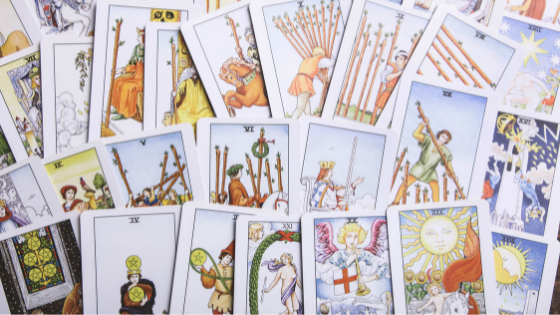
Let’s say you’ve been dabbling with using Tarot cards for your writing and you’ve been pulling one card at a time – great!!  Looking at one card can help you gain insight, get you out of your own head, and spark ideas but by adding a second (or even third) card, you can take your writing from pretty awesome to freaking amazing! 


Look at each card individually first

Grab your favorite Tarot deck, shuffle and pull one card at random.  Spend some time looking at that card and see what comes up for you.  Look at the background, foreground, what the “character” of the card is doing, colors, animals, etc. Note or write down everything you can think of.

Now, pull the next card and do the same thing.  Spend some time and note all the things about this card as it stands without thinking about the first card.  Again, look at the background, the foreground, and the character.  Write it all down. 

Watch the video below to see real world examples using one of my favorite Tarot decks for creative writing.

Look at the cards together

Here’s where the magic comes in.  Put the two cards together and start looking at what’s the same about each card.  Do they both have water elements? Are there similar colors? Does each card have animals? Are they both in the same suit? Is the character facing the same direction? Anything and everything that’s the same gets noticed first.

Then take note of what’s different.  Is one card more warm tones while the 2nd card is more cool tones? Does one have lots of animals while the other is pretty barren? You can notice anything that catches your eye that’s different about the cards.

You can then assign meaning to those things based on your writing style or genre or just what strikes your fancy.  If you’re trying to get help writing a scene, let that guide you to what’s more important.  Like I tell people, there is no wrong answer – there is just YOUR answer.  So write everything down and start connecting the dots.


Have fun

Here’s where the fun comes in – start writing by putting them into a scene together.  They can be attending the same party, waiting for the bus, be co-workers, sitting at a bar – seriously the sky’s the limit here.  Pick something that works for your genre or a setting you like and start from there.  You can type all of this, handwrite, or turn on your phone and record yourself and then get it transcribed or type it up later.

OR another fun writing activity is to start the action on one card and finish it on the other.  For example, let’s say you pulled a Queen and a King card.  You could start with whatever’s happening  


Try adding more cards

This is something you can do with multiple cards as well.  Just follow the same steps – look at each card individually, then look at them together – what’s the same, what’s different, and then group them together and start writing! 


Things to think about

If you pull a card that doesn’t have a person or character on it, can you still use the card?  Sure, just use elements from the card to either create a character or add to the scene – you can combine the elements of both cards to create one perfect setting, one weird character, or one conflict that you can then use.  

It’s usually helpful, before you start, to decide if you want to write a scene, create a character, or if you just need some inspiration to get around writer’s block.  It’s helpful, but not needed if you just want to have some fun and see what comes up for you – again, there is no wrong answer, there is only YOUR answer and your answer is beautiful – and so are you!

Did you find this helpful? You might enjoy my signature course, Turn on the Tap, happening this June – so join the waitlist by clicking here to find out more ways to use Tarot with your writing, especially for ways to deal with and get unstuck if you are dealing with writer’s block.

The form you have selected does not exist.

  • Previous
  • 1
  • 2
  • 3
  • 4
  • 5
  • 6
  • 7
  • 8
  • …
  • 14
  • Next
  • July 25, 2025 by Jennifer Gregson How to Use Headings and Flourishes in Book Formatting: A Fun Guide for Indie Authors
  • July 18, 2025 by Jennifer Gregson Book Formatting Terms Every Indie Author Should Know: Lingo 101 for Self-Publishing
  • July 18, 2025 by Jennifer Gregson Don’t Leave Your Reader Hanging: What to Include in the Back Matter of Your Self-Published Book
  • June 27, 2025 by Jennifer Gregson Front Matter 101: What Every Self-Published Author Needs Before Chapter One
  • June 20, 2025 by Jennifer Gregson How to Pick the Perfect Trim Size for Your Print Book (with Examples!)
© 2026 Jennifer Gregson | Powered by Minimalist Blog WordPress Theme