Jennifer Gregson

Young Adult Indie Author

Menu
  • Home
Menu

Tag: revisions

How To Make Starting A Novel Revision Less Stressful

Posted on May 11, 2023 by Jennifer Gregson

Starting a revision can feel very overwhelming. There are a lot of moving parts and things to think about. With any multi-step project, thinking things through and making decisions before you start can help alleviate some stress and help you start things on the right foot. 


Method

The first decision would be figuring out exactly how you’re going to do this revision. Are you going to print out the document and bind it in some way? Are you going to work directly on your computer, probably in the program you used to write the first draft? Or are you going to turn your manuscript into a PDF and upload it onto your iPad or other tablet and use an app, like GoodNotes, to annotate by hand? I have used all three methods and they work for different types of drafts, so think about how you like to work and decide now which method you’re going to use.


Type

The next decision you’ll need to make is what type of revision you’re doing. Are you going to go from Once Upon A Time all the way to Happily Ever After, revising the book in a linear fashion? Or are you going to go through the book multiple times focusing on different topics or problems? For example, you go through the whole book working on the main character’s arc and then go through again working on subplots and finally you go through and tighten up and edit descriptions.  Both of these work, it really depends on you and your book. 

Setup

The final decision I would like you to make before starting your revision is what I call the setup. How do you write best? Do you need a writing ritual where you have music, candlelight, fancy beverages and snacks? Or do you write in silence? If you used a ritual during your first draft, utilize similar things and keep notes about what works and what doesn’t work.

You should also ask yourself how you want your desk to look like, or if you even want to work at home. Maybe drafting on the couch was perfect, but now you need more focused time so you need to write from the library.  These things can all depend on how you like to work best, the draft you are on, and what’s going to help you revise your novel. 


Final Things To Think About

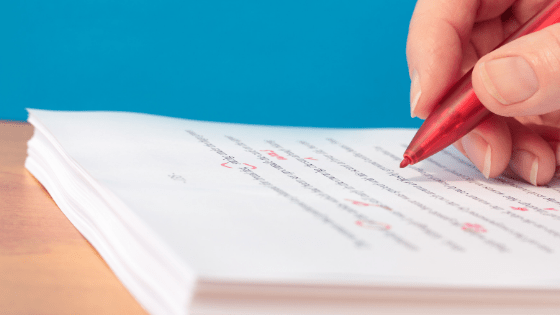
Making these three decision before you even touch your manuscript can free up a lot of brain space, a lot of worry and stress so you can sit down and get to work making your book better.   Once you have your answers, you can prepare your manuscript for the method, write up notes about the problems you need to solve, and gather all the supplies you might want to have on hand for your ritual.  Having all of this before you even sit down with that red pen is going to give you so much confidence that you’ll be raring to go!

I would love to know which method of revision you’ll be doing, so let me know in the comments below. 

The form you have selected does not exist.
How To Create An Editing Plan

Posted on November 16, 2020October 30, 2020 by Jennifer Gregson

I took a break from my manuscript and now I’m ready to dive back in for what I’m hoping will be the fourth and final round of edits.  If you read my last blog post you know I had some feedback from my editor, so I sat with that for awhile and then made an appointment to speak with my editor about a plan.

We talked about being methodical with the draft so I don’t miss anything – because I’m serious, I’m ready for this book to be out in the world – and really going as slow as I need to accomplish that goal. We also came up with some really good guidelines that I think will help other writers.

Read and create a Reverse Outline

And while you read, take notes – lots and lots of notes. I plan on doing this right in the Word doc I sent to my editor and making my notes and comments in a different color than her notes so I can see them both.  As I’m reading I will create a Reverse Outline – which is my editor’s favorite thing – and for good reason, it helps you see all the big problems right away.  A reverse outline is simply an outline you make after you’ve written your book – instead of mapping out where you want to go, it helps you see where you’ve been (or where you haven’t been). 

Once I’ve read through my book, read through all of her notes and made all of mine, and created a new reverse outline – it will be time for the next step.

Priority Checklist

Since a lot of my editor’s notes were about things that I need to fix book-wide, I’m going to make a checklist of all of those things and look over them while I’m editing.  Things like – are we in a white room or is there description? Do my characters sound the same or different? Is everyone mad or angry or is there variety?  Having one checklist to look over will keep me organized and on track to fixing those book-wide issues that I seem to be having this round.  I call it my priority checklist because these are things that NEED TO BE FIXED!!  Like major attention needs to be paid. 

Planning

Now comes the somewhat fun part, planning my writing sessions. I will look at my calendar and my digital planner and I will start working out how much time I’m going to have each week for editing.  2-3 sessions a week is usually my average with some weekend times thrown in there.  And I usually average one chapter per session so I can plan on having 30-35 days of work to get everything done.  OK! 

Side tip! Get yourself a reward system — use stickers for each day you do your writing and after so many stickers give yourself a treat – either a day off, or a fancy coffee, or time with YouTube.  Make this part fun!

Start working and writing

Once I have my notes, my general checklist, and my plan it’s time to actually start. I will open up the Word Doc and my Scrivener file and  get to work – little by little, fixing each chapter. I read through the notes from me and my editor and fix those first.  Then I’ll go through the checklist and make any and all changes to make sure my chapters are near perfect.  I’m hoping I can get one chapter done per editing session but some chapters might need more sessions so I can adjust as I go.  Try to remain flexible with your own plan – things happen.

Final read through

Since I would like this to be my last major edit, I will do a final read through at the end and run a spell check to catch any glaring errors before sending it back to my editor.  Whew!  That was a lot of steps, but when you want to do something right you need to buckle down and do the work, right?  Right!

Have you ever edited a major project? A book, or large term paper perhaps?  What were your steps?  What are you still curious about in terms of editing?  Let me know in the comments below or email me and I’ll get back to you with my answers.

A Few Of My Favorite Things…When I Write

Posted on January 13, 2020 by Jennifer Gregson

It is now firmly into 2020, almost the middle of January and you know what that means? It’s time to get some writing done!

As I gear up to start revisions again I thought you might like to see a list of the things I need to start writing.

☕️ Coffee – mmmm, coffee

📕 My beat-up project notebook (see image – this thing has been in numerous bags and flung all over my desk/office area)

🖊 Various blue pens – my pen color of choice for most things (like I’m lowkey upset that the emoji is a black pen)

☕️ Coffee – ok, I’m all set up, I’ll grab a 2nd cup

🎼 Music, I actually created a playlist specifically for this revision/draft to help get me into the mind of not one but two teenage girls

💻 Scrivener and GoogleDocs – I did a lot of my outlining and pre-writing for this draft over in GDocs so I could share with my Editor/Writing Coach but now I need to get those notes back into Scrivener where I do most of my actual writing

☕️ Coffee – can never have too much!

Are you a writer or creator of some kind, tell me in the comments below what you need to start working on your projects?


The form you have selected does not exist.

  • July 25, 2025 by Jennifer Gregson How to Use Headings and Flourishes in Book Formatting: A Fun Guide for Indie Authors
  • July 18, 2025 by Jennifer Gregson Book Formatting Terms Every Indie Author Should Know: Lingo 101 for Self-Publishing
  • July 18, 2025 by Jennifer Gregson Don’t Leave Your Reader Hanging: What to Include in the Back Matter of Your Self-Published Book
  • June 27, 2025 by Jennifer Gregson Front Matter 101: What Every Self-Published Author Needs Before Chapter One
  • June 20, 2025 by Jennifer Gregson How to Pick the Perfect Trim Size for Your Print Book (with Examples!)
© 2026 Jennifer Gregson | Powered by Minimalist Blog WordPress Theme