Jennifer Gregson

Young Adult Indie Author

Menu
  • Home
Menu

Tag: writing advice

How to Overcome Writer’s Block in Every Stage of the Writing Process

Posted on April 11, 2025 by Jennifer Gregson

Writer’s block. Just the phrase can make us cringe. But let’s be real—writer’s block isn’t always burnout. Sometimes you’re cruising along, words flowing like a dream, and then BAM! You hit a wall. You stare at your screen or notebook, and nothing. Nada. Zero creative juice.

As a young adult indie author with three books under my belt and a new urban fantasy series in the works, I’ve met that wall more times than I can count. The key? Understanding that writer’s block looks — and feels — different depending on what stage of the writing process you’re in. Here’s how I tackle it.

Drafting Phase: You vs. the Blank Page

This is the “high energy” phase where you’re building worlds, getting to know characters, and weaving plot threads. Until it stops.

Tips to get unstuck:

  • Journal from your character’s POV. Choose one of your main characters and write a diary entry about the scene before the one you’re stuck on. No pressure—this is just for you.
  • Interview your character. Ask them why you’re stuck. Seriously, they might surprise you.
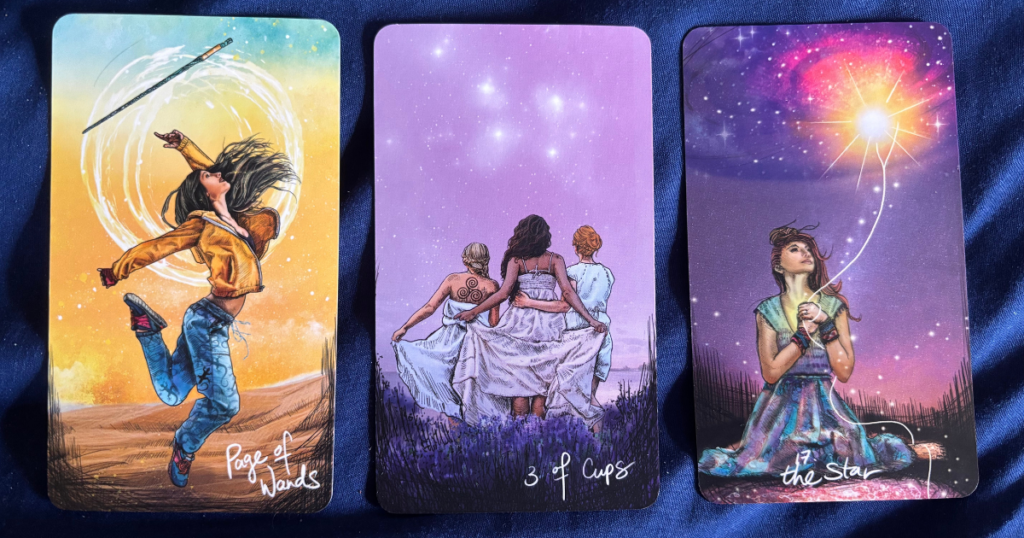
  • Use tarot cards for inspiration. Pull 1-3 cards and use the imagery as a prompt. Even if you never use what you write, it might open something up.
  • Find random writing prompts. Whether from Google or a helpful AI (hi 👋), a new scene—even one unrelated to your WIP—can loosen things up.
  • Permission to take a break. If it feels more like burnout, revisit that idea and rest without guilt.
Editing/Revising Stage: Brain Fog Meets Perfectionism

You’re not creating from scratch, but that doesn’t mean the words flow easily.

Creative side-steps to re-engage:

  • Build playlists for your book’s vibe.
  • Make a vision board or mood board. Pinterest, magazines, whatever works for you.
  • Sketch maps—whether your setting is a fantasy realm or a real-life city.
  • Act out scenes. Get silly, record voice memos, or rope in a writer friend over Zoom for impromptu roleplaying.

Production Phase: When the Fear Creeps In

By this point, your book is nearly done. Formatting, keywords, launch prep—it’s a different kind of creative block: decision fatigue, imposter syndrome, and fear of failure or success.

Reconnection tips:

  • Write a love letter to your book. Not just your characters, but the journey—from first idea to now. Remind yourself why this book matters.
  • Re-read parts you’re proud of. Even holding a printed draft in your hands can bring the spark back.

Final Thoughts

Writer’s block doesn’t mean you’re not a real writer. It just means you’re human—and writing is a creative, emotional process. The more you understand your rhythm and needs during each phase, the more equipped you’ll be to navigate the stuck spots.

So what about you? Do you approach writer’s block differently depending on where you are in the process? I’d love to hear your favorite tips!
The Worst Writing Advice For Writers I’ve Heard

Posted on July 13, 2022July 5, 2022 by Jennifer Gregson

Here are three terrible pieces of writing advice I hear most often…and how to avoid them.

Write Everyday

I’ve heard this for years and in all kinds of places, and for me, it did not work. It did cause me to burn out and stop writing for weeks and months at a time, because I was simply too exhausted.

To avoid this, I think it’s better to look over your schedule – either weekly or monthly – and see where you have time to schedule writing and then when you have the most energy to dedicate to your writing.  Personally I believe it’s better to consistently write only 1-3 times a week rather than try to write every day, start off strong, then flame out because you were just too tired to keep up with the schedule.

Just Start

So in the writing world, there are usually plotters and there are pantsers

The plotters are the ones that have the very, very, very detailed outlines of pages and pages and pages. The pantsers just go by the seat of their pants and they just start.

Both camps believe they are right, that they have the right way – and maybe for them, they do, but I personally like to have the middle ground, which doesn’t necessarily have a name, although I have heard it called plotser (not sure I love that).

For me, I figure out what information is needed so I know how to start, how to end, and some juicy scenes in the middle to get me from Point A to Point B.  I also need to know my characters and then I’m pretty much ready to start my first draft.  This will be different for every writer, so you will need to experiment and play to see what feels “just right” for you.  

Note…if you need to stop at some point during the first draft to flesh out some more scenes or more characters, I think that’s perfectly fine.

Edit As You Go


This, for me, is the absolute worst advice I’ve ever heard – so please, just don’t.  I have seen this stop writers from finishing their first draft way too many times.  They start obsessing over that first chapter, or the beginning, trying to get everything perfect that they never get to the end.  


Fixing the occasional typo, or having some great idea when you’re finishing up a chapter that will help that particular chapter, isn’t what I’m talking about.  I’m talking about spinning your wheels working on the chapters you’ve already written because you’re not sure how to end the story or your characters start doing things that feel out of your control.  Writers that do this think if they get the beginning just right that the ending will come and I’ve never seen it work.


My first advice to alleviate this problem is have somewhere you can keep notes for revision. It can be in the document itself, a separate document, or a writer’s notebook.  When you have ideas about how to make your beginning better because of something you just wrote in the middle, write it down and keep going. My other advice is to see where you are when you get stuck and want to keep revising previous chapters and where you want to go and then start writing as if your book was exactly how you want it – you can always fix things and make things work later. 


What’s the worst piece of writing advice you’ve heard? Let me know in the comments below.

  • July 25, 2025 by Jennifer Gregson How to Use Headings and Flourishes in Book Formatting: A Fun Guide for Indie Authors
  • July 18, 2025 by Jennifer Gregson Book Formatting Terms Every Indie Author Should Know: Lingo 101 for Self-Publishing
  • July 18, 2025 by Jennifer Gregson Don’t Leave Your Reader Hanging: What to Include in the Back Matter of Your Self-Published Book
  • June 27, 2025 by Jennifer Gregson Front Matter 101: What Every Self-Published Author Needs Before Chapter One
  • June 20, 2025 by Jennifer Gregson How to Pick the Perfect Trim Size for Your Print Book (with Examples!)
© 2026 Jennifer Gregson | Powered by Minimalist Blog WordPress Theme