Jennifer Gregson

Young Adult Indie Author

Menu
  • Home
Menu

Category: Writing

How I Develop Characters: From Concept to Creation

Posted on September 27, 2024September 27, 2024 by Jennifer Gregson

When I sit down to write a new story, the first thing I think about is the characters. For me, they’re the heart of every story, and I like to build them up in layers, starting with a simple question and growing them into fully fleshed-out people.

Starting with a Question

Most of my stories begin with a “what if” question. What would happen if someone was born into a famous flying circus family but was terrified of heights? Or what if a teen girl woke up one day with magical powers, and her mom wasn’t surprised at all? These kinds of questions spark my curiosity and start shaping the bones of my characters.

The question not only sets the foundation for the plot, but it also helps me think about who my main character is and how their internal struggle will drive the story forward.

Using Tarot to Create Characters

Once I have my “what if,” I turn to one of my favorite tools for character development: tarot cards. Tarot has always been a creative tool for me, and I use it to dive deeper into who my characters are.

Because I write YA, I know that most of my characters will be high school or college-aged and usually girls. But when it comes to their deeper traits—like what they look like, what their interests are, and what makes them tick—I pull a card or two to guide me. The tarot helps me figure out their quirks, strengths, and weaknesses. It’s a way to get creative and let the cards guide me toward traits I might not have considered. Sometimes a card gives me a hint about their hair or eye color, while other times it gives me insight into their personality or history.

Pinterest and Casting Characters

With some basics in place, I move on to creating a visual representation of my characters. I head over to Pinterest and start putting together a mood board for the story. This is where I start to “cast” my characters.

Sometimes I’ll use images of famous people—like Harry Styles or Maya Hawke—to give me a face for my characters. Other times, I find inspiration from models or random photos of people who fit the vibe I’m looking for. Seeing them visually helps solidify the character in my mind and brings them to life in a way that goes beyond just words on the page.

Defining Their Core: Desires, Flaws, and Growth

Now that I have a solid image of my character, I start diving deeper into who they are. I ask myself a series of key questions:

  • What do they want?
  • What do they need?
  • What is their fatal flaw?

These questions are crucial because they define the character’s arc in the story. What they want is usually a surface-level goal, but what they need is often deeper and tied to their personal growth. Their fatal flaw is the thing that stands in their way, and it’s what makes them human. I also make sure to define their quirks and behavior traits, things that might not be obvious at first but make them feel real. These are the details that I hope will make readers fall in love with them, or at least feel something strong about them—whether that’s admiration, empathy, or even frustration.

Journaling as My Characters

Once I have the basics in place, I dive into my first draft, letting the characters guide me through the story. After the draft is complete, I take some time to journal as if I am the characters themselves. I write as though I’m inside their heads, allowing them to tell me what I might’ve missed, what I need to change, and how they would react in certain situations.

This exercise is especially helpful because I write in first-person POV, meaning I’m often focused solely on the main character’s internal thoughts and perspective. Journaling in the voice of my side characters helps me connect with them more deeply and craft dialogue that feels authentic to each one’s unique personality.

Refining Through Each Draft

Every draft gives me the opportunity to understand my characters better. It’s during these rounds of revision that they start to feel like real people—people with flaws, strengths, and depth. I want my readers to experience these characters as fully human: to fall in love with them, to hate them, to root for them, or to want to see them fail. My goal is always to make them relatable and multi-dimensional, not perfect, but real.

For my current work in progress, World Ablaze,’ this process has been especially important. With a cast that includes Ruby and her parents, the girls with elemental powers, and Ruby’s best friend Sophie, there are a lot of personalities to manage. But taking the time to develop each one individually, from tarot readings to journaling, ensures that they all feel fully realized by the time I’m done.


This process of developing characters has become one of my favorite parts of writing. It’s like meeting new people, getting to know them little by little, until eventually, they feel like old friends (or enemies). And I hope when readers dive into my stories, they’ll connect with these characters in the same way I do.

The Art of Editing: What I’m Focusing on in My Next Book

Posted on September 9, 2024 by Jennifer Gregson

Second-draft land is a weird place. After the whirlwind of writing a first draft, you might think the second draft would be easier. But, as I’ve learned, it’s anything but.

In the first draft, you’re essentially telling yourself the story—letting your imagination run wild and figuring things out as you go. But in the second draft, the real work begins. You kind of know where you’re going now, but you’ve got holes to fill, changes to make, and things to fix. This is when you look back at your first-draft self with a mix of compassion and frustration, sometimes even asking, “WTF were you thinking?”

Take my current project, for example. In the first chapter, my main character gets dumped. I originally named the guy Dylan, but then I realized—his family is from Colombia, and they moved to New York just before he was born. They wouldn’t have named him Dylan! So, back to the drawing board I went and I changed it to Diego. (Thank goodness for Find and Replace tools)

Then, in the second chapter, I had my main character, Ruby, wake up, go to school, and head to swim practice—all in the span of three sentences. That obviously wasn’t going to work, so I had to add about 300 words just to make that opening flow. Like, did she want to talk to her parents where her parents even home, how was she feeling after getting dumped, was she worried about seeing him at school? 

This book also has magical elements, and I had no idea what I was doing in the first draft. So before I even touched the second draft, I had to sit down and figure out where the original magic came from, why the villain is so angry and how he got his powers, where everyone’s been hiding (spoiler: time portals and alternate universes are involved), and why the boots they wear are so essential to their tech. It was a lot to sort out!

But second drafts are where the real magic happens. This is where you uncover those juicy details that you can drip in earlier to delight your readers, where you truly get a sense of your characters, and, for me, where I tighten up the sense of place and how everything fits together.

The journey doesn’t end here, though. I’m going to be working on this book and refining it over the next few months. If you want to follow along with my progress, join my newsletter to stay updated on all the drafts, edits, and discoveries along the way.

From Draft to Publication: My Writing Journey

Posted on September 6, 2024September 6, 2024 by Jennifer Gregson

Every book starts with a single spark of inspiration. For me, it began with a simple question: What would happen if a girl was born into a famous flying family, but she was scared of heights? That idea lingered in my mind, and soon enough, Roz was born—the protagonist who would lead me on a winding, challenging, and ultimately fulfilling journey.

Draft One: The Beginning

With the idea in hand, I started drafting the story. Roz took shape, and alongside her was Louise, the daughter of a famous clown family. The story bounced back and forth between Roz’s world and Louise’s, weaving together two different lives within the circus. But as the draft grew, so did my doubts. Something wasn’t clicking, and deep down, I knew the story needed to evolve.

Draft Two: A Major Change

That’s when my editor stepped in with a suggestion that would change everything: focus more on the big three-ring circus where Roz auditions at the end of the original draft. It meant scrapping Louise’s storyline and bringing more attention to the heart of Roz’s world—the circus. This shift brought the story back to the drawing board, forcing me to rethink the direction of the narrative.

Draft Three and Four: Finding the Flow

After revising and expanding the circus setting, I finally felt like I had a more cohesive storyline. Roz was stronger, the world felt more vivid, and the supporting characters were coming into their own. But there was still something missing—especially in the ending. My editor came to the rescue once again, offering guidance on where the story could go and how to bring the narrative full circle. With those new insights, I dove back into revisions, determined to find the perfect conclusion.

Draft Five: The Final Version

After many drafts and countless hours of rewriting, I finally had a book that felt complete. The journey of this book wasn’t easy—writing rarely is. It’s about pouring your heart and soul into every word, figuring out what works, and pivoting when needed. Through all the changes, revisions, and rewrites, I held onto that initial spark—the reason why I started writing in the first place. And although Roz is no longer afraid of heights, she spoke to me through the whole process begging me to tell her story and I’m so glad she did!

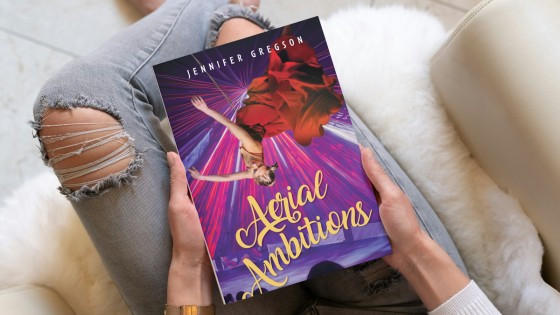
Now, I’m thrilled to share that my book is available for you to read. Check it out on Amazon, where you can read it for free with Kindle Unlimited.

How To Make Starting A Novel Revision Less Stressful

Posted on May 11, 2023 by Jennifer Gregson

Starting a revision can feel very overwhelming. There are a lot of moving parts and things to think about. With any multi-step project, thinking things through and making decisions before you start can help alleviate some stress and help you start things on the right foot. 


Method

The first decision would be figuring out exactly how you’re going to do this revision. Are you going to print out the document and bind it in some way? Are you going to work directly on your computer, probably in the program you used to write the first draft? Or are you going to turn your manuscript into a PDF and upload it onto your iPad or other tablet and use an app, like GoodNotes, to annotate by hand? I have used all three methods and they work for different types of drafts, so think about how you like to work and decide now which method you’re going to use.


Type

The next decision you’ll need to make is what type of revision you’re doing. Are you going to go from Once Upon A Time all the way to Happily Ever After, revising the book in a linear fashion? Or are you going to go through the book multiple times focusing on different topics or problems? For example, you go through the whole book working on the main character’s arc and then go through again working on subplots and finally you go through and tighten up and edit descriptions.  Both of these work, it really depends on you and your book. 

Setup

The final decision I would like you to make before starting your revision is what I call the setup. How do you write best? Do you need a writing ritual where you have music, candlelight, fancy beverages and snacks? Or do you write in silence? If you used a ritual during your first draft, utilize similar things and keep notes about what works and what doesn’t work.

You should also ask yourself how you want your desk to look like, or if you even want to work at home. Maybe drafting on the couch was perfect, but now you need more focused time so you need to write from the library.  These things can all depend on how you like to work best, the draft you are on, and what’s going to help you revise your novel. 


Final Things To Think About

Making these three decision before you even touch your manuscript can free up a lot of brain space, a lot of worry and stress so you can sit down and get to work making your book better.   Once you have your answers, you can prepare your manuscript for the method, write up notes about the problems you need to solve, and gather all the supplies you might want to have on hand for your ritual.  Having all of this before you even sit down with that red pen is going to give you so much confidence that you’ll be raring to go!

I would love to know which method of revision you’ll be doing, so let me know in the comments below. 

The form you have selected does not exist.

How To Write Better Dialogue Using This Easy Tarot Prompt

Posted on April 26, 2023 by Jennifer Gregson

Do you need some inspiration? 

Are you in a writing slump or maybe coming out of writer’s block? 

Or are you just in between projects and want something fun, something that’s easy, something that involves tarot cards? 

Great! Then let me show you my easy and fun tarot dialogue writing prompt. 

And if you’d rather watch me go through the exercise, then you can click here!!

Grab Your Favorite Tarot Deck

I find it most helpful to take out any cards that don’t have people, or have too many people, but you might also find that you’re just not in the mood to write as kids or the devil, and that’s okay. Once you take out all the cards that won’t work for you, shuffle the rest of the stack and pull two cards.

Note, once you get the hang of this exercise you can totally pull more than two cards.


Create Your Characters

For each card, take a few minutes and come up with your characters:

    • Who are these people?
    • What do they do for a living?
    • Where do they live?
    • What things do they like?

These don’t have to be too in depth – in fact, it might be helpful to set a timer so you can do this quickly.

Once you have your characters, think of a setting that might work for both of them. A bus stop, school or work, and a party are all good places to start, but think about your favorite genre and what might make the most sense for your cards and characters.

And finally, think about what each character wants in this scene. For my example in my video one character wanted to flirt with the other and the other character wanted to be left alone.  Instant conflict!! 


Write Your Scene

Now it’s time to grab your journal or open a document online and start writing.  You can write out the scene as if it were a chapter in a novel with scene setting and description or you can just concentrate on the dialogue and write like this was a play.


CHAD: So, what are you reading?

ELEANOR: Psych 101, doing some studying.


Ways You Can Use This Prompt

Yes, this prompt is super fun as a general writing exercise for when you’re in between projects or to even help brainstorm a new project, but it’s also really great when you’re stuck in your novel.

Grab the tarot cards you used to create your characters, or choose them now, and do this same exercise – but I would put them in some wacky setting not used in your book. So if you’re writing YA contemporary and most of your scenes are set in school, put them somewhere really wild. Maybe they all went on a scavenger hunt or they’re trapped in an escape room and see how they all react. It can give you some really amazing insights and will hopefully unlock some things for your book.

If you like these kinds of tarot writing prompts, join my newsletter for even more and receive my free training, Novel Narrator, all about creating characters using tarot cards immediately. 

The form you have selected does not exist.

How to stop feeling like YOU are not good enough

Posted on December 15, 2022December 15, 2022 by Jennifer Gregson

Does your inner critic say really mean things to you? And has this stopped you from writing because you’re afraid that your inner critic is telling the truth? 


Who or what is the inner critic exactly?

It’s that inner negative voice that tells you things like: You can’t, you shouldn’t, why bother, don’t, what are you thinking? You call yourself a writer? It feeds off of our own internal fears and amplifies them.  It can go by other names as well – the inner editor, the inner mean girl, gremlins, or even just a pain in the butt.  

These fears – fear of success, fear of failure, fear of internet trolls or bad reviews, and the fear of being found out aka imposter syndrome – can all cause that inner voice to be very very loud, feeding off our fears and making us feel like crap. And they can cause us to stop writing – even going so far as to cause writer’s block, because when we don’t feel good about our own writing, why are we going to sit down and do it?

Something I hear writers say a lot is that they don’t feel like they are good enough to write the story idea they have and I’m here to tell you that that is simply NOT TRUE – that’s just the inner critic being very loud and vocal and there are ways to stop being haunted by this voice, and work with them – even becoming friendly with them. 


Personifying the inner critic

The act of personifying that inner negative voice puts the inner critic outside of ourselves rather than inside ourselves. It gives you a focal image, which I’m gonna talk about in a minute, so that you can talk to them, find out a little bit more about why they’re there, why they’re talking to you in this manner, what the fear is all about, and how to work with them rather than against them. Because once we put that inner critic out here away from us, not in our own head, then we can deal with them without shame. We basically create a character and then it’s not about our voices, it’s about their voices. 


Tools you can use to personify the inner critic

First, grab a notebook or journal and start writing down things the inner critic says to you, how it makes you feel, and what they might look like. Be very, very gentle with yourself during this process and give yourself ample time. Don’t rush this process, really sit with it and let things come up organically as you go about your writing life. 

Once you have some stuff written down, look over what they might look like and decide how you want to personify them? I like to choose a Tarot card, but you can also use Oracle cards, Goddess cards, pictures from magazines, or even Pinterest. Choose an image that resonates with you and give them a name.  I call mine Dude, so no need to be super serious here with this step. 

Now you have someone you can talk to. Create a character worksheet – like you do with your novel’s characters – and then write them a letter asking them why they are here, what they want you to know, and why they talk to you the way they do.  Once you have your letter, allow yourself some time to write a letter from their point of view answering you. This is the start of forming a friendship, a relationship, with your inner critic. 


Need help with this?

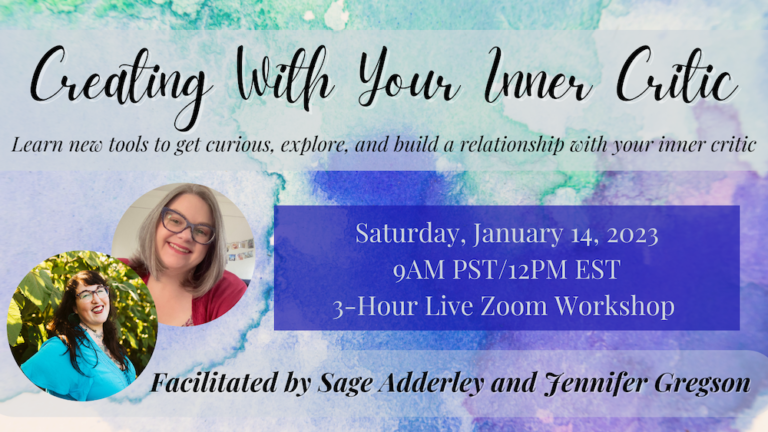
I am co-teaching a live Zoom workshop with my friend and fellow book coach, Sage Adderley, in January all about Creating With Your Inner Critic. 


Sage will be teaching you how to process emotions, thoughts, feelings and limiting beliefs using an intentional creativity process called Cosmic Smash Booking. She’ll be taking you on a journey with the relationship you currently have with your inner critic, that voice that tells you that you are no good, why bother, you’ll never be a writer. Cosmic Smash Booking goes beyond journaling to a spiritual release of emotions so you can move through them, work with them, and move past them.


For my portion of the workshop, I’ll be teaching how to use Tarot, Oracle, or other images to personify that inner critic so you can start talking to them, building a healthy relationship with them rather than reacting to them, so you can start writing without the inner critic stopping you from the brilliant words that I know are inside you. 


Creating With Your Inner Critic
will allow you to trust your own intuition so you can get unstuck and start that book that’s sitting on your heart and in your soul. 


Join us on Saturday, January 14, 2023 at 9 AM PST / 12 PM EST for a 3-hour Live Zoom workshop – valued at $597, it’s yours for $147 until December 31st so sign up below!!

Join Creating With Your Inner Critic Workshop HERE

NaNoWriMo 2022: You Wrote 50,000 words! Or Did You?

Posted on November 30, 2022December 15, 2022 by Jennifer Gregson

As we finish up another round of National Novel Writing Month, I’m here to answer some of your most burning (and frequently asked) questions.


I didn’t hit 50,000 words, now what?


It’s okay, you didn’t hit NaNo’s goal, but guess what? You probably created a writing habit this month, you probably wrote more this month that you might have all year.  The big question to ask yourself here is what did you learn about yourself as a writer?   And then you should celebrate what you did accomplish – seriously, I don’t care if you wrote 100 words or 49,999 you should celebrate. I know I’m proud of you, and you should feel proud of yourself too.


I did hit 50,000 but I’m nowhere near the end of my story, now what?


If you are feeling burnt out from this past month of frenzied writing, it’s okay to take a short break – maybe a week – and then come back and keep writing. If you do need that time off, make sure you schedule your next writing session so you can keep up your momentum. 


If you aren’t feeling burnt out, you are rocking and rolling, continue writing and finish your story.  Most books aren’t complete at 50,000 words. I write Young Adult and that’s usually my first draft goal, but my books end up being closer to 70K by the time I’m done.  It’s totally genre specific. 

I hit 50,000 and my story seems complete, now what?


Celebrate!  I know I’m big on celebrations, but for good reason – we need to take time to acknowledge how awesome we are, and writing 50,000 words in one month is huge so plan something that will make you feel amazing and put it on the calendar now!


Then, you can make revision plans.  Personally, I like to give my first draft a rest before I revisit it so if you can, take at least 2-3 weeks off (a month is even better) and then come back and read through what you wrote. 


Just a side note here, but I’ll be doing a whole REvision series starting in January so if you’d like to wait until then, please do.


As you read through your first draft, make sure you have somewhere to take notes about what changes you’d like to make, questions you might have for me, or new ideas you want to incorporate based on what happened during the writing process.


Those are the big three questions I get about the ending of NaNoWriMo, but I have a question for YOU – tell me in the comments below, how did you feel this month and what are your next steps? I would love to know so I can best support you with my blog posts and YouTube videos. 


Seriously, go celebrate yourself – buy a book or a coffee or take yourself out to dinner – you did something great this month and I’m very, very proud of you!!

The form you have selected does not exist.

NaNoWriMo 2022: Five (Unexpected) Ways to Increase Your Word Count

Posted on November 23, 2022December 15, 2022 by Jennifer Gregson

How’s your word count looking as we round into the final week of NaNoWriMo? Is it a little lower than you’d like? Here are five unexpected (and fun) ways to increase your word count to help you reach your 50,000 word goal. 


Tarot Cards

Of course, this is my number 1 thing to grab when I need to up my word count. Choose your favorite deck, give it a shuffle and flip over 1-3 cards. Then just start describing the cards – starting with things like:

  • What is the figure doing?
  • What are they wearing?
  • What action are they taking? Or not taking?
  • What’s happening in the background?
  • What’s happening in the foreground?

Now, challenge yourself to use these aspects in the scene you are writing. For example, you pull a knight card and the figure is on a horse.  Can you add horseback riding to the chapter you are writing? Can you have your main character find a horse? To see more examples, make sure you watch the YouTube video below, I pulled two cards from the Modern Witch Tarot deck and had some fun figuring out what I could add to a story.


Describe all the things

If I sit down to write, and have no idea how to start, I spend anywhere between 200-500 words describing the room that my characters are in. I’ll start with things like curtains, couches or other furniture, how the room smells, the temperature, and then move on to how the characters themselves are dressed.  If I’m still stuck, I’ll finally move on to how the characters are feeling about the story so far, and how they’re feeling about each other.  Usually at this point, I’m off and running with new ideas for what to write. 


Use all 5 senses

In a similar vein, I will write down various ways to use the five senses on a piece of paper.  Say, losing one’s glasses for sight or having them find a new pair of sunglasses. For sound, they could be listening to the news or dealing with construction noise that makes it hard to concentrate.  Then once I have my list, I’ll randomly choose one from each category and challenge myself to include those in the scene or chapter that I’m writing.  You can also do this with feelings, body parts, actions, locations.  Come up with the category types, fill in the blanks, randomly choose, and get to writing.  It becomes a fun game that you play with yourself.


Element of surprise

Grab your favorite, or closest book, and flip open to a random page.  Read and find a piece of dialogue and challenge yourself to use that dialogue in your book and make it make sense.  You can do this with other elements on the page, random description or just any line – regardless of what type it is.  You can also do this with your playlist, the first song that comes on, look up the lyrics and choose one line to add to your own novel.  You can do this every time the songs change too…which is harder, but more fun!


Lean into your character’s obsessions

What is one thing that your main character is really into? Spend 10 minutes researching the thing, sport, activity, song, book, TV show, etc. – and Wikipedia totally works for this, it isn’t school – and then try to use all that information in the scene you are writing. For example, the main character of my NaNoWriMo novel is into swimming, so I could look up info about chlorine, types of strokes, who won various Olympic swim meets, and then have her info dump to someone else all the information.  Want even more words? Have your character talk to someone who’s on the opposite side and let them argue.  So say your main character is into video games and the other character hates video games – let them fight it out for a while. You get character development, some fun dialogue, and extra words.  It’s a win-win!

So those were five unexpected ways to increase your word count, while having some fun writing. Which one was your favorite? Which one are you going to try this week? Let me know in the comments below and I hope you’ve enjoyed NaNoWriMo this year, and that you can finish strong!

NaNoWriMo 2022: 10 Ways I Encourage Myself to Keep Going 

Posted on November 16, 2022 by Jennifer Gregson

Has your NaNoWriMo novel lost its luster? Are you feeling a little frustrated by your word count or lack thereof? No you’re wondering if you should just quit?


Please don’t!!


Instead use these ten ways to encourage yourself, give yourself some much needed motivation, and incentive to keep going.


The word bribery usually gets a bad rap because it usually means you’re doing something illegal, right? You’re bribing someone you shouldn’t. But self bribery, I think, works really well, especially when you get to the point in your novel writing where it starts to feel a little drudgery, a little drudging through just to get through.


Music


I love writing with music. I create a playlist for almost every single manuscript I write, but if you don’t like writing to music or you don’t need that interference when you write, then you can do music after the fact and have a dance party. Getting to listen to your favorite jam – whether it be Lizzo or Taylor Swift – and dance around your living room can motivate you to finish writing. Of if you do create a playlist, listen to it before you start writing to hype yourself up, giving your brain a clue that you’re about to write something amazing.


Movies and TV


I’m assuming you have at least one streaming service, or a stack of DVDs and Blu-rays somewhere so pick a few and use them to reward yourself after each writing session.  You could do one TV show after each session and a longer movie after several sessions in a row. Do what works best for you and your schedule, but having something to look forward to really helps when you don’t want to sit down at your computer. 


Video Games, Books, and Magazines


This tip also works for other things – not a TV or movie person, that’s fine. Use the same concept with making time to read or play your favorite video game. Say, I’m going to write for 30 minutes, then play for 30 minutes.  We don’t always make time during our day for the things we enjoy, so use those things as rewards for all your hard work. 


Food & Beverages


You can always have something to drink or eat when you write – your favorite tea in your favorite mug or something crunchy to snack on OR you can use food as a reward for after you write.  I like to have a little chocolate after each session. You can also go to your local coffee place and write there, getting a holiday drink to sip on. Whatever you think is yummy is going to work – want to have a fancy yogurt or fruit salad, go for it!


Milestone Rewards


The first few things on this list were smaller rewards, things you can gift yourself after each writing session, but I also want you to think about Milestone rewards. This year for NaNoWriMo I’m doing larger items for every 10,000 words written. I’ll be buying books, a new sweater, and some new nail polish from my favorite company as my rewards but you can also do fancy clickety keyboards, new video games, or anything that makes you happy. If your budget won’t allow that – trust me, I get that! – then combine some of the smaller items and have a longer reward where you watch a movie and spend time reading. 

Surprise!


If you’d like to add an element of fun to your rewards, grab a D20 or 12 sided die and create a list of all rewards you could give yourself. Then after each writing session, you roll the die and surprise, you get a fun reward.  If you don’t have any dice, you can also put each reward on a small piece of paper and pull one each day.  Seeing what you get each day can be some excellent motivation to keep writing.


Plan a day off


This might be a bit controversial, but plan for a whole day off from your writing. If you are in the US and celebrate Thanksgiving, you could use that day but seriously any day will work.  Grab your calendar and plan a day off right now.  This works especially well if you are starting to feel burnt out, as we don’t want you to just give up right before the end. 


Share online


If you are active on social media, you can share your journey online, find some new writer friends and connect with your community.  And sharing gives you some accountability. You can get online and say you’re sitting down to write, then come back afterwards to let people know how you’re doing. If you are not on social media, or don’t feel like sharing, find a friend who will let you text them for accountability.


Join my FREE accountability group


If you don’t have any writer friends who will understand what you’re doing, then join my FREE accountability group – it’s not too late – I can help keep you on the right path, offer advice and guidance, or just be there for you when you get stuck. 


Which item above was your favorite? What is something you’re going to try?


Week 3 of NaNoWriMo can really be frustrating – it’s the week where either things are going so well you’re flying high or they suck so bad you want to hide under your covers. If things are terrible right now, please don’t hesitate to reach out for help. And just know that things will be better next week!

NaNoWriMo 2022: 6 Questions to Ask When You Lose the Plot

Posted on November 9, 2022November 8, 2022 by Jennifer Gregson

Did you follow a plot bunny? And now you are completely off track? 


Plot bunnies can be fun, they can be exciting, they can lead us to amazing discoveries, but sometimes they can also leave us lost, confused, and frustrated. Let me share with you 6 Questions that you can ask yourself when this happens so you can get back on track.


My favorite way to do this is via a Tarot spread, but you can also just ask yourself the questions as well. To see me go through this spread with my own NaNoWriMo novel, watch the YouTube video below.


You might be asking yourself, what is a Plot Bunny?  It’s an idea that refuses to leave you alone until you’ve actually followed it. And even though it does predate NaNoWriMo, they can happen a lot during those November writing sessions.


Before you tackle the six questions, ask yourself first how far off your outline you got and if there’s anything from your detour you want to keep.  Do you think you need to start completely over with where you got off track, or can you merge some of your ideas and have a better story?


Once you have that all figured out, you are ready to pull some Tarot cards or grab your journal, and find out what your Plot Bunny and Main Character are trying to tell you.


Plot Bunnies Tarot Spread

  1. What’s your bunny trying to tell you?
  2. What is your Main Character trying to tell you?
  3. How would the bunny solve this?
  4. How would the Main Character solve this?
  5. What’s one creative solution you can try?
  6. How can you move forward and get back on track?


Tips & Tricks

If you decide you need to start over and basically trash what you’ve written DO NOT DELETE those words, at least not yet. During NaNoWriMo, those words you wrote count toward your final 50,000 word count goal. I suggest moving them to the end of your document or writing at the head of each chapter that’s going to eventually get tossed: PLOT BUNNY, DON’T USE or something like that.  Then when you come back to edit, you can put those in a separate document just in case.


It’s okay to have some strong emotions around this process, getting off track and seeing that you’re going to need to rewrite 5,000 or more words can be devastating, but trust me, that wasn’t wasted effort.  Like I said above, the words still count toward your goal this month, and two it gave you some things to explore, to try out, to discover and that’s never bad – you learned what doesn’t work, sometimes writing them out needs to happen before you can see the right way to go. But be kind to yourself, remember that writing is a process, and sometimes it’s messy and painful.


Plot Bunnies can be really fun and take you to some cool places you might not have thought to explore, but if you do get off track, just ask yourself these six questions and get back to writing the story you want to write. 

  • Previous
  • 1
  • 2
  • 3
  • 4
  • 5
  • 6
  • …
  • 14
  • Next
  • July 25, 2025 by Jennifer Gregson How to Use Headings and Flourishes in Book Formatting: A Fun Guide for Indie Authors
  • July 18, 2025 by Jennifer Gregson Book Formatting Terms Every Indie Author Should Know: Lingo 101 for Self-Publishing
  • July 18, 2025 by Jennifer Gregson Don’t Leave Your Reader Hanging: What to Include in the Back Matter of Your Self-Published Book
  • June 27, 2025 by Jennifer Gregson Front Matter 101: What Every Self-Published Author Needs Before Chapter One
  • June 20, 2025 by Jennifer Gregson How to Pick the Perfect Trim Size for Your Print Book (with Examples!)
© 2026 Jennifer Gregson | Powered by Minimalist Blog WordPress Theme