Jennifer Gregson

Young Adult Indie Author

Menu
  • Home
Menu

Tag: the struggle is real

best trim size for self-published print books

How to Pick the Perfect Trim Size for Your Print Book (with Examples!)

Posted on June 20, 2025June 20, 2025 by Jennifer Gregson

When you hear the word “trim size,” your first thought might be…a haircut? But in the world of self-publishing, trim size refers to the dimensions of your book—and it’s one of the most important decisions you’ll make when preparing your print edition.

📏 What is Trim Size?

Trim size is the final size of your printed book after it’s been trimmed during the binding process. It affects how your book feels in the reader’s hands, how it looks on the shelf, how many pages it has—and yes, even how much it costs to print.

Choosing your trim size early in the formatting process is key. It impacts the design, the page count, and even how your book will be priced through print-on-demand platforms.

📚 The 3 Most Popular Trim Sizes (with Examples)
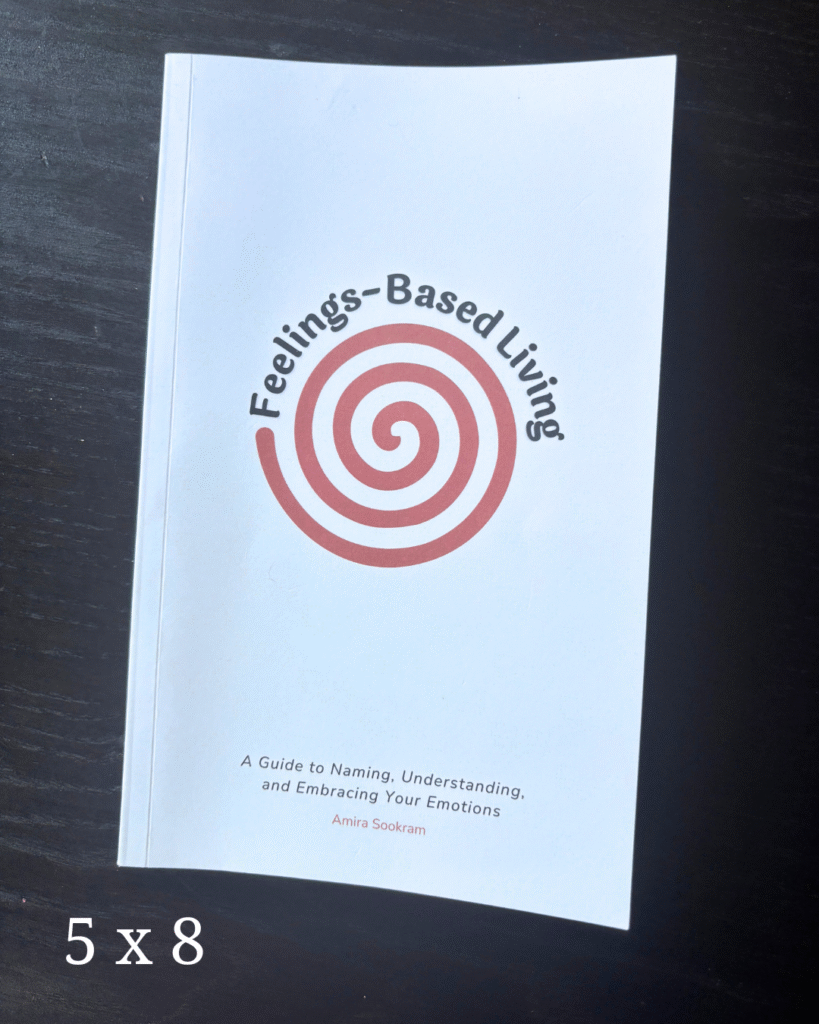
Here are the most common trim sizes for fiction and nonfiction books:

5” x 8”

Often referred to as a “pocket-size” novel. This trim size is great for:

  • Middle grade and early YA fiction
  • Nonfiction books under ~70,000 words
  • Cozy genres that benefit from a smaller, more portable format

It fits nicely in bags and feels “just right” for shorter, focused reads.

5.5” x 8.5”

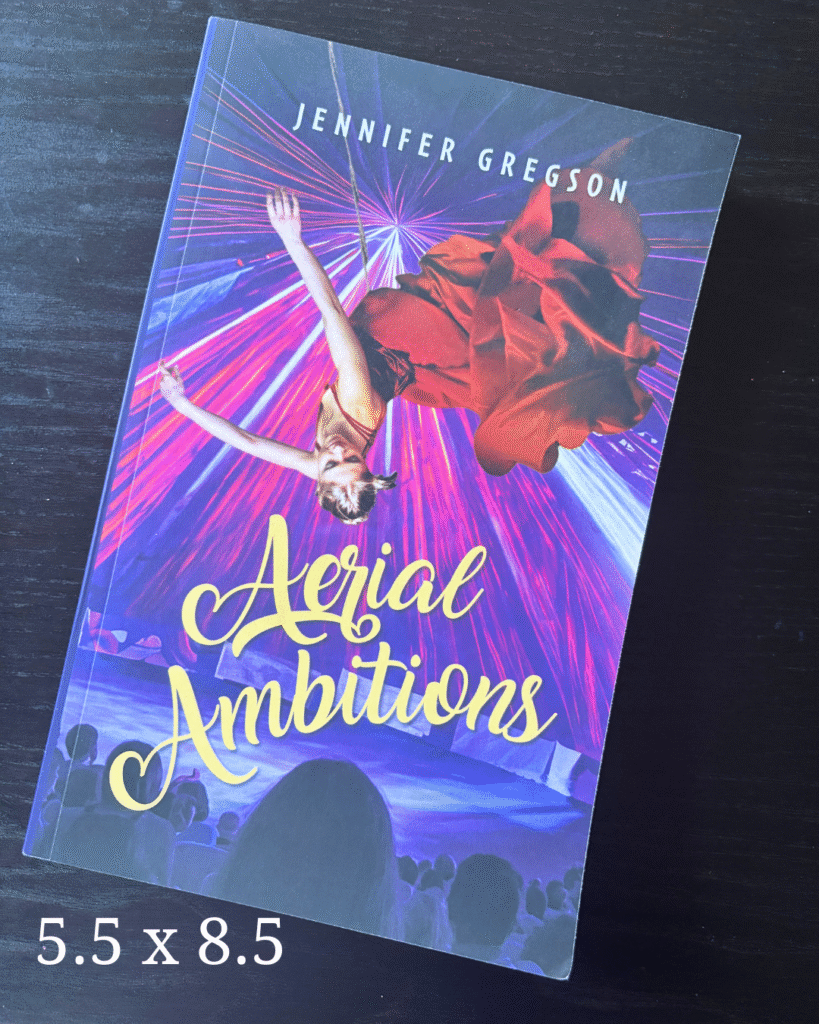
This is my personal favorite—and the size I use for all of my YA novels.

It’s:

  • Perfect for young adult, women’s fiction, and general contemporary books
  • Visually pleasing with more room on the back cover for your blurb
  • A middle-of-the-road option for page count and cost

If you’re unsure, check the trim size of your favorite books in your genre—it’s likely many of them use this size.

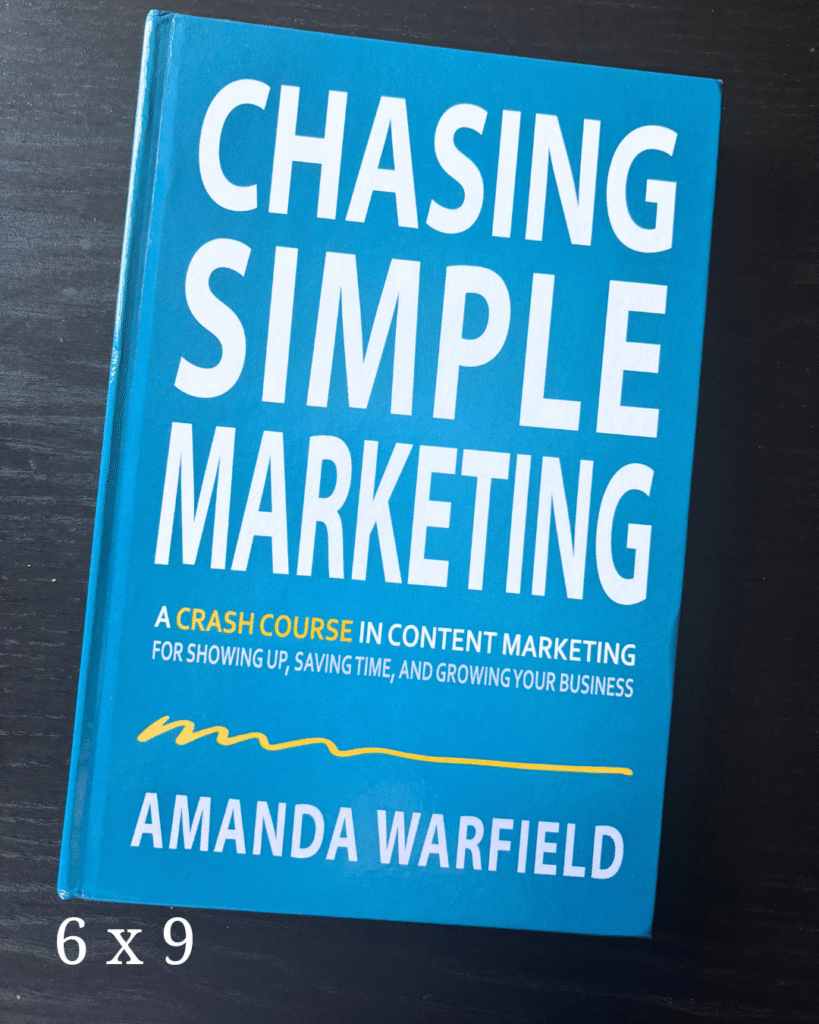
6” x 9”

A popular choice for:

  • Memoirs
  • Nonfiction with charts, diagrams, or room for note-taking
  • Fantasy or sci-fi novels that tend to run longer

This size is also ideal for hardcover versions of your book—it gives you space and a polished, professional feel.

🎨 Consider Genre & Aesthetic

Different genres often lean toward different trim sizes. Do a bit of research:

  • Visit your local bookstore and check what size books in your category use
  • Measure books you already own and love
  • Think about how you want readers to experience your book—is it cozy and portable or bold and immersive?

Also consider series consistency: if you’re planning a multi-book series, you probably want all the books to match on your shelf. Readers do notice!

💸 Trim Size Affects Cost

Print-on-demand pricing varies depending on trim size and page count. Larger trim sizes can increase printing costs—especially if you’re publishing in both paperback and hardcover.

For example:

  • A smaller book (like 5×8) typically costs less to produce
  • A larger trim size (like 6×9) may cost more but allow fewer total pages, which can balance the pricing

Always check the print pricing tools on Amazon KDP, IngramSpark, or your preferred POD platform before finalizing your choice.

✍️ When Should You Decide on Trim Size?

You don’t need to think about this during your first draft—but once you’re preparing for formatting (whether DIY or hiring help), trim size needs to be locked in. It affects layout templates, page setup, and even design choices.

🤔 What Trim Size Should You Choose?

Ask yourself:

  • What’s common in my genre?
  • How long is my book?
  • Do I want my series to have a uniform look?
  • What aesthetic am I going for?

I write YA coming-of-age fiction and use 5.5 x 8.5, but my upcoming urban fantasy might push me toward 6 x 9 for those longer word counts. I’ll decide once I’m closer to formatting!


📣 Let’s Chat

What trim size are you using? What genre do you write in? Have you found any surprising favorites while researching?

Drop a comment or send me a message! And if you’re stuck choosing or can’t find the info you need, I’d be happy to help.
Grab your free Indie Author Formatting Checklist here

How to Overcome Writer’s Block in Every Stage of the Writing Process

Posted on April 11, 2025 by Jennifer Gregson

Writer’s block. Just the phrase can make us cringe. But let’s be real—writer’s block isn’t always burnout. Sometimes you’re cruising along, words flowing like a dream, and then BAM! You hit a wall. You stare at your screen or notebook, and nothing. Nada. Zero creative juice.

As a young adult indie author with three books under my belt and a new urban fantasy series in the works, I’ve met that wall more times than I can count. The key? Understanding that writer’s block looks — and feels — different depending on what stage of the writing process you’re in. Here’s how I tackle it.

Drafting Phase: You vs. the Blank Page

This is the “high energy” phase where you’re building worlds, getting to know characters, and weaving plot threads. Until it stops.

Tips to get unstuck:

  • Journal from your character’s POV. Choose one of your main characters and write a diary entry about the scene before the one you’re stuck on. No pressure—this is just for you.
  • Interview your character. Ask them why you’re stuck. Seriously, they might surprise you.
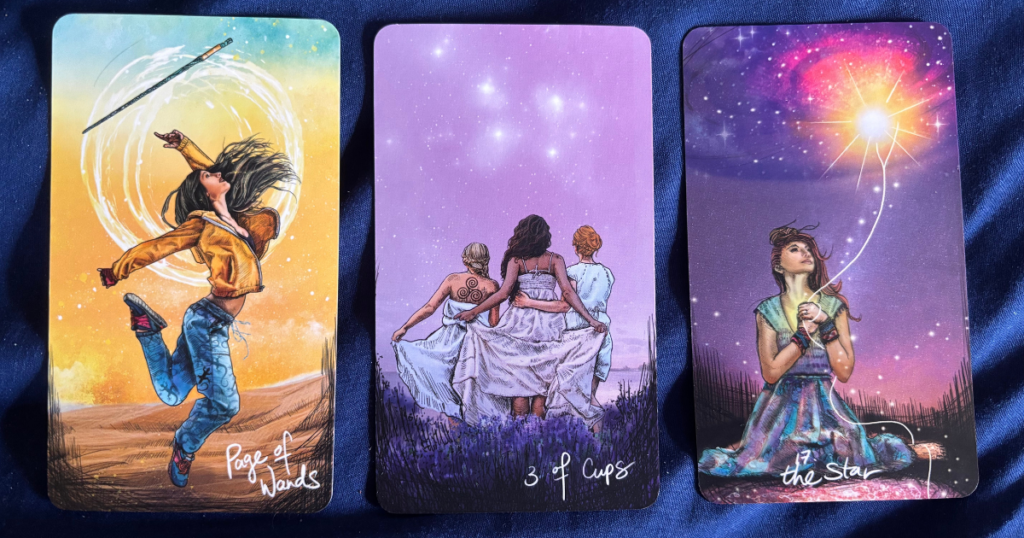
  • Use tarot cards for inspiration. Pull 1-3 cards and use the imagery as a prompt. Even if you never use what you write, it might open something up.
  • Find random writing prompts. Whether from Google or a helpful AI (hi 👋), a new scene—even one unrelated to your WIP—can loosen things up.
  • Permission to take a break. If it feels more like burnout, revisit that idea and rest without guilt.

Editing/Revising Stage: Brain Fog Meets Perfectionism

You’re not creating from scratch, but that doesn’t mean the words flow easily.

Creative side-steps to re-engage:

  • Build playlists for your book’s vibe.
  • Make a vision board or mood board. Pinterest, magazines, whatever works for you.
  • Sketch maps—whether your setting is a fantasy realm or a real-life city.
  • Act out scenes. Get silly, record voice memos, or rope in a writer friend over Zoom for impromptu roleplaying.

Production Phase: When the Fear Creeps In

By this point, your book is nearly done. Formatting, keywords, launch prep—it’s a different kind of creative block: decision fatigue, imposter syndrome, and fear of failure or success.

Reconnection tips:

  • Write a love letter to your book. Not just your characters, but the journey—from first idea to now. Remind yourself why this book matters.
  • Re-read parts you’re proud of. Even holding a printed draft in your hands can bring the spark back.

Final Thoughts

Writer’s block doesn’t mean you’re not a real writer. It just means you’re human—and writing is a creative, emotional process. The more you understand your rhythm and needs during each phase, the more equipped you’ll be to navigate the stuck spots.

So what about you? Do you approach writer’s block differently depending on where you are in the process? I’d love to hear your favorite tips!

Are You Burned Out? How to Recover and Prevent Writing Fatigue

Posted on April 4, 2025 by Jennifer Gregson

Burnout is something we don’t talk about enough in the Indie author community, but it’s a reality for so many of us. If you’re feeling exhausted, overwhelmed, or ready to tear your hair out, this post is for you.

What Does Burnout Look Like?

Burnout doesn’t always hit the same way for everyone. Here are a few common signs:

  • Struggling to get words on the page, even 100 feels impossible.
  • Feeling cranky and unmotivated every time you sit down to write.
  • Overwhelm from all the non-writing tasks: marketing, formatting, cover design.
  • Comparing yourself to other authors and feeling like you’ll never catch up.
  • The constant pressure to be productive, especially if writing isn’t your full-time job.

Sound familiar? I’ve been there too. Not long ago, I hit a wall — hard. I was pushing myself too much, juggling writing, marketing, and content creation, and it all felt like too much. I knew something had to change.

How to Recover from Burnout

If you’re currently in the middle of burnout, here’s what I recommend:

1. Step Back Without Guilt

Yes, easier said than done! But taking a break isn’t failing—it’s necessary. Instead of pushing through exhaustion, allow yourself time to rest. The world won’t end if you take a step back.

2. Refill Your Creative Well

Once you’ve rested, focus on creative activities that bring you joy:

  • Read for FUN (not research!) 📖
  • Watch movies 🎬
  • Paint, dance, sing—anything that sparks creativity! 🎨💃🎶

3. Reconnect with Your Story

Before jumping back into writing, remind yourself why you love your story. Think about your characters, your world, and why this book matters to you.

4. Set Realistic Goals

If you were writing three times a week, start with once. Lower your word count goals—try just 50 or 100 words per session. The goal is to ease back in without overwhelming yourself.

5. Redefine Success

Stop comparing your journey to others. Your progress is YOURS. Stay in your lane and focus on your next small step—not the entire mountain ahead.

How to Prevent Burnout

1. Schedule Rest Like You Schedule Writing

Rest isn’t optional—it’s part of the process. Build in time for hobbies, breaks, and white space in your week.

2. Batch Your Marketing

If social media is draining you, try batching your content. Create posts and videos in one go, then schedule them in advance.

3. Celebrate Small Wins

Hit your word count goal? Celebrate! 🥳 It doesn’t have to be big—watching a movie guilt-free or treating yourself to a coffee works too.

4. Lean on Your Writing Community

Feeling stuck? Talk to fellow writers! Burnout is common, and I guarantee others have been through it too. Reach out, share your struggles, and get support.

Final Thoughts

Burnout happens to the best of us. But by recognizing the signs, giving yourself permission to rest, and building in preventative measures, you can keep your writing journey sustainable and enjoyable.

Have you ever experienced burnout as a writer? What helped you recover? Let’s chat in the comments!

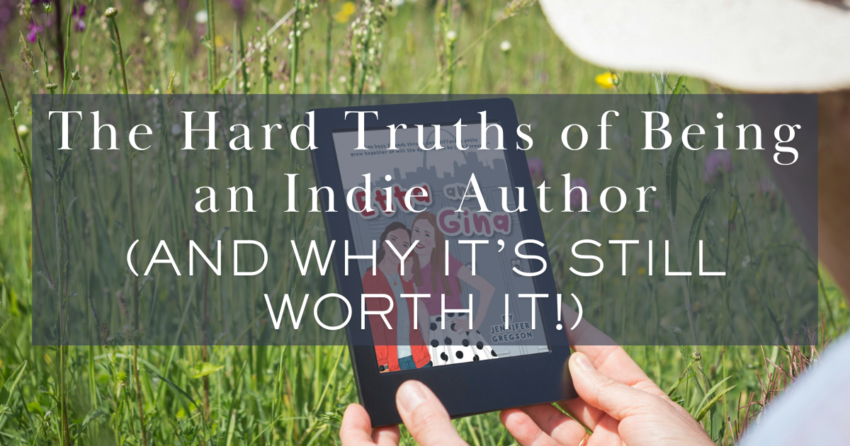
The Hard Truths of Being an Indie Author (And Why It’s Still Worth It!)

Posted on March 28, 2025March 28, 2025 by Jennifer Gregson

Being an indie author is an incredible journey filled with creativity, freedom, and the ability to bring your stories to life exactly as you envision them. But let’s be real—it’s not all sunshine and rainbows. There are challenges, frustrations, and moments of doubt that many indie authors experience.

As someone who has independently published three books and is now working on my first urban fantasy series set in New York, I’ve learned some hard truths along the way. If you’re considering self-publishing or are already on the indie path, here are five realities you need to know.

1. You Are Your Own Marketing Team

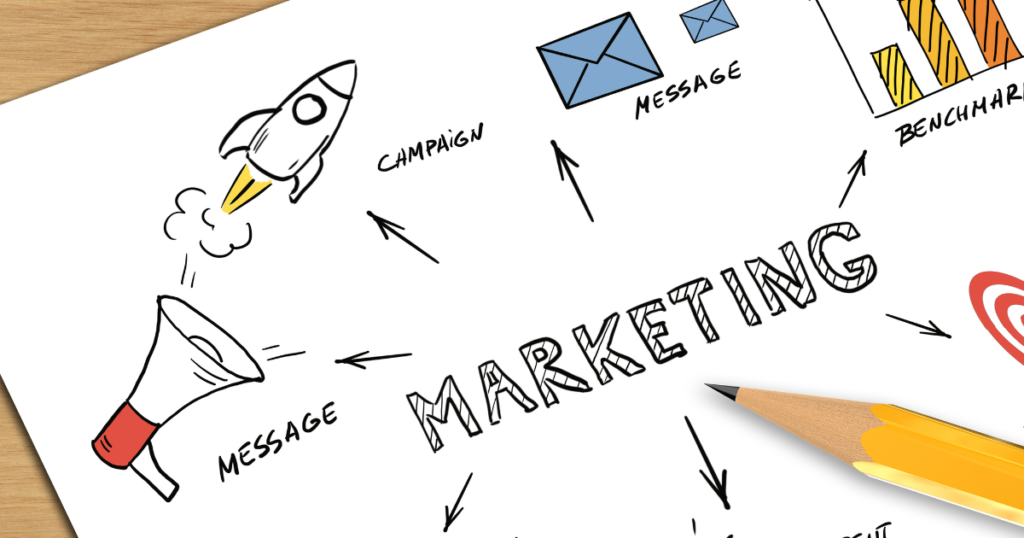
One of the biggest differences between indie and traditional publishing is marketing. When you traditionally publish, a PR or marketing team supports you to some degree. As an indie author, everything is on you—creating graphics, finding opportunities, developing a strategy, learning social media, and managing a newsletter.

Marketing has been a struggle for me, and I know I’m not alone in that. But the good news? You can improve, find what works for you, and build a supportive community to help navigate the process.

2. Sales Are Unpredictable

In traditional publishing, authors receive an advance, meaning they get paid upfront. But in indie publishing, you only make money when your book sells. And sales can be unpredictable.

You might have a fantastic launch, sell a ton of books, and get great page reads, only for sales to drop dramatically a few months later. This up-and-down nature makes financial planning tricky, especially early on. But the key is consistency and adaptability—always looking for new ways to engage readers and market your books.

3. Impostor Syndrome Never Truly Disappears

Even after publishing multiple books, that little voice of doubt still creeps in. Would I feel more validated if I had an agent? If a publisher had chosen me?

The truth is, indie publishing is just as legitimate as traditional publishing. Over time, I’ve learned to acknowledge these feelings and move forward anyway. The key is reminding yourself why you chose this path and celebrating your wins, big and small.

4. Success Looks Different for Every Indie Author

Traditional publishing has clear markers of success: getting an agent, securing a book deal, hitting bestseller lists. Indie publishing? It’s more fluid.

When I published my first book, success meant selling just five copies. Now, it’s about building a solid marketing strategy, having a successful launch, and seeing readers connect with my stories. Define your own version of success—it will make the journey more rewarding.

5. Writing Is Not Always Fun (And That’s Okay)

Let’s be honest—writing isn’t always enjoyable. There are moments of frustration, doubt, and wanting to quit. The messy middle of a manuscript? The endless revisions? The cover design dilemmas? All real.

This is why having a supportive community is crucial. Surround yourself with fellow indie authors who understand the struggle and can help you through tough days. Writing may not always be easy, but it is worth it.

The Bottom Line: Indie Publishing Is Still Amazing

Despite the challenges, I wouldn’t trade my indie publishing journey for anything. I love the creative control, the ability to pivot quickly, and the deep connection with my readers. If you’re an indie author struggling with doubt, know that you’re not alone.

If you’re in a stuck place, drop a comment below or reach out on Instagram—I’d love to encourage you! Indie publishing may be tough, but it’s also an incredible adventure. Keep going, keep writing, and embrace the journey!


Why Book Reviews Matter: How Leaving a Quick Review Helps Your Favorite Indie Author (and Other Readers!)

Posted on March 21, 2025March 21, 2025 by Jennifer Gregson

Have you ever finished reading a book, flipped to the end, and spotted a little note that says something like, “If you loved this book, please leave a review!”? Maybe you’ve seen it and thought, Eh, does it really make a difference? Spoiler alert: YES, it does—more than you probably think! Today, I want to break down exactly why authors (especially indie authors like me!) ask for reviews and how your short, sweet thoughts can make a BIG impact.

1. Reviews Help Our Books Get Seen

The world runs on algorithms—whether you’re scrolling on Amazon, Barnes & Noble, or Kobo. The more reviews a book has, the more likely the platform is to recommend it to new readers. Yep, even short reviews count! You’ve probably seen those “Readers Also Bought” sections—those are prime spots fueled by reviews. Your review could be the reason a new reader discovers their next favorite book (and mine!).

2. Reviews Help Other Readers Make Decisions

Think about it—how many times have you peeked at reviews before spending your gift card or hard-earned cash? Reviews are like word-of-mouth recommendations in digital form. They help readers decide if the book is worth their time, if it has the kind of plot or character they love, or if it’s a total page-turner. So even if it’s just one sentence, your thoughts matter.

3. Honest, Constructive Reviews Help Authors Grow

Here’s a little behind-the-scenes secret: we actually want your honest opinions. Did the twist not surprise you? Was the character a little flat? Sharing that (kindly!) helps us improve future books, especially if we’re writing a series. Constructive feedback = better books for you in the long run.

4. Reviews Create Promo Magic

Lastly, reviews are a marketing goldmine! I use quotes from reviews in my newsletters, on Instagram, and everywhere else to spread the word. So your review isn’t just for the store—it’s a tool that helps me reach more readers all over the internet.

How to Leave a Quick & Helpful Review

It doesn’t need to be a novel (pun intended)! Here are some super simple review starters:

  • “I loved this book. The main character’s problem felt so real!”
  • “Couldn’t put this down—the twist totally surprised me.”
  • “Such a fun read! Can’t wait for the next book.”

Short, sweet, and seriously helpful.

Ready to help your favorite authors?
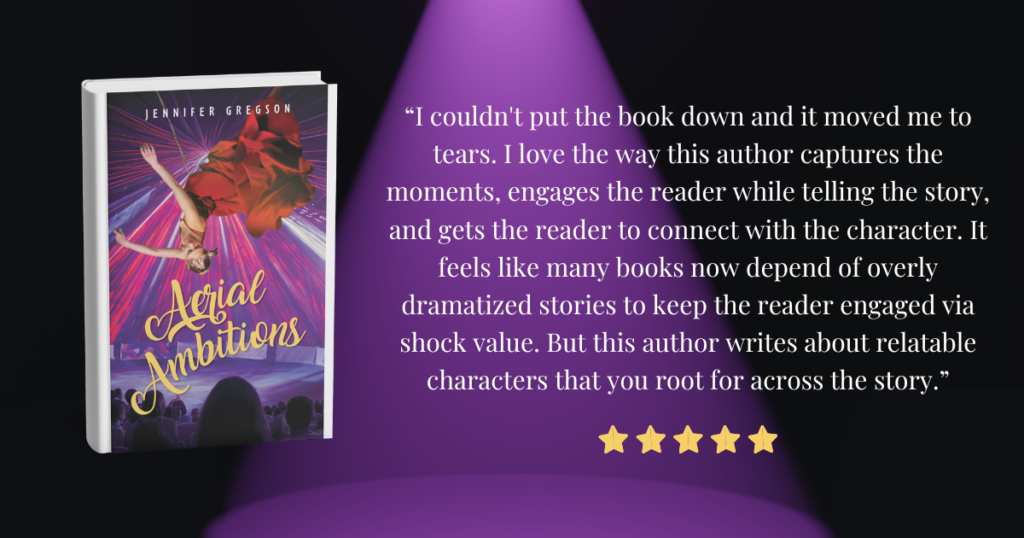
Next time you finish a book you enjoyed—even if it’s just a mild like—consider leaving a review. It’s one of the easiest, most supportive things you can do for indie authors (and fellow readers). If you’ve read my latest Young Adult novel, Aerial Ambitions, I would really appreciate you leaving me a review today. Thanks!!

How to Overcome Creative Fear and Finish Your Passion Projects

Posted on March 7, 2025March 7, 2025 by Jennifer Gregson

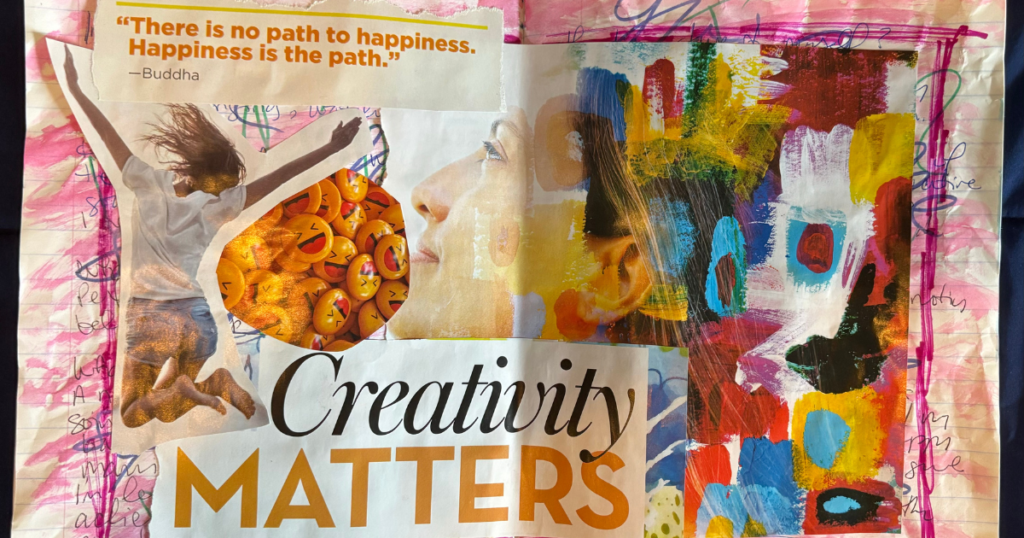
Starting a creative project is exciting—but fear, self-doubt, and that relentless inner critic can stop you in your tracks. Whether you’re writing a book, painting a canvas, or launching a new creative venture, fear can make you second-guess everything.

As an indie author, I’ve battled these fears many times, sometimes delaying a project for nearly a year. But through experience, I’ve learned that fear doesn’t have to win. Instead, it can be understood, reframed, and even used as a tool for creative growth.

The Three Types of Creative Fear

  1. Fear of Success – It sounds counterintuitive, but success can be scary. What if people expect more from you? What if you change too much? This fear whispers, What if I can’t keep up?
  2. Fear of Failure – This is the classic What if I’m not good enough? fear. The fear of putting your heart into something and not seeing the results you hoped for.
  3. Fear of Judgment & Imposter Syndrome – Worrying about what others will think or feeling like a fraud can be crippling. Thoughts like What if they find out I’m not as talented as they think? hold so many creatives back.

How to Reframe Fear and Keep Creating

  1. Acknowledge Fear, Don’t Fight It
    Fear isn’t your enemy—it’s trying to protect you, just in a clumsy way. Instead of letting it paralyze you, ask: What is this fear trying to tell me?
  2. Feel It in Your Body
    Take a moment to notice where you feel fear physically—your chest, shoulders, or stomach? This simple awareness can help you move through it.
  3. Journal It Out
    Write about your fear. Ask yourself: Which fear is stopping me? Then go deeper with What am I really afraid of? This exercise brings clarity.
  4. Use Intentional Creativity
    • Tarot – Pull a card representing your inner critic and have a conversation with it.
    • Cosmic SmashBooking – A creative blend of journaling and art that helps reframe limiting beliefs.
  5. Find Accountability
    A friend, a creative community, or an accountability partner can help you push through fear and stay committed to your project.

Fear will always show up in the creative process. The key is learning how to work with it, not against it. So the next time fear tries to stop you, try these strategies and keep going.

Does your inner critic or inner fear hold you back from fully embracing your creative potential?

Whether it’s the voice of self-doubt or the protective whisper urging you to stay in your comfort zone, these inner barriers can make pursuing your creative dreams feel impossible.

But it doesn’t have to be that way!

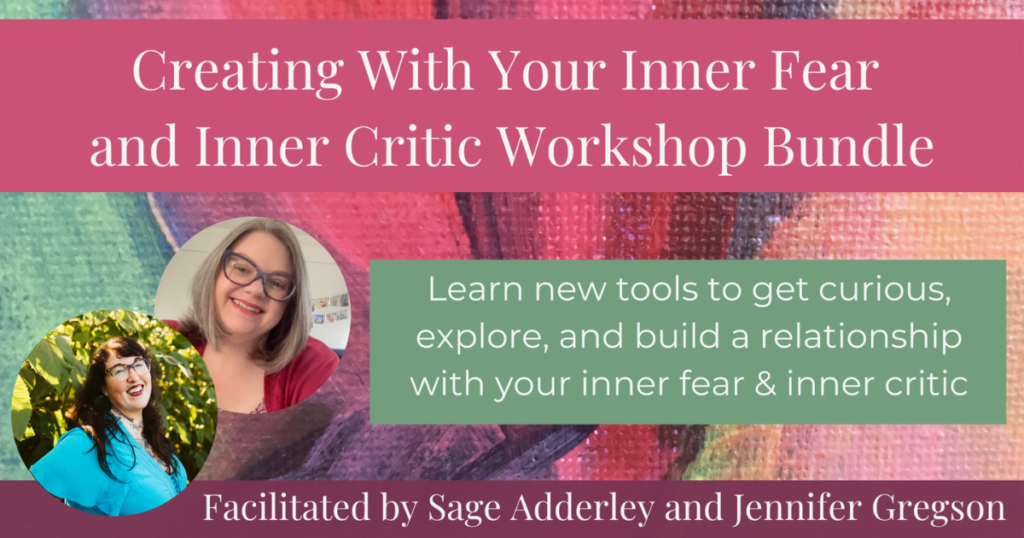
✨ Introducing the Workshop Bundle: Creating with Your Inner Critic & Inner Fear ✨

Join me and my co-host, Sage Adderley, as we guide you through two transformative workshops designed to help you mend your relationship with your inner critic and inner fear. Through creative and intuitive tools, you’ll learn how to approach these inner voices with curiosity and compassion, empowering yourself to create with ease and confidence.

✨ Ready to transform your inner voices and unleash your creative potential? ✨

Join us HERE!!

How I’m Making Writing More Fun

Posted on May 19, 2020 by Jennifer Gregson

I go through cycles of my author journey where writing feels really carefree, fun, amazing, and then there are downright muddy, painful, and just plain hard times too. I’m in a hard phase right now, as you know from last month but I’ve decided instead of just staying in the muck, I’m going to pull from my bag of tricks and work on making the writing more fun!

Music

I need music to write and edit but with my husband working from home and my son doing remote learning and our apartment being just a tiny bit too small it’s hard to find a space to play music, but since I’ve started writing more in the morning before everyone wakes up, my headphones have become my new best friend. It’s been so nice to listen to my Etta and Gina playlist while I work on my novel again. 


Timers

I’ve talked about timers before but seriously, playing beat the clock and doing quick sprints creates so much fun. Set a fifteen-minute timer and I try to see how many new words I can write, or how many paragraphs I can edit. Or even how many toys I can pick up or how many dishes I can clean. Pair this with music and my next tip – rewards – and you have a quick burst of energy and some good work getting done.


Rewards

Coffee is my number one reward when I write in the morning, but I also like to have weekly rewards for hitting my writing session goals. Time with a cup of tea and a magazine, time to just lay on the couch and watch an old movie (the Back to the Future trilogy is on Netflix – FYI), or just time to put on a face mask and lay down with my eyes closed. Lovely!


Location

The old joke about real estate (location, location, location) is true – if you’re used to writing in a certain spot, or going out of your house to write, and that isn’t feasible or working right now – switch it up. Usually write at your desk? Write on the couch! Usually head to a coffee house and that’s not possible right now?  Find a jazzy radio station, brew up a fancy coffee in your own kitchen, and try sitting at your dining room table! Typing not working? Try a quick walk in your neighborhood while you dictate some words to your phone. Write in bed, write on paper using a pen, just try something different. Take notes and think of it like an experiment – you never know, you might find a place or a situation that just works!


Mindset

Sometimes, the only thing you can do to get out of a funk is work on your limiting beliefs. If I’m thinking, “This isn’t fun anymore!” then I’m not going to have fun the next time either, it becomes harder to start writing. I use daily affirmations that I write down to help me stay on track, but when I get into a real funk sometimes I have to journal my thoughts out and see what’s going on. Lately, I’ve realized that I was more worried about the end result and not about the process – which is a real problem for me. So I worked on those issues with daily affirmations.  For example, Writing is fun. My writing is a joyous process, an adventure I get to take. My characters are friends who I love hanging out with. You get the idea, and it’s cheesy but if you’re writing them down in a notebook or journal – no one is going to see them. 


Story

Also, related a little to my mindset and the fact that I was stuck on results and thinking way too far ahead, I gave myself permission to work on whatever made me happy during that writing session. I’ve hopped around and written new chapters instead of working in a linear fashion, chapter one to chapter two, and so forth. If I feel like editing, then I go backward that morning. If I wake up and really just want to work on a blog post or some Instagram posts, then I do that without guilt. If I wake up and really just want to jot down a bunch of ideas for a new story or quickly write a short story (or some bad poetry) – then I do that. Anything to keep writing and to make the whole process FUN.


If you’re a writer – how’s the whole process feeling during this time? If you’re feeling mucky, can you infuse a tiny bit of fun into your writing again?  And if you’re a reader – how are you infusing fun into your day?  This isn’t just for writers, this is a hard time for everyone and I think we all need some levity, self-care, and rest in our days.


The form you have selected does not exist.

Is This Our New Normal?

Posted on March 31, 2020 by Jennifer Gregson

I’ve been quiet. I’ve retreated into old favorite TV shows, cuddles with my kid and Skype dates with my Mom. I’ve hidden away because I wasn’t sure what to say.

How should I deal with the new normal? How should I react to the fact that our Disney vacation (the one I’ve been planning for a year, and looking forward to for at least 2) is now canceled? How should I handle the fact that my son and husband and both home and we are dealing with online school? Can I be stressed out and grateful? Can I still be entertaining while also being a little scared?

Is it okay to be funny? Is it okay to tell stories? What is my role now? How do I reach the people that need to be reached? What does that even mean?

So, instead, I did nothing. I sat with these questions hoping an answer would magically appear, but instead I was just left with more questions. And I figure that’s how most of the country and the world is right now and you know what? That’s okay!

My big reason for telling coming of age stories is to share with young adults (and anyone that loves a good YA story) that they are not alone. That other people have embarrassing things happen, issues with their parents, problems at school, fights with their friends, first loves and dreams for the future.  Right now, almost the whole world is going through the same thing – fear, worry, and hope. Dreams for the future and aspirations for what comes next.

Will I say the right thing? Who knows. Will this message make someone feel better? I hope so.  It’s okay to be scared. It’s okay to not know. It’s all okay. It’s okay to have a million projects going, or flop on the couch with a cup of coffee and the TV remote.  It’s really all okay.

I’m here to tell you that even us adults have no idea what we’re doing most days and even more so right now while we try to figure out day jobs, goals, kids, spouses, parents, shopping, and surviving while also laughing at an old comedy, or the joke your 8-year-old tells, or something funny your Mom says on Skype.  It’s okay.

If you are feeling lonely and scared, reach out.  Comment below and just say HEY…let me know what’s going on in your tiny corner of the world.  Are you staying in? Reading more? Watching that favorite TV show for the 10th time? This week it was Psych for me because Shawn and Gus always make me laugh! I would love to hear your story and hopefully, soon I’ll find the words to share mine again.

Stay safe,
Jennifer

Look At This Stuff? Isn’t It Neat? NO! It’s a mess, Ariel, a really big mess!

Posted on January 16, 2020 by Jennifer Gregson

Have you ever had a Really Big Goal on your list of To-Do’s that keeps alluding you? A few weeks ago, I shared my Q1 Goals and way down on the list was: Beautifying The Apartment.    The thing is…it’s really so much bigger than just making the apartment look nice. So. Much. Bigger. 

We live in a decent-sized two-bedroom apartment with our 8-year-old son and all of our crap. Everywhere.  See, to start making it beautiful, we have to see the floor first. UGH! Step 1 of this overall goal is to declutter, organize, throw out, donate, and basically clean up the apartment. And this is where I get stuck, every time. 

Want to know a little secret? This has been on my goals list for a few years.  And last year we made a small dent, but we never finished because looking around at everything starts getting overwhelming! I look at each room and get tired just thinking of the hard work and energy and time that it’s going to take and instead, I make coffee and find some chocolate and flip on Disney+ (because who doesn’t love Baby Yoda?!?!).

I have a fairly strong WHY for this goal – to feel comfortable and more at home in our space. But that doesn’t seem to help motivate us into action.  Yes, I said US because this is not a solitary ME goal, this involves my husband and my son – so it’s not just me trying to motivate myself, it’s me trying to motivate all of us, at the same time, to accomplish a common goal.  Not easy.

So, I would love to hear your thoughts, ideas, and any advice you might have on this goal.  Have you ever had to declutter an entire room or apartment or house before? How did you chunk up the tasks? How did you keep from being overwhelmed and just get started? Seriously – any advice you can offer is appreciated? 

I’ll just be over here, looking at the piles, drinking my coffee, googling Baby Yoda gifs. Thanks!


Self-Care Isn’t Selfish

Posted on November 9, 2018 by Jennifer Gregson

I wasn’t going to write about self-care today, but I saw this ad that really kinda irked me.  It’s for a random cookie company and the print ad is just a lovely white background and a picture of the cookie and the ad copy says: Ahhh, self-care!  That’s it, nothing else.  And tiny in the corner is the cookie company name and logo.  I love that we as a society are talking about self-care and how self-care isn’t selfish and that it is definitely needed, but marketing companies have now latched on to that idea and turned it into a money making scheme.

Starbucks is not the only way

And this bugs me because self-care and the conversations around the subject are mostly aimed at women – we don’t know how to say NO, we take on too much, we don’t ask for help (this is an over generalization – I know that not everyone has this problem) – and now we’re buying told that buying the cookies, buying the lattes, buying the weighted blankets are self-care.   Trust me, time at Starbucks to drink a grande white chocolate mocha while I read a book is totally self-care for me, but it’s not the only way!

I’m not trying to discount the need for fuzzy socks, good coffee, and products to help us feel more like ourselves.  Not at all – but self-care is also learning to say NO to things you truly do not want to do OR knowing you are tired and taking a nap OR talking to a friend or therapist about some deep-seated issues or just the fact that your husband or partner pissed you off.  Those are self-care items too.

Treadmill Vs Napping

Self-care is so individualized for each person, each month, each day, each moment.  My self-care routine and your self-care routine should look different.  You might like pole dance exercise classes and I might like dancing to YouTube videos.  You might like running on a treadmill while I like lighting candles and doing spell work.  You might like napping, I might like singing.  It should look different.  And your Monday is definitely going to look different than your Friday – and that’s okay!

Each person needs to figure out what their self-care routine is going to look like or need to look like and it changes based on the day, time, stressor, or mood. I’m not quite sure if I have a point or any suggestions, other than to say don’t let ads sway you.  If you don’t let ads tell you what type of laundry detergent to by, then don’t let them sway you into what self-care IS and NEEDS to be to be determined “real” self-care.  

Listen, if you like a particular kind of cookie or treat and taking that time each day with a cup of coffee or tea then yes, that most definitely is self-care – buy the cookies, have the pretty plates and cups! But if you think that’s all that self-care is – just buying things and being a consumer, then maybe we need to re-think what self-care is.

Everybody needs TIME

Self-care isn’t selfish –  I believe everybody (and I do mean everybody -women, men, and children) needs time to just be, to refill their cup, to do the things that make them happy –  EVERYBODY needs that. We are told, as a society, that taking time like that is bad,  that it’s lazy,  that you shouldn’t need that….but then that same society is pushing buying things as self-care as the only acceptable way.  I’m here to tell you – NO…buy the things that make you happy, but real self-care should be YOURS and yours alone. 

I believe that as long as you communicate your needs to others and make sure the people in your life are on board and that everyone gets the time they need, then whatever you do for that self-care is fine (you know, barring it’s not hurting anyone else).  It’s healthy to take that time away from providing for others and just provide for yourself.  Read the book, watch the TV show, have the latte, buy the cookies and blankets and fuzzy socks – but make sure it’s what YOU want, not what you think society wants.

What are you going to do today for self-care? Tell us in the comments below.  Me? I took a walk and actually dictated this blog post and now I’m going to have a lovely cup of French Vanilla coffee and watch an episode of a TV show I just started on Netflix before diving into work.  I hope you have an amazing day!


The form you have selected does not exist.

  • 1
  • 2
  • Next
  • July 25, 2025 by Jennifer Gregson How to Use Headings and Flourishes in Book Formatting: A Fun Guide for Indie Authors
  • July 18, 2025 by Jennifer Gregson Book Formatting Terms Every Indie Author Should Know: Lingo 101 for Self-Publishing
  • July 18, 2025 by Jennifer Gregson Don’t Leave Your Reader Hanging: What to Include in the Back Matter of Your Self-Published Book
  • June 27, 2025 by Jennifer Gregson Front Matter 101: What Every Self-Published Author Needs Before Chapter One
  • June 20, 2025 by Jennifer Gregson How to Pick the Perfect Trim Size for Your Print Book (with Examples!)
© 2026 Jennifer Gregson | Powered by Minimalist Blog WordPress Theme