Jennifer Gregson

Young Adult Indie Author

Menu
  • Home
Menu

Tag: Writing

Overcoming Impostor Syndrome as a Writer: How to Keep Creating Despite Self-Doubt

Posted on February 3, 2025February 11, 2025 by Jennifer Gregson

If you’re an indie author, chances are you’ve asked yourself: Am I good enough? Will readers figure out I’m a fraud?

Impostor syndrome is something almost every writer experiences at some point. It can be paralyzing, making it difficult to sit down and do the work. But the good news? You can overcome it. Here’s how I deal with impostor syndrome and keep writing.


Acknowledge Your Fears

The first step in overcoming impostor syndrome as a writer is to acknowledge it. Ignoring or pushing it away won’t make it disappear—it’ll just creep up when you least expect it. Instead, try these methods:

  • Journal about it – Write down your fears and get them out of your head.
  • Talk it out – Share your thoughts with a trusted friend, spouse, or (better option) a therapist.
  • Personify your inner critic – Give it a name, have a conversation, and take away its power over you.

When you sit with your fears rather than fight them, you can process them and move forward.

Take Action to Counteract Fear

The best way to silence impostor syndrome? Take action. Fear thrives on inaction, but even small steps forward can help you break free.

1. Use Accountability Groups

Writing alongside others keeps you motivated. I have three accountability groups throughout the week where I write with other people. This method, often called “body doubling,” can be especially helpful for neurodivergent writers.

2. Set Timers for Short Writing Sessions

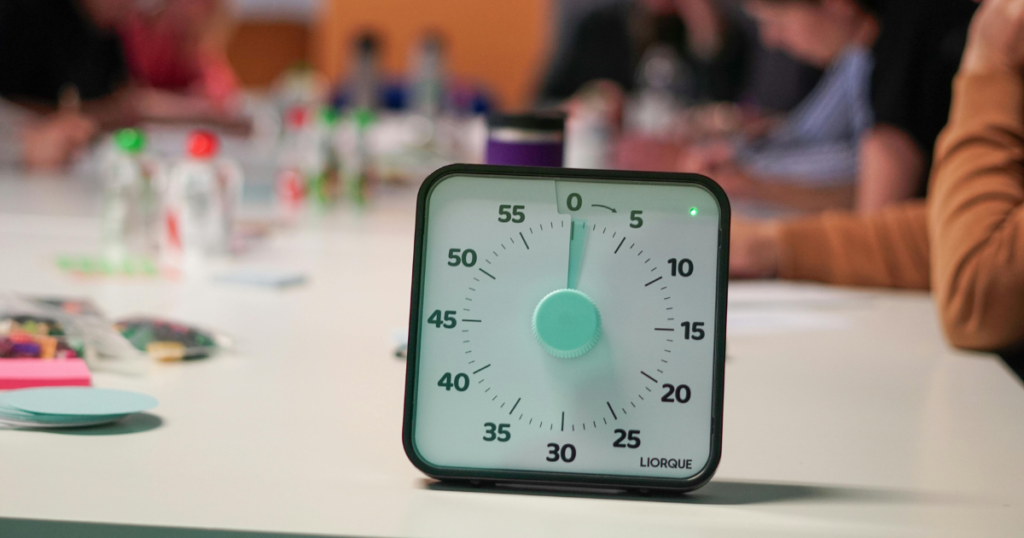
When fear stops me from writing, I set a five-minute timer. I tell myself I only need to write a few sentences, maybe just 25 words. This simple trick helps my brain relax, and I almost always end up writing more than I expected.
3. Focus on Your Why

Why did you start writing in the first place? For me, it’s the art of discovery. Even though I outline, I love when unexpected characters or plot twists appear in my drafts. That excitement keeps me coming back to the page. When impostor syndrome starts whispering doubts, remind yourself why you love to write.

Shift from External to Internal Motivation
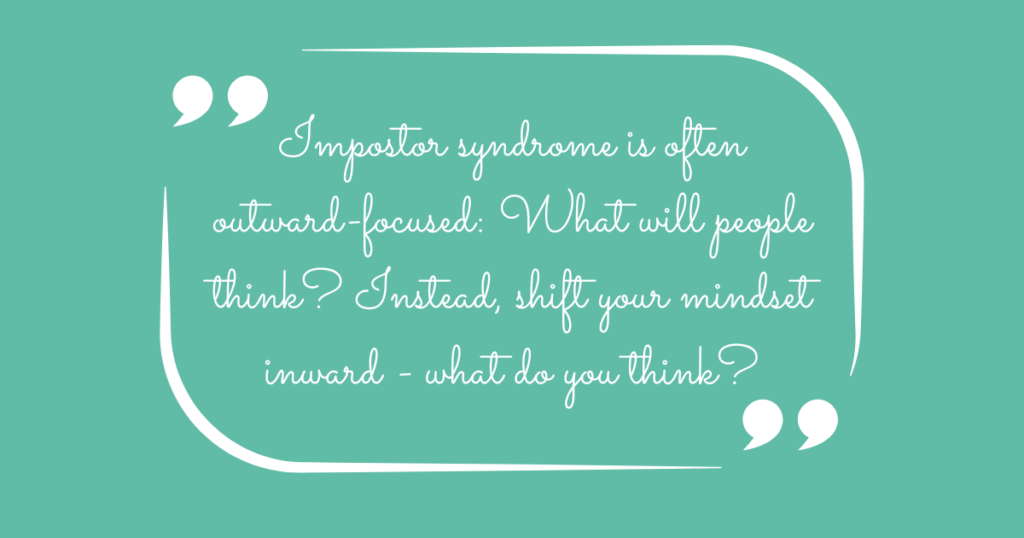
Impostor syndrome is often outward-focused: What will people think? Will they like my book? Instead, shift your mindset inward. During the drafting phase, allow yourself to be selfish. What excites you? What scenes make you eager to keep going? Make sure you keep your why somewhere you can see it before each writing session to remind you.

Later, during revisions, you can shift focus to your audience, but for now – give yourself permission to write for you first.


Final Thoughts

Overcoming impostor syndrome as a writer is an ongoing process. Some days, it’s louder than others. But by acknowledging your fears, taking small actions, and remembering your motivation, you can keep writing despite self-doubt.

If you have any questions or topics you’d like me to cover in future posts, drop them in the comments below. 
The Ultimate Writing Toolbox: My Favorite Analog & Digital Writing Tools

Posted on January 31, 2025February 11, 2025 by Jennifer Gregson

Whether you’re a new or seasoned writer, finding the right tools can help boost creativity and streamline your process. Let’s dive in!

My Go-To Analog Writing Tools

Sometimes, nothing beats the feel of pen and paper. Here are my top three must-haves for brainstorming and planning:

1. Spiral-Bound Notebooks

I stock up on these during back-to-school sales, but Amazon also has great deals. I use them for brainstorming, outlining, and keeping track of ideas. For my current urban fantasy series, I dedicated an entire notebook to jot down initial thoughts, asking myself what if questions to spark creativity, and for keeping track of character names and descriptions.

2. Index Cards

These are a lifesaver for outlining! I love that I can move them around, shuffle ideas, and visualize my story structure. Using different colors helps me track changes during revisions—sometimes I even highlight corners or use washi tape to categorize sections.

3. Tarot Cards

If you’ve been following me for a while, you know tarot is a big part of my writing process. I use it for character creation, conflict development, and even as a daily writing prompt. I’ll be sharing more about this in an upcoming post, so stay tuned!

My Favorite Digital Writing Tools

While I love analog tools, I also rely heavily on digital ones. Here are the writing programs I can’t live without:

1. Scrivener

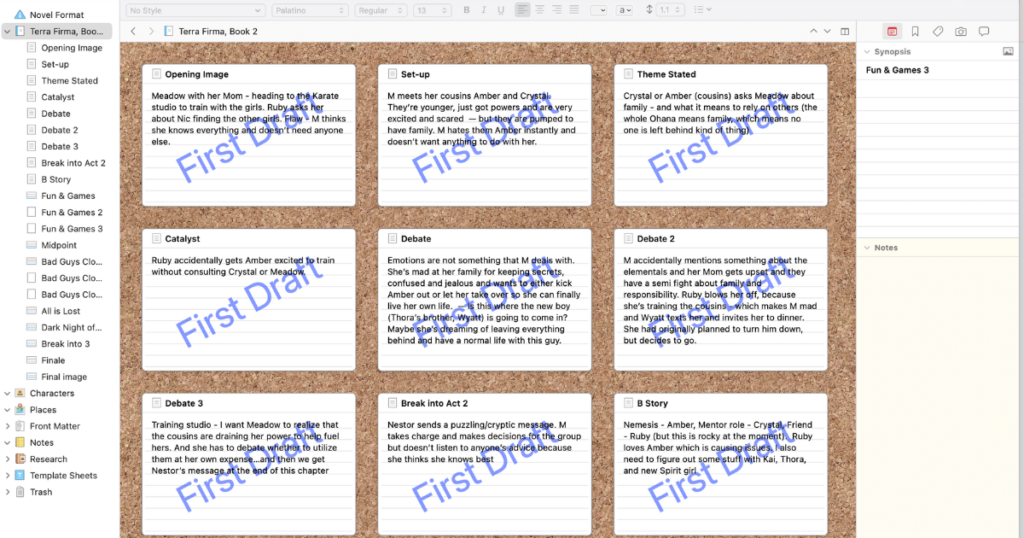
I’ve been using Scrivener for years, transferring it across multiple laptops. The digital corkboard allows me to move my scenes around effortlessly, which is a game-changer compared to cut-and-paste in Google Docs. While Scrivener can be overwhelming at first, taking a course or reading a tutorial helps unlock its full potential.

2. Google Docs

Though I don’t draft in Google Docs, I am currently using it to create a series bible to track characters, settings, and major plot points across the five books I have planned. It’s free, accessible, and great for collaboration – I can share the file with my editor or beta readers easily and track comments across multiple people.

3. Amazon Music & Spotify

I have to have music to write – at this point, it’s non-negotiable. I love being able to choose playlists, radio stations, or whole albums on various music websites. It allows me to groove to the many genres I adore like 90s hip-hop, Broadway soundtracks, or modern day pop music. 

4. Vellum

This is a Mac-only software that I use to format my books beautifully for both print and digital publishing.  It’s pretty magical, since none of my books have images, I can format my entire novel in 2 days and have files ready for the eBookstores in a flash.

My Final Thoughts

At the end of the day, all I really need to write is my laptop. But my notebooks, index cards, and digital tools make the process smoother and more enjoyable.

I’d love to hear about your favorite writing tools! Share them in the comments or connect with me on Instagram.


How to Balance Writing as an Indie Author: Tips for Productivity and Flexibility

Posted on January 29, 2025February 14, 2025 by Jennifer Gregson

 As an indie author, one of the most common questions I get is, “How do you find the time to write?” Balancing writing with a day job, family responsibilities, and everything else life throws your way can feel overwhelming. Over the years, I’ve developed a system that works for me, and today I’m excited to share my formula for staying productive and consistent as a writer. 

1. Planning Is Key

The foundation of my writing routine is planning. I use two tools to keep my schedule organized:

    • Google Calendar: This helps me schedule everything digitally and sync with other commitments.

    • A Paper Planner: As someone who loves stickers and creativity, this adds a fun, tactile element to my planning.

Each week, I sit down and plan my schedule, including dedicated time for writing. My goal is to write at least three times a week, sometimes more if I can. I also prioritize flexibility, because life is chaotic and unpredictable.  For example, I’ll often plan a Monday writing session, but if Monday doesn’t work out, I move that session immediately to Tuesday in my Google calendar

2. The Power of Accountability

Accountability has been a game-changer in my writing journey. I rely on two consistent co-writing sessions every week:

    • Thursday Co-Writing with a Friend: This is a focused hour where we start by sharing our goals and then spend 50 minutes writing. These sessions are incredibly productive—just last week, I wrote 2,100 words in 50 minutes!

    • Friday Writing Group: This is a 90-minute session with fellow writers. We spend about 30 minutes chatting and problem-solving, followed by an hour of solid writing.

These sessions provide both structure and motivation. Writing alongside others, even virtually, creates a magical sense of focus and accountability.

3. Staying Flexible

Life happens, and flexibility is essential. While I rarely miss my Thursday and Friday writing sessions, I’m ready to adjust if a family member gets sick or a day job project comes up. If I miss my usual times, I’ll carve out time later in the evening or even on a weekend if I’m on a deadline.

When I do need to shift things around, I communicate with my family. For instance, I’ll let my husband and son know that I need an hour to write after dinner. This balance ensures that I meet my goals without sacrificing family time.

4. Setting Goals and Staying Motivated

Another critical piece of the puzzle is setting clear goals. I set yearly goals for my writing, breaking them down into monthly, weekly, and even daily tasks. For example, my current goal is to publish the first book in my urban fantasy series this fall and draft the second book while waiting for edits.

I also keep the bigger picture in mind: my dream is to publish all five books in the series within the next five years. Staying focused on this long-term vision helps me stay motivated and consistent, even on busy days.

Final Thoughts: Balancing Writing and Life as an Indie Author

Balancing writing with everything else requires careful planning, accountability, and flexibility. By scheduling time to write, staying committed to accountability groups, and remaining adaptable when life throws curveballs, I’ve been able to make consistent progress on my books.

If you’re an aspiring writer and struggling to find time, I’d love to help! Drop a comment below, and let me know how I can support you in your writing journey.

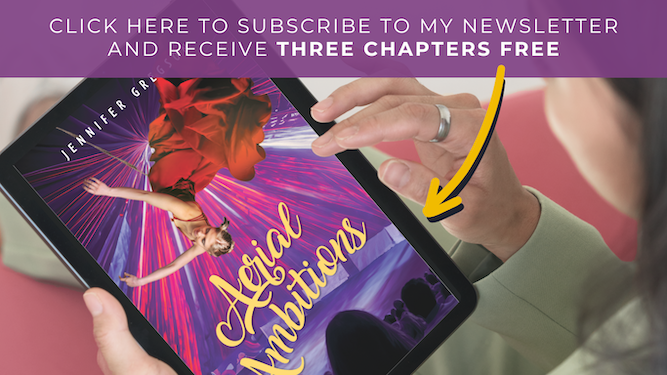
And if you’d like to follow my writing progress, subscribe to my newsletter by clicking the image below – bonus, you’ll get the first three chapters of my latest young adult sweet romance novel, Aerial Ambitions, for free!

NaNoWriMo 2022: 6 Questions to Ask When You Lose the Plot

Posted on November 9, 2022November 8, 2022 by Jennifer Gregson

Did you follow a plot bunny? And now you are completely off track? 


Plot bunnies can be fun, they can be exciting, they can lead us to amazing discoveries, but sometimes they can also leave us lost, confused, and frustrated. Let me share with you 6 Questions that you can ask yourself when this happens so you can get back on track.


My favorite way to do this is via a Tarot spread, but you can also just ask yourself the questions as well. To see me go through this spread with my own NaNoWriMo novel, watch the YouTube video below.


You might be asking yourself, what is a Plot Bunny?  It’s an idea that refuses to leave you alone until you’ve actually followed it. And even though it does predate NaNoWriMo, they can happen a lot during those November writing sessions.


Before you tackle the six questions, ask yourself first how far off your outline you got and if there’s anything from your detour you want to keep.  Do you think you need to start completely over with where you got off track, or can you merge some of your ideas and have a better story?


Once you have that all figured out, you are ready to pull some Tarot cards or grab your journal, and find out what your Plot Bunny and Main Character are trying to tell you.


Plot Bunnies Tarot Spread

  1. What’s your bunny trying to tell you?
  2. What is your Main Character trying to tell you?
  3. How would the bunny solve this?
  4. How would the Main Character solve this?
  5. What’s one creative solution you can try?
  6. How can you move forward and get back on track?


Tips & Tricks

If you decide you need to start over and basically trash what you’ve written DO NOT DELETE those words, at least not yet. During NaNoWriMo, those words you wrote count toward your final 50,000 word count goal. I suggest moving them to the end of your document or writing at the head of each chapter that’s going to eventually get tossed: PLOT BUNNY, DON’T USE or something like that.  Then when you come back to edit, you can put those in a separate document just in case.


It’s okay to have some strong emotions around this process, getting off track and seeing that you’re going to need to rewrite 5,000 or more words can be devastating, but trust me, that wasn’t wasted effort.  Like I said above, the words still count toward your goal this month, and two it gave you some things to explore, to try out, to discover and that’s never bad – you learned what doesn’t work, sometimes writing them out needs to happen before you can see the right way to go. But be kind to yourself, remember that writing is a process, and sometimes it’s messy and painful.


Plot Bunnies can be really fun and take you to some cool places you might not have thought to explore, but if you do get off track, just ask yourself these six questions and get back to writing the story you want to write. 

Pantser Problems – Getting Out Of The Hole You’ve Dug

Posted on August 31, 2022August 29, 2022 by Jennifer Gregson

You pride yourself on being a pantser – someone who just dives right in with their book project without an outline, writing by the seat of your pants.  It’s exciting – I get it! You want to just get started, but what happens when you get to that one scene and you don’t know what happens next? Let me tell you…

Stop & Assess – Where You Are


The best way I have found to do this is with what my editor calls a reverse outline.  Basically, you read what you have written so far and using very easy bullets, you write down what has happened.  For example:

  • Bob meets Jane
  • Jane hates Bob
  • Jane tells her sister about Bob
  • Jane’s sister realizes she knows Bob

I want these bullets to look like a kids primer book – easy breezy. 

Figure Out Your Ending


Pantsers don’t get scared, I’m not asking for a detailed outline – we are going to stay with these easy bullet points for this too.  You don’t need a full blown plan, but you do need to know where you are going.  Do Bob and Jane end up together? Do Bob and the sister end up together? Does Bob get murdered? What happens before The End?

This does not need to be the ending you actually write, but like pulling back an arrow you need to know where you are aiming before you let go, right? Right! That’s all I’m asking you do.  So, for example

  • Bob and Jane fall in love
  • Bob and Jane get married
  • Bob falls into the Grand Canyon and dies
  • Jane falls in love with a park ranger

Your ending can be anything you want and need it to be – just write something down so you have an ending, deal?  Okay, how are those bullet points treating you? I’m hoping you are digging this because step three uses more of them.

Map Out The Journey From Point A To Point B


Did you read that heading and freak out?  Unclench please, I’m not asking you to do a full outline – I’m asking for bullet points.  Very simple bullet points starting from where you are and ending with what you figured out in the above step. 

So, if we’re going with the ending that Bob dies at the Grand Canyon and Jane falls in love with that park ranger, because – why not! – then you need to figure out how to take Bob and Jane on this road from hating each other to true love to death.  

  • Jane gives Bob a chance
  • The first date goes really well
  • At the one month anniversary, they realize neither has dated anyone that long before
  • Something happens here (this is perfectly fine to do when doing these bullet points) and Bob and Jane start fighting
  • To re-ignite their romance, they go on a trip to the Grand Canyon
  • It’s late, it’s raining, it’s dark and Bob falls in
  • Jane, grieving, meets Park Ranger Ron
  • Jane falls in love

Literally, it can be that simple!

Extra Tip


Now, I’m going to throw in something…extra that you can take or leave, pantsers.  Take those bullet points and expand on them as needed.  I like to do a very detailed outline of a few chapters at a time.  So on Friday I’ll look at what scenes/chapters are coming up and work out characters, conflict, setting, etc so the next week when I sit down I’m ready to go.  You can also do this as a writing warm-up exercise and it can be as simple or as detailed as YOU need.  Take two minutes and just write down the characters and setting. Or don’t write at all – just look over your bullet points, shut your eyes, and put yourself into the setting, open your eyes and start writing.  

I think pantsers like writing by the seat of their pants because it’s exciting, they need space to explore and I believe the bullet point method helps them do that while also keeping them on track to actually type The End.  If you only need the bullet points and don’t mind shuffling things around as new ideas come around – great! If you want to try the extra tip and expand those bullet points before you write – also great!

Let me know in the comments below – Why do you like being a pantser?

And if you found this helpful, I would love for you to check out my Muddy Middle To Manuscript coaching package where I will walk you through a process of getting very clear on your Big Why, becoming friends with your characters, and we will fix your outline so you can type The End all with a smile on your face.  

The form you have selected does not exist.

Image of binders stuffed with papers

4 Ways To Get Back On Track When You’re Off Your Detailed Outline

Posted on August 24, 2022August 24, 2022 by Jennifer Gregson

You did what all of the writing books and experts told you to do when you started working your novel – you created a very detailed outline and you expected things to go super smooth. BUT now you’ve hit a wall and that detailed outline isn’t helping anymore.  Your characters aren’t doing what you told them to do. Your scenes, heck your entire plot, feels boring, like nothing is actually happening. And that ending you mapped out months ago is miles away, nowhere to be found on the page.


I hate to be the bearer of bad news, but sometimes having that thought out detailed, meticulous document can actually hinder your creativity. 


Before I jump into the four things that I think will help you when you’re off track from your outline, I want to talk a tiny little bit about why I think having too detailed of an outline is actually causing the problem. See I get it. I’m a planner girl at heart. I have goals for my week, my month, my quarter, my year. I love having a plan, but sometimes, okay most of the time, life does not go according to plan. And yes, I am also still learning this. I have tried to learn to be a little bit more flexible with my planning. This also goes along with my writing life – you need to have a flexible plan with your outlining. Having things too mapped out can cause you to freak out when the littlest thing goes wrong. And when you freak out, you don’t know how to get back on track which can cause you to stop writing – that’s where I come in!


Let’s assess where you are


How far off your outline did you get? Are you just a little bit, or are you a lot? If you’re not sure, you can do something my editor taught me called The Reverse Outline. You just read what you’ve already written and write down in bullet points what happens in each scene or chapter.  Note – you need to write what you actually wrote here, not what you planned – and I’m talking bullet points. 

  • Jimmy did this 
  • Which caused Laura to do 
  • And because of that, Jane did this other thing

This should show you in black and white what you planned and what you wrote and how far off the plan you are. 


Do you like where you ended up? 


Are you okay with where your story went OR do you like your original outline better? Neither answer is correct here. It’s just how you are feeling about your story. 


So if the answer is, “I loved my original outline and what happened is terrible.” OR “Yes, I love where my story went, the character did this really cool thing and I’m excited, I’m just not sure where to go from here because it’s so far off my map.”  Both are good!! If you like your story right now, but need help, go on to the next step.  If you hate where you ended up, I need you to take a small pause and do a little bit of journaling about where you think the story should be at this point in time in your outline, then you can move on to step three. 

Now, let’s look at your ending


Look at where you originally mapped out and ask yourself if it’s still the ending you want. Are you happy with the ending or is it not going to work based on all the new things you figured out in steps one and two?  Does it still make sense? Do you still love it? Again, there is no right or wrong answer here, just how you are feeling and what you think based on your story. 


If you like your ending and can start to see a path between where you are and where you want to go, great – move on to the final step.  But if you’re not happy, pause again and do some more journaling – ask yourself some What If questions to get to an ending you are happy with…but please, please do not start a new detailed outline. Not yet okay? Just write down where you’d like your characters to end up based on the new information and then go on to step four.


Getting from Point A to Point B


Now we are going to map out a quick and dirty plan from where you are to where you want to end up using bullet points. Doing this step first, before you start mapping everything out in full sentences, will help you see problems before they start. So get out your outline document or index cards and start writing down ideas, notes, thoughts, and plans for different scenes and chapters between where you got stuck and where you hope to end up. I just don’t want you to sit down and spend three weeks making a new detailed, meticulous plan. I want you to keep it a little loosey goosey, a little free flowing.


Secret 5th Step – Flexible Planning


Now I’m not asking you to not have a plan because I couldn’t do that. What I’m asking you to do is just try, just try the loosey goosey, free flowing for just a minute and see if you feel better. When you start actually writing again, you don’t have to keep this up. If you get back on track and you are in the zone and want to make another detailed outline, great, you can stop and do that in a day or two, but I’m asking you not to do that yet. I’m asking you just to map things out quick and dirty bullet points, one idea at a time, just so that you can get back on track and then assess how you are feeling.


The hidden step here is the way I now do my outlines – and again, this is totally optional, but if you’ve been stuck this might be something to try.  So I outline my entire novel using bullet points on index cards – usually 1-2 sentences max for each chapter.  BUT then on my final writing session of the week, I look at my living document and do a more detailed outline for the chapters coming up – that can be anywhere from 3-5 scenes for the following week.  That’s when I flush things out with character motivations, settings, ideas for dialogue, what I need to remember based on what I wrote the week before, etc and so forth.  I take my index card and use my writing software, Scrivener, to add detailed notes and flesh the scene out so when I sit down to write I have my plan. 


Hopefully you can see the beauty of being a little bit more flexible, I’m inviting you into the world of plotser. I really hate this term, and wish I could come up with a new one, but I haven’t been able to. It’s basically where you take the plotters, the people that have that detailed, meticulous outline and you merge it with the pantsers, the people that have no outline and just start writing – by the seat of their pants.


The thing I like about being a plotser, is you have a plan (because I am a planner girl don’t forget) and you can map out your whole book but that doesn’t mean I’m tied down to a meticulous plan right at the beginning. I don’t have to spend too much time before I start writing because I’m going to take some time each week to add, update, and map out more of my book as I go. And this works for me. 


So I’m inviting you to try this, especially if you are stuck, especially if you are feeling frustrated with your outline. If you have a detailed outline and you are cooking with gas and you are moving towards your goal. Perfect. I don’t think there’s any one right way to write a book, but I’m saying if you’re stuck, maybe try this.


Let me know in the comments below – Do you consider yourself a pantser, a plotter, or are you that sort of middle plotser? And do you also hate that word or is it just me? 


And if you found this helpful, I would love for you to check out my
Muddy Middle to Manuscript coaching package where I will walk you through a process of getting very clear on your Big Why, becoming friends with your characters, and we will fix your outline so you can type The End all with a smile on your face.  

The form you have selected does not exist.

4 Ways To Ensure You Are Creating Real Human 3D Characters

Posted on August 17, 2022August 16, 2022 by Jennifer Gregson

We have all read books where the characters seem to leap off the page, where they feel so lifelike that you wouldn’t be surprised if they walked through your front door.   As a writer, I know that you want to ensure that your characters are like that so your readers fall in love with them, want to be them, and want to keep reading their story.   Here are four ways to ensure that happens.

Create your character’s persona

This is the character development portion.  I like to use a Tarot card for this, but you can use character bio worksheets, Pinterest mood boards, or just writing down everything you know about your characters in your project file.

For an example using The Empress card from the Rider-Waite tarot deck, watch the video below!!

If you already have a character created, get your notes back out and start from there – look at what you have and make sure you at least have the basics of who this person is, what role they play in your novel, and a few points about what makes them unique. 

Talk to your characters

You need to talk to your characters as if they are real human people (or aliens, or dragons, or whatever type of creature you are creating). I like to do this with the Tarot card I used to create the character, but you can also grab an image off Pinterest or a magazine – have something you can look at while you’re doing this exercise.  

You can do this either out loud – asking your character questions and then answering as if you are them (I like doing this as it lets me use some of my theatre training) OR you can do this in a journal or word document.  Start with a list of open ended questions and see what they say.  For example, if you ask them: What do you want me to know about your story? And they answer, I don’t want to be known as the villain.  Then your next question could be – why do people assume you’re the villain?  And so on and so forth. 


Become friends with your character

It’s true, you need to become friends with your characters – even the bad guys, even the truly evil antagonists you can create – the way you do this is what do you love about them? Probably for the bad guy, the thing you love the most is how evil they are, right?

To accomplish this, I like to journal as if I was the character.  Do they write in a journal? Keep an online diary? Are they teens and write things down in the notes app on their phone or keep a vlog via TikTok? I figure that out first then try to mimic it as close to possible so I can get into the mindset of my character. Then I choose a day – either from my novel or right before – and start writing.  

Every time I do this exercise I learn valuable information and things I can use about my characters for my novels – seriously, this is so much fun, if you only take away one exercise, let it be this one!!

Visualize them/Describe them to someone else

Now, step away from the images you have – either the Tarot card or Pinterest pictures, and try to visualize them in your mind.  If you are not able to do this – describe them to someone else. This exercise is to get you thinking about your character, seeing your character in your own mind so much that you if they did walk in, the other person would go – oh, them?! 

This helps you take everything you’ve learned and put it all together, creating a real human 3D character with quirks and flaws and emotions and all the things that make a reader fall in love with a person in a book. 

If you did this exercise with one of your characters, please let me know in the comments below how it worked for you and what one thing you discovered about them that you are definitely putting into your book?

And if you found this helpful, I would love for you to check out my Muddy Middle to Manuscript coaching package where I will walk you through a process of getting very clear on your Big Why, becoming friends with your characters, and we will fix your outline so you can type The End all with a smile on your face.

The form you have selected does not exist.

Turquoise typewriter with the words The End

Are YOU the reason you haven’t been able to finish your book?

Posted on August 10, 2022August 9, 2022 by Jennifer Gregson

Have you used any of these excuses before while writing…

  • I’ll write later or I’ll write when the kids are older
  • I’ll write when my house is perfectly clean
  • I can’t concentrate until all of my projects are done
  • I love my characters, but they’re not doing what I want…and now my draft is messy
  • I’m waiting on inspiration to find my ending

Listen, writing The End is scary – trust me, I know, I’ve done it multiple times, but the truth is you cannot edit a blank page. You need to finish your draft.  So, now that we’ve established that fact, let me make it a little easier for you.


You need to have a plan of attack

How’s your outline looking? Is it fleshed out? Are you completely off track? First, let’s take a moment and see where we are and where we’re trying to go.  (Note, I have blog posts coming very, very soon about outlining so be on the lookout – or subscribe to my YouTube channel and not miss anything!)

Next, let’s get those characters cooperating.  Figure out what they’re trying to tell you by interviewing them, journaling as if you are them, and get them back on your side.


You are thinking too far ahead

Writing The End is really scary, because you are thinking too much about what happens next.  Your brain is five steps ahead thinking about the editing process or hiring an editor, finding beta readers, marketing on Instagram or joining TikTok.  STOP!!

You need to stay in the phase that you’re in right now – the discovery stage, the learning about your characters and their story stage, the beautiful messy first draft stage.  If you have ideas about things for the future, write them down somewhere, but don’t get stuck in too much future planning especially since social media platforms are always changing – ideas for excellent Reels might not even make sense in six months or a year if Instagram decides to change something…again!

Try to relax and enjoy the first draft – it’s supposed to be FUN!!  Revisions are fun in a different way and when you get there, I’ll tell you the same thing – stay in your lane and enjoy where you are.


Schedule your writing time

Here’s some honest truth, if you need your house completely clean before you write, it’s never going to happen – this is just an excuse.  So may I make a small suggestion?  Clean the room or area you’ll be working in.  I get it, I know people like this – I mean, I’m not like this – but usually having them clean their desk, or their bedroom, before writing helps them feel a bit more grounded and ready to rock. Or write.

Ok, so excuse number one down, let’s look at the excuse of having kids around.  Can you get up before them? Got babies or toddlers who are early risers, can you write during nap time? Can you write when your partner gets home? Can you swap writing time/work time with a friend who has a baby? There are ways to do this, but you have to communicate your needs with the people you live with and schedule your writing in a way that works for YOU. 

My son is ten so this looks very different now than when he was a baby, but I had to do some interesting things – write during baby gym classes, write at night or in the morning, have my husband take him to baby music classes on the weekend so I could write every other weekend – it’s tricky, I’m not going to lie, but it can be done. 

You may not be able to write every day, and that’s okay, but figure out what’s realistic for you and your family or situation and schedule that time.  I’d rather you be consistent with one day a week than never write because you are waiting for that “perfect” time to appear out of thin air – it’s not going to happen.

And finally, writing should be fun – I’ve said that before and I’ll keep saying because it’s true – you should be enjoying at least a little bit of the writing process, or why do it?!? If writing is starting to feel like a chore can you do something to make it more fun? I like to add music to my writing sessions, but you could add in a reward, a writing snack, a fun new place to write in, or stickers on a calendar! 

I know writing is hard, I know getting to that ending is scary, but these things can help you get over the writing slump and get back into the groove so you can type The End, all with a smile on your face.

And if you found this helpful, I would love for you to check out my Muddy Middle to Manuscript coaching package where I will walk you through a process of getting very clear on your Big Why, becoming friends with your characters, and we will fix your outline so you can type The End all with a smile on your face.  

The form you have selected does not exist.

How To Make The Book Writing Process More Fun

Posted on August 3, 2022August 2, 2022 by Jennifer Gregson

Has writing your novel lost its luster?

You started writing with all kinds of ideas and energy and excitement, but now that you’re in the muddy middle, it all just feels a little blah, a little hard. Sitting down and forcing yourself to write feels about as much fun as riding the New York City subway without air conditioning in the middle of August – icky.

Let me share three reasons you might be finding the writing process less than enjoyable and a few ways to fix that.

Your characters are feeling dull


Now, one reason for this might just be that you need a break, because you are so involved in your characters and their lives, it all becomes repetitive, but if you don’t feel like you know your characters very well or you’re not writing them in an exciting way, that’s when you need to take a step back and talk to your characters.

I suggest interviewing them, asking them some questions like:

  • What do you need me to know today?

  • What do you need me to know about your story?

  • What can you tell me about “other character names here”?

  • Why aren’t you doing what I want you to do?


Or, you can do one of my favorite things – journal as if you were them! You can do this in a physical journal and hand write or you can do this in a word document. Basically just pretend you are your character and pick a day, either from your book or from before your book started, and write the journal entry as if you are them. It tells you a lot about their quirks, their habits, how they speak to themselves, what they share when no one else is around. It can be very, very insightful. 

Another fun thing I like to do, especially when things are feeling stagnant, is throw all the characters into one scene and throw something big at them.  Even if this is not something that’s going to be in your book later, it can still be a lot of fun and give you some insights into how your characters interact with each other and handle the pressure of a new situation.  An example would be having them all at one party, now this works for me because I write young adult books, but you can also have them all at a bar or the office, and then I might decide that police show up to shut the party down.  How do each of my main characters react to that? And write as if you’re going to hit all of your characters, write from their point of view – again, even if this isn’t how your book is set up, it gives you time in each of their heads to find out more about them and their quirks, their habits, their issues.


Your plots feels a little flat


Again, you might just be tired of writing and need a break – and that’s cool, or it might mean that you need to add a few things into your plot, some new ideas to add tension or conflict.  I like to brainstorm by using Tarot cards, and you can watch the video above to see a real-world example, but you can also just start writing down new thoughts, ideas, and come up with something to add to your plot now that you are further along that you maybe didn’t think of back when you were first starting out writing or working on your outline.

Maybe it’s not so much the plot itself, but the next few chapters you need to write aren’t exciting you but a chapter or scene a few bullet points down is.  Give yourself permission to write out of order. I don’t always do this, but something you are just too jazzed about an upcoming scene and writing that will do two things. One, you’ll keep up the momentum and excitement you were feeling at the beginning on a project. And two, it will show you that you might need to punch up the chapters or scenes you skipped to make them more exciting.

The words are just feeling super weird when you write them


If the words sound weird, and this is what’s causing the writing process to now seem fun, add in something new to your writing ritual.  I like to have special things that I do before, during, and after I write.  For me, I like to pull a Tarot card, light a candle and play a pump up playlist to get me super hyped for writing.  During my session I’ll have a vision board, Tarot card, or my Big Why somewhere close by to remind me of why I’m telling this story and I usually also play music while I write.  Afterwards I reward myself with chocolate, a fancy coffee, some downtime, or time with my family. Creating a writing ritual like this makes the whole process more fun, more magical and makes you happier. 

You can also create a reward system so with every five writing sessions, you get a Starbucks or Dunkin Donuts coffee. Of if you write every day for two weeks straight, you get three days off, whatever works for you, but figure out a little reward system.  It doesn’t have to be anything huge or expensive, if buying a Starbucks is too much, maybe make yourself a yummy beverage that you only make when you’re done writing or have a run of writing sessions. 

I also like to make it a game. I love to use timers and I try to see how many words I can write in 25 minutes. (Note, I’ve been doing this awhile and 25 minutes works for me, but I would start with 10 if you’re new to timers and writing).  I set the timer and see how many words I can write within that time frame. Write the number down.  The next time I sit down to write, I see if I can “beat” my own number.  Let’s say in one session you write 100 words, can you do 110 the next day? 120 the day after that?  If this starts to stress you out, please just put this option away and go back to the reward system instead – I don’t want anyone being more flustered and frustrated with their writing, okay?  Cool!

The other thing I want you to remember is that our writing feels weird to us, especially in first draft land. We are trying to tell the story that’s in our head and putting it down on paper, and that is a funky process. Just know the words are not always going to feel right. You can’t always be subjective with your own writing and that’s okay. That’s what revisions and beta readers and editors are for, down the road. It’s okay if the words sound a little funky to yourself.  Remind yourself that you can always fix things later.

First drafts are messy and that’s okay!

Now that you know the three reasons why sitting down to write may feel hard, which one is hitting you the most right now? And what are you planning on doing this week to make writing more fun? I would love to know in the comments below. 

And if you found this helpful, I would love for you to check out my Muddy Middle to Manuscript coaching package where I will walk you through a process of getting very clear on your Big Why, becoming friends with your characters, and we will fix your outline so you can type The End all with a smile on your face.  

The form you have selected does not exist.

Does Your Novel Really Suck?

Posted on July 27, 2022July 22, 2022 by Jennifer Gregson

Every writer that I know, myself included, always hits a wall at some point in their writing process. Usually it’s smack dab in the middle of the manuscript where you look at your book and you think, does this suck? Do I suck? Should I just scrap this whole thing? 


I’m going to give you five questions to ask yourself before you chuck that 70,000 word manuscript into the digital trash.


Do you hate your character(s)?


I’m gonna admit something. This was me. I wrote 70,000 words on a novel that I basically had to toss and start over with because I really hated my main character. If I had stopped, when I started to feel stuck, and asked myself this question, I could have saved myself a lot of time and energy. 


Sometimes we really don’t like our characters, but there are fixes for that.  Before you trash the whole thing, ask if there’s another character you’d rather write about or are you just bored with this character? If it’s another character calling to you, stop and retool your outline and try writing a few chapters from the new character’s point of view.  If you’re just feeling bored, try interviewing your character or journal as them to see if you learn some new things.  You can also throw something kooky at them to see how they would react – it can even be something totally out of the norm for your genre like an alien invasion, earthquake or other natural disaster – you can always toss that chapter later, but you might find you discover something about your character or book plot that will help you feel more excited overall. 


Are you connected to your story anymore? 


Writing a novel is a long process and I believe it’s pretty normal to get bored. We know our stories so well. We live and breathe them every day. We think about them constantly so it’s easy to get tired of our own words. If you’re feeling disconnected (or a little bored), maybe you just need a break. Maybe you need to write something else for a while. A short story, bad poetry, or create some characters for something new. 


You might need a break from writing all together. That’s okay! 

Do you just feel burnt out? 


Are you tired? Do you just hate sitting down to write? To go along with the above question, if you’re feeling burnt out you might need a break from writing all together.  Maybe you don’t wanna think about your book or your characters anymore. Again, that’s okay. Give yourself a time period. One week, two weeks. Don’t give yourself too much time, but give yourself a couple of weeks and do something completely different.


Play guitar, paint with watercolors, take a photo walk with your phone. Whatever YOU think is FUN – do that! Then come back and see if you feel better. 


Do I just not see a way to end this stupid thing? 


Even if you have an outline and have an ending written down, you might have gone through some twists and turns and you’re not where you thought you should be. Now you don’t know how to get to that end.  


When this happens, I like to take a couple of days and journal it out to rethink some things. Do you like where your outline was or not? Do you like where you are now? 


Start from where you are, figure out where you want to go, and then keep writing from there. If you need to take a couple of days to do this, it’s better to do it now than to just keep spinning your wheels or wind up scrapping the whole thing and never finishing. 


Are you judging every word you’re writing?


I do this. This is your inner editor talking. I also believe this is sort of the on ramp to feeling burned out. If you can catch this now, when you’re judging every little word before you get completely burnt out, you can save yourself a couple of weeks of frustration. 


If it is your inner editor, you’ll want to befriend your inner editor and get them on your side.  The easiest way to do this, have a conversation with them, ask them what they’re trying to tell you and how you can work together to keep going. Hopefully they give you some useful information and they allow you to get back to work.  If they aren’t being helpful, make sure you write that down and see if there’s something you can do to quiet the voice for awhile. 


Remember that this process can take some time, but again, stopping to deal with the issue now will keep you from giving up all together and never getting to The End.


Great, so let’s say you’ve asked yourself these five questions, you’ve fixed the problems and you’re ready to push through and finish your novel – you love your story, you’re grooving again with your characters, you see the ending – but you don’t know how to get there.  That’s where I come in with my 1:1 Coaching Package, Muddy Middle to Manuscript where I walk you through a process to help you overcome your issues, learn more about your plot and characters, and find the needed motivation to get to The End. 


If you have any questions, leave them below.

  • 1
  • 2
  • 3
  • 4
  • Next
  • July 25, 2025 by Jennifer Gregson How to Use Headings and Flourishes in Book Formatting: A Fun Guide for Indie Authors
  • July 18, 2025 by Jennifer Gregson Book Formatting Terms Every Indie Author Should Know: Lingo 101 for Self-Publishing
  • July 18, 2025 by Jennifer Gregson Don’t Leave Your Reader Hanging: What to Include in the Back Matter of Your Self-Published Book
  • June 27, 2025 by Jennifer Gregson Front Matter 101: What Every Self-Published Author Needs Before Chapter One
  • June 20, 2025 by Jennifer Gregson How to Pick the Perfect Trim Size for Your Print Book (with Examples!)
© 2026 Jennifer Gregson | Powered by Minimalist Blog WordPress Theme