Jennifer Gregson

Young Adult Indie Author

Menu
  • Home
Menu

Tag: Fiction

Why Book Reviews Matter: How Leaving a Quick Review Helps Your Favorite Indie Author (and Other Readers!)

Posted on March 21, 2025March 21, 2025 by Jennifer Gregson

Have you ever finished reading a book, flipped to the end, and spotted a little note that says something like, “If you loved this book, please leave a review!”? Maybe you’ve seen it and thought, Eh, does it really make a difference? Spoiler alert: YES, it does—more than you probably think! Today, I want to break down exactly why authors (especially indie authors like me!) ask for reviews and how your short, sweet thoughts can make a BIG impact.

1. Reviews Help Our Books Get Seen

The world runs on algorithms—whether you’re scrolling on Amazon, Barnes & Noble, or Kobo. The more reviews a book has, the more likely the platform is to recommend it to new readers. Yep, even short reviews count! You’ve probably seen those “Readers Also Bought” sections—those are prime spots fueled by reviews. Your review could be the reason a new reader discovers their next favorite book (and mine!).

2. Reviews Help Other Readers Make Decisions

Think about it—how many times have you peeked at reviews before spending your gift card or hard-earned cash? Reviews are like word-of-mouth recommendations in digital form. They help readers decide if the book is worth their time, if it has the kind of plot or character they love, or if it’s a total page-turner. So even if it’s just one sentence, your thoughts matter.

3. Honest, Constructive Reviews Help Authors Grow

Here’s a little behind-the-scenes secret: we actually want your honest opinions. Did the twist not surprise you? Was the character a little flat? Sharing that (kindly!) helps us improve future books, especially if we’re writing a series. Constructive feedback = better books for you in the long run.

4. Reviews Create Promo Magic

Lastly, reviews are a marketing goldmine! I use quotes from reviews in my newsletters, on Instagram, and everywhere else to spread the word. So your review isn’t just for the store—it’s a tool that helps me reach more readers all over the internet.

How to Leave a Quick & Helpful Review

It doesn’t need to be a novel (pun intended)! Here are some super simple review starters:

  • “I loved this book. The main character’s problem felt so real!”
  • “Couldn’t put this down—the twist totally surprised me.”
  • “Such a fun read! Can’t wait for the next book.”

Short, sweet, and seriously helpful.

Ready to help your favorite authors?
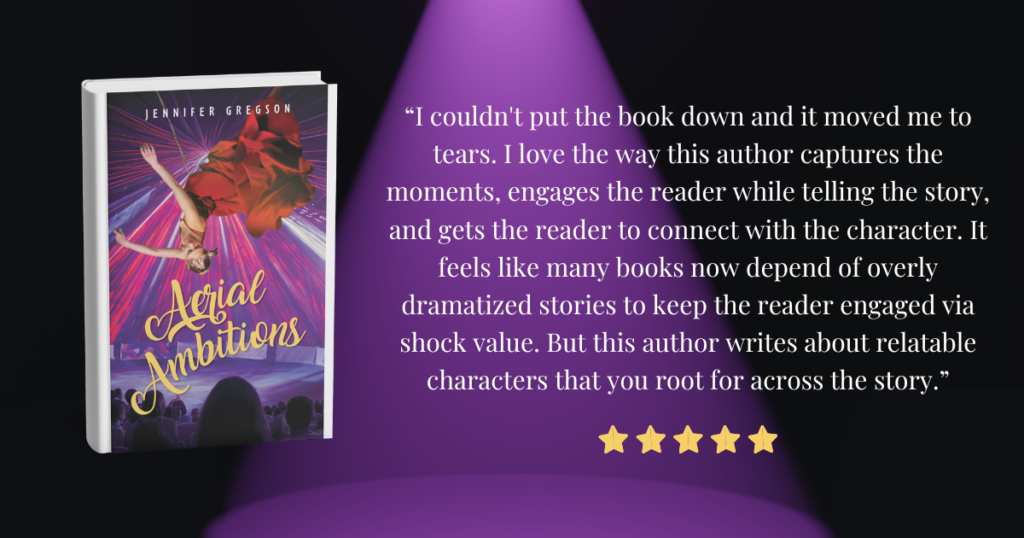
Next time you finish a book you enjoyed—even if it’s just a mild like—consider leaving a review. It’s one of the easiest, most supportive things you can do for indie authors (and fellow readers). If you’ve read my latest Young Adult novel, Aerial Ambitions, I would really appreciate you leaving me a review today. Thanks!!

Overcoming Impostor Syndrome as a Writer: How to Keep Creating Despite Self-Doubt

Posted on February 3, 2025February 11, 2025 by Jennifer Gregson

If you’re an indie author, chances are you’ve asked yourself: Am I good enough? Will readers figure out I’m a fraud?

Impostor syndrome is something almost every writer experiences at some point. It can be paralyzing, making it difficult to sit down and do the work. But the good news? You can overcome it. Here’s how I deal with impostor syndrome and keep writing.


Acknowledge Your Fears

The first step in overcoming impostor syndrome as a writer is to acknowledge it. Ignoring or pushing it away won’t make it disappear—it’ll just creep up when you least expect it. Instead, try these methods:

  • Journal about it – Write down your fears and get them out of your head.
  • Talk it out – Share your thoughts with a trusted friend, spouse, or (better option) a therapist.
  • Personify your inner critic – Give it a name, have a conversation, and take away its power over you.

When you sit with your fears rather than fight them, you can process them and move forward.

Take Action to Counteract Fear

The best way to silence impostor syndrome? Take action. Fear thrives on inaction, but even small steps forward can help you break free.

1. Use Accountability Groups

Writing alongside others keeps you motivated. I have three accountability groups throughout the week where I write with other people. This method, often called “body doubling,” can be especially helpful for neurodivergent writers.

2. Set Timers for Short Writing Sessions

When fear stops me from writing, I set a five-minute timer. I tell myself I only need to write a few sentences, maybe just 25 words. This simple trick helps my brain relax, and I almost always end up writing more than I expected.

3. Focus on Your Why

Why did you start writing in the first place? For me, it’s the art of discovery. Even though I outline, I love when unexpected characters or plot twists appear in my drafts. That excitement keeps me coming back to the page. When impostor syndrome starts whispering doubts, remind yourself why you love to write.

Shift from External to Internal Motivation

Impostor syndrome is often outward-focused: What will people think? Will they like my book? Instead, shift your mindset inward. During the drafting phase, allow yourself to be selfish. What excites you? What scenes make you eager to keep going? Make sure you keep your why somewhere you can see it before each writing session to remind you.

Later, during revisions, you can shift focus to your audience, but for now – give yourself permission to write for you first.


Final Thoughts

Overcoming impostor syndrome as a writer is an ongoing process. Some days, it’s louder than others. But by acknowledging your fears, taking small actions, and remembering your motivation, you can keep writing despite self-doubt.

If you have any questions or topics you’d like me to cover in future posts, drop them in the comments below. 

How to Balance Writing as an Indie Author: Tips for Productivity and Flexibility

Posted on January 29, 2025February 14, 2025 by Jennifer Gregson

 As an indie author, one of the most common questions I get is, “How do you find the time to write?” Balancing writing with a day job, family responsibilities, and everything else life throws your way can feel overwhelming. Over the years, I’ve developed a system that works for me, and today I’m excited to share my formula for staying productive and consistent as a writer. 

1. Planning Is Key

The foundation of my writing routine is planning. I use two tools to keep my schedule organized:

    • Google Calendar: This helps me schedule everything digitally and sync with other commitments.

    • A Paper Planner: As someone who loves stickers and creativity, this adds a fun, tactile element to my planning.

Each week, I sit down and plan my schedule, including dedicated time for writing. My goal is to write at least three times a week, sometimes more if I can. I also prioritize flexibility, because life is chaotic and unpredictable.  For example, I’ll often plan a Monday writing session, but if Monday doesn’t work out, I move that session immediately to Tuesday in my Google calendar

2. The Power of Accountability

Accountability has been a game-changer in my writing journey. I rely on two consistent co-writing sessions every week:

    • Thursday Co-Writing with a Friend: This is a focused hour where we start by sharing our goals and then spend 50 minutes writing. These sessions are incredibly productive—just last week, I wrote 2,100 words in 50 minutes!

    • Friday Writing Group: This is a 90-minute session with fellow writers. We spend about 30 minutes chatting and problem-solving, followed by an hour of solid writing.

These sessions provide both structure and motivation. Writing alongside others, even virtually, creates a magical sense of focus and accountability.

3. Staying Flexible

Life happens, and flexibility is essential. While I rarely miss my Thursday and Friday writing sessions, I’m ready to adjust if a family member gets sick or a day job project comes up. If I miss my usual times, I’ll carve out time later in the evening or even on a weekend if I’m on a deadline.

When I do need to shift things around, I communicate with my family. For instance, I’ll let my husband and son know that I need an hour to write after dinner. This balance ensures that I meet my goals without sacrificing family time.

4. Setting Goals and Staying Motivated

Another critical piece of the puzzle is setting clear goals. I set yearly goals for my writing, breaking them down into monthly, weekly, and even daily tasks. For example, my current goal is to publish the first book in my urban fantasy series this fall and draft the second book while waiting for edits.

I also keep the bigger picture in mind: my dream is to publish all five books in the series within the next five years. Staying focused on this long-term vision helps me stay motivated and consistent, even on busy days.

Final Thoughts: Balancing Writing and Life as an Indie Author

Balancing writing with everything else requires careful planning, accountability, and flexibility. By scheduling time to write, staying committed to accountability groups, and remaining adaptable when life throws curveballs, I’ve been able to make consistent progress on my books.

If you’re an aspiring writer and struggling to find time, I’d love to help! Drop a comment below, and let me know how I can support you in your writing journey.

And if you’d like to follow my writing progress, subscribe to my newsletter by clicking the image below – bonus, you’ll get the first three chapters of my latest young adult sweet romance novel, Aerial Ambitions, for free!

World-Building 101: Crafting a Unique Setting

Posted on September 27, 2024 by Jennifer Gregson

World-building is one of the most exciting parts of writing for me, but it’s also a process that evolves with each story I write. My first three books were all set in real places: New York City (and New Jersey), St. Louis, and Chicago. I’m comfortable using real settings because it allows me to draw on real-life experiences and the unique vibes of these cities. But with my next book—the first in a new series—I’m diving into something different. While the story is still set in New York City, I’m adding an element of magic, with time portals and alternate realities, which has pushed me out of my comfort zone and into uncharted territory.

Brainstorming the Basics

The biggest challenge with this new world-building adventure has been figuring out how the magical elements work within a real-world setting. I started by brainstorming what these time portals and alternate realities actually mean. How do they function? Where do they lead? What are the rules of these magical spaces? Even now, as I head into the second draft, I don’t have all the answers. That’s part of the journey. My goal for the second draft is to nail down exactly how these portals work and what to call them, but for now, I’m enjoying the creative freedom of discovery.

Using Real Maps to Ground the Story

Since much of the story is still rooted in the real world, specifically New York City, I rely heavily on Google Maps to get the lay of the land. My main character, Ruby, lives in Queens, but she spends time in Brooklyn for training, and some of the action takes place in Manhattan. By using Google Maps, I can get a close look at the streets, neighborhoods, and subway routes Ruby would travel, which helps me keep the setting realistic even as I blend in the magical elements. I always keep a subway map open while I’m writing, ensuring Ruby’s journey through the city is as accurate as possible.

Filling in the White Space

I tend to be what I call a “white space first drafter,” which means that when I write the first draft, I don’t always focus on describing the setting in detail. The characters are having dialogue, doing things, but the world around them is often left blank in my mind. It’s only when I move on to the second draft that I really dive into the details of the environment.

This is where I start to ask myself all the important questions about the spaces my characters occupy. What do the rooms look like? How do they smell? What items are scattered around? For example, I think about Ruby’s bedroom—what kind of personal touches does she have? How does her room in Queens compare to her best friend’s space, or to the apartment in Manhattan? I jot down all these questions and notes as I plan my edits, and then I refer to them as I go back through each scene, ensuring the settings feel vivid and grounded.

Weaving Magic Into the World

The biggest difference in this current work-in-progress, compared to my previous books, is the use of magic and the battle against evil beings. I had to spend a lot of time journaling to figure out how magic came into play. Where did it come from? How did it travel from its original world to ours? And what about the villain—how did he gain his magical powers?

In the first draft, some of these answers were there, but they weren’t fully fleshed out or didn’t make complete sense. But that’s the beauty of the first draft—it’s a space to explore ideas, even if they’re messy. Now, as I approach the second draft, I’m honing those magical elements so that they’re clearer and more consistent. Since I plan to send this draft to my editor to begin the development process, I want the magic to feel seamless and logical, even within a fantastical world.

Bringing the World to Life

World-building isn’t just about geography or magic; it’s about atmosphere. To help me get into the right mood for different sections of my book, I turn to a few tools: Pinterest, music, and more maps. I love creating Pinterest boards filled with images that reflect the mood and tone I’m aiming for. It’s a great way to get visually inspired, especially when I’m trying to capture the essence of both New York City and the magical elements I’m weaving in.

Music also plays a big role in setting the tone. I create playlists that help me sink into different scenes—whether it’s an intense fight scene, a quiet moment of reflection, or a mysterious encounter in one of the magical portals. The music helps me connect emotionally with the scene and gives me the energy I need to bring it to life on the page.

Google Maps continues to be my trusty sidekick for looking around parts of the city that I can’t always visit in person. For example, I lived on the Upper East Side for years, but now that I’m writing from Queens, it’s not easy to just pop over there whenever I want. Using maps and street views lets me virtually “walk” around those areas, giving me a sense of the neighborhoods that my characters are moving through, without needing to leave my writing desk.

Embracing the Fun of World-Building

For me, world-building is one of the most enjoyable parts of writing. It’s a chance to immerse myself in both the familiar and the unknown, blending real-world settings with magical possibilities. While creating these worlds takes time, it’s always worth the effort when the setting starts to feel like a living, breathing part of the story. Whether I’m writing about real places like New York City or inventing entire alternate realities, my goal is to craft a world that readers can step into and explore, a world that feels as tangible as the characters who inhabit it.


World-building might seem daunting, but it’s an exciting way to stretch your imagination and deepen your story. Whether you’re setting your story in the real world, a fantasy realm, or a mix of both, the details you create will help your readers feel truly immersed in the world you’ve built.

How I Develop Characters: From Concept to Creation

Posted on September 27, 2024September 27, 2024 by Jennifer Gregson

When I sit down to write a new story, the first thing I think about is the characters. For me, they’re the heart of every story, and I like to build them up in layers, starting with a simple question and growing them into fully fleshed-out people.

Starting with a Question

Most of my stories begin with a “what if” question. What would happen if someone was born into a famous flying circus family but was terrified of heights? Or what if a teen girl woke up one day with magical powers, and her mom wasn’t surprised at all? These kinds of questions spark my curiosity and start shaping the bones of my characters.

The question not only sets the foundation for the plot, but it also helps me think about who my main character is and how their internal struggle will drive the story forward.

Using Tarot to Create Characters

Once I have my “what if,” I turn to one of my favorite tools for character development: tarot cards. Tarot has always been a creative tool for me, and I use it to dive deeper into who my characters are.

Because I write YA, I know that most of my characters will be high school or college-aged and usually girls. But when it comes to their deeper traits—like what they look like, what their interests are, and what makes them tick—I pull a card or two to guide me. The tarot helps me figure out their quirks, strengths, and weaknesses. It’s a way to get creative and let the cards guide me toward traits I might not have considered. Sometimes a card gives me a hint about their hair or eye color, while other times it gives me insight into their personality or history.

Pinterest and Casting Characters

With some basics in place, I move on to creating a visual representation of my characters. I head over to Pinterest and start putting together a mood board for the story. This is where I start to “cast” my characters.

Sometimes I’ll use images of famous people—like Harry Styles or Maya Hawke—to give me a face for my characters. Other times, I find inspiration from models or random photos of people who fit the vibe I’m looking for. Seeing them visually helps solidify the character in my mind and brings them to life in a way that goes beyond just words on the page.

Defining Their Core: Desires, Flaws, and Growth

Now that I have a solid image of my character, I start diving deeper into who they are. I ask myself a series of key questions:

  • What do they want?
  • What do they need?
  • What is their fatal flaw?

These questions are crucial because they define the character’s arc in the story. What they want is usually a surface-level goal, but what they need is often deeper and tied to their personal growth. Their fatal flaw is the thing that stands in their way, and it’s what makes them human. I also make sure to define their quirks and behavior traits, things that might not be obvious at first but make them feel real. These are the details that I hope will make readers fall in love with them, or at least feel something strong about them—whether that’s admiration, empathy, or even frustration.

Journaling as My Characters

Once I have the basics in place, I dive into my first draft, letting the characters guide me through the story. After the draft is complete, I take some time to journal as if I am the characters themselves. I write as though I’m inside their heads, allowing them to tell me what I might’ve missed, what I need to change, and how they would react in certain situations.

This exercise is especially helpful because I write in first-person POV, meaning I’m often focused solely on the main character’s internal thoughts and perspective. Journaling in the voice of my side characters helps me connect with them more deeply and craft dialogue that feels authentic to each one’s unique personality.

Refining Through Each Draft

Every draft gives me the opportunity to understand my characters better. It’s during these rounds of revision that they start to feel like real people—people with flaws, strengths, and depth. I want my readers to experience these characters as fully human: to fall in love with them, to hate them, to root for them, or to want to see them fail. My goal is always to make them relatable and multi-dimensional, not perfect, but real.

For my current work in progress, World Ablaze,’ this process has been especially important. With a cast that includes Ruby and her parents, the girls with elemental powers, and Ruby’s best friend Sophie, there are a lot of personalities to manage. But taking the time to develop each one individually, from tarot readings to journaling, ensures that they all feel fully realized by the time I’m done.


This process of developing characters has become one of my favorite parts of writing. It’s like meeting new people, getting to know them little by little, until eventually, they feel like old friends (or enemies). And I hope when readers dive into my stories, they’ll connect with these characters in the same way I do.


The Art of Editing: What I’m Focusing on in My Next Book

Posted on September 9, 2024 by Jennifer Gregson

Second-draft land is a weird place. After the whirlwind of writing a first draft, you might think the second draft would be easier. But, as I’ve learned, it’s anything but.

In the first draft, you’re essentially telling yourself the story—letting your imagination run wild and figuring things out as you go. But in the second draft, the real work begins. You kind of know where you’re going now, but you’ve got holes to fill, changes to make, and things to fix. This is when you look back at your first-draft self with a mix of compassion and frustration, sometimes even asking, “WTF were you thinking?”

Take my current project, for example. In the first chapter, my main character gets dumped. I originally named the guy Dylan, but then I realized—his family is from Colombia, and they moved to New York just before he was born. They wouldn’t have named him Dylan! So, back to the drawing board I went and I changed it to Diego. (Thank goodness for Find and Replace tools)

Then, in the second chapter, I had my main character, Ruby, wake up, go to school, and head to swim practice—all in the span of three sentences. That obviously wasn’t going to work, so I had to add about 300 words just to make that opening flow. Like, did she want to talk to her parents where her parents even home, how was she feeling after getting dumped, was she worried about seeing him at school? 

This book also has magical elements, and I had no idea what I was doing in the first draft. So before I even touched the second draft, I had to sit down and figure out where the original magic came from, why the villain is so angry and how he got his powers, where everyone’s been hiding (spoiler: time portals and alternate universes are involved), and why the boots they wear are so essential to their tech. It was a lot to sort out!

But second drafts are where the real magic happens. This is where you uncover those juicy details that you can drip in earlier to delight your readers, where you truly get a sense of your characters, and, for me, where I tighten up the sense of place and how everything fits together.

The journey doesn’t end here, though. I’m going to be working on this book and refining it over the next few months. If you want to follow along with my progress, join my newsletter to stay updated on all the drafts, edits, and discoveries along the way.

From Draft to Publication: My Writing Journey

Posted on September 6, 2024September 6, 2024 by Jennifer Gregson

Every book starts with a single spark of inspiration. For me, it began with a simple question: What would happen if a girl was born into a famous flying family, but she was scared of heights? That idea lingered in my mind, and soon enough, Roz was born—the protagonist who would lead me on a winding, challenging, and ultimately fulfilling journey.

Draft One: The Beginning

With the idea in hand, I started drafting the story. Roz took shape, and alongside her was Louise, the daughter of a famous clown family. The story bounced back and forth between Roz’s world and Louise’s, weaving together two different lives within the circus. But as the draft grew, so did my doubts. Something wasn’t clicking, and deep down, I knew the story needed to evolve.

Draft Two: A Major Change

That’s when my editor stepped in with a suggestion that would change everything: focus more on the big three-ring circus where Roz auditions at the end of the original draft. It meant scrapping Louise’s storyline and bringing more attention to the heart of Roz’s world—the circus. This shift brought the story back to the drawing board, forcing me to rethink the direction of the narrative.

Draft Three and Four: Finding the Flow

After revising and expanding the circus setting, I finally felt like I had a more cohesive storyline. Roz was stronger, the world felt more vivid, and the supporting characters were coming into their own. But there was still something missing—especially in the ending. My editor came to the rescue once again, offering guidance on where the story could go and how to bring the narrative full circle. With those new insights, I dove back into revisions, determined to find the perfect conclusion.

Draft Five: The Final Version

After many drafts and countless hours of rewriting, I finally had a book that felt complete. The journey of this book wasn’t easy—writing rarely is. It’s about pouring your heart and soul into every word, figuring out what works, and pivoting when needed. Through all the changes, revisions, and rewrites, I held onto that initial spark—the reason why I started writing in the first place. And although Roz is no longer afraid of heights, she spoke to me through the whole process begging me to tell her story and I’m so glad she did!

Now, I’m thrilled to share that my book is available for you to read. Check it out on Amazon, where you can read it for free with Kindle Unlimited.

Dear Diary…

Posted on March 4, 2024March 8, 2024 by Jennifer Gregson

Hello readers!! The following is a fun diary entry from Libby, a character featured in my latest YA novel, Etta and Gina, available now on Amazon’s kindle unlimited.  If you like this, you can join my newsletter to receive the first four chapters of Etta and Gina for free here.

Dear Diary,

I can’t believe Mom is mad at me. I didn’t do anything wrong – Gina started it!

She’s the one that can’t leave Liam here alone. He is clearly into me, not her, but she can’t take a hint. He’s so dreamy too, those eyes and his hair. I wonder what it would feel like to run my hands through it?

Stupid Gina, stupid Mom. I wonder if we’re going to get kicked out of the show? Would they do that to me? I hate to admit this, but Gina has a big role, would they do that to her? What am I going to do if I get kicked out? I was just getting close to Liam and then Gina had to go and ruin everything.

Ugh, and on top of all of that, my Dad canceled our visit again. It’s like the fourth time he’s done that too. I haven’t seen him in, what, two months now? I know he’s busy with work, and his wife just had another baby, but still…I usually see him at least every once in a while. Okay, I don’t know why I’m lying to myself. He does this all the time. I’m glad Mom’s boyfriend is nice and likes to do things with me. It will be nice having him around all the time. Mom said he’s moving in next weekend, and that he has a lot of stuff she’s not thrilled with so our basement is going to be boy central.

It’s going to be weird living with a guy. It’s been me and Mom for as long as I can remember. When did Dad move out? I think I was three, right? I don’t want to ask Mom, especially not now since she’s mad at me, but I could sneak the picture albums out of the living room and look. I know he was here for my 3rd birthday, but was he still living here? Anyways, Michael  is a good guy and I’m glad Mom is getting married again, she’s been so happy since he asked her. Except when she’s getting on my case for fighting with Gina.

Cousins are so hard sometimes, like I try to be her best friend and help her out with things like what to wear to auditions and what to sing for auditions and how to dance and how to talk to boys, but she never listens. It’s like talking to a brick wall and I’m not apologizing no matter what my mom or her mom says. I’m just not!

Well, talk later Diary, I have stupid homework to do.

Libby ❤️️

Friendship

Posted on April 7, 2023April 4, 2023 by Jennifer Gregson

It’s one of the big themes in my latest novel, Etta and Gina, and one that I loved exploring as a writer, because it’s something I’ve thought about a lot with my life on this planet.

Growing up, I had a small but mighty group of girls that were almost always together – either at school or at someone’s house for sleepovers.  Dealing with older siblings, annoying teachers, and even death – I knew I had people that were going to be there for me. 

As I moved into college, I lost touch a little bit with those grade school friends, and had to navigate new relationships that included significant others, different priorities, mental health issues, and drama. For some odd reason, there’s always drama when it comes to friendships – and that’s not just with girl friendships, I’ve seen this with guys too.

The concept of what it means to be a friend changes over the course of one’s life and over the course of the friendship itself.  We can fight, break up, make up, try again, lose touch, reconnect, and end things all together.  We can be there to hold their hands, celebrate, hold their hair back when they’re sick, and laugh so much it feels like you can’t breathe.

Every relationship looks different and that’s one of the reasons I love writing about friendship, especially in the young adult stage – when you’re dealing with not only trying to figure out who you are and where you fit in, but also how to be a friend to others. AND what you need out of others when it comes to friendship.  It’s complicated, complex, and just cool to think about.

How have you dealt with changing friendships in your life?


Can two best friends thrown onto two very different paths learn to grow together or will they fall apart?

My latest young adult novel, Etta and Gina, is now exclusively available via Amazon’s Kindle Unlimited!!

Read Etta and Gina today and jump right into this entertaining look at suburban high school life.

Image of binders stuffed with papers

4 Ways To Get Back On Track When You’re Off Your Detailed Outline

Posted on August 24, 2022August 24, 2022 by Jennifer Gregson

You did what all of the writing books and experts told you to do when you started working your novel – you created a very detailed outline and you expected things to go super smooth. BUT now you’ve hit a wall and that detailed outline isn’t helping anymore.  Your characters aren’t doing what you told them to do. Your scenes, heck your entire plot, feels boring, like nothing is actually happening. And that ending you mapped out months ago is miles away, nowhere to be found on the page.


I hate to be the bearer of bad news, but sometimes having that thought out detailed, meticulous document can actually hinder your creativity. 


Before I jump into the four things that I think will help you when you’re off track from your outline, I want to talk a tiny little bit about why I think having too detailed of an outline is actually causing the problem. See I get it. I’m a planner girl at heart. I have goals for my week, my month, my quarter, my year. I love having a plan, but sometimes, okay most of the time, life does not go according to plan. And yes, I am also still learning this. I have tried to learn to be a little bit more flexible with my planning. This also goes along with my writing life – you need to have a flexible plan with your outlining. Having things too mapped out can cause you to freak out when the littlest thing goes wrong. And when you freak out, you don’t know how to get back on track which can cause you to stop writing – that’s where I come in!


Let’s assess where you are


How far off your outline did you get? Are you just a little bit, or are you a lot? If you’re not sure, you can do something my editor taught me called The Reverse Outline. You just read what you’ve already written and write down in bullet points what happens in each scene or chapter.  Note – you need to write what you actually wrote here, not what you planned – and I’m talking bullet points. 

  • Jimmy did this 
  • Which caused Laura to do 
  • And because of that, Jane did this other thing

This should show you in black and white what you planned and what you wrote and how far off the plan you are. 


Do you like where you ended up? 


Are you okay with where your story went OR do you like your original outline better? Neither answer is correct here. It’s just how you are feeling about your story. 


So if the answer is, “I loved my original outline and what happened is terrible.” OR “Yes, I love where my story went, the character did this really cool thing and I’m excited, I’m just not sure where to go from here because it’s so far off my map.”  Both are good!! If you like your story right now, but need help, go on to the next step.  If you hate where you ended up, I need you to take a small pause and do a little bit of journaling about where you think the story should be at this point in time in your outline, then you can move on to step three. 

Now, let’s look at your ending


Look at where you originally mapped out and ask yourself if it’s still the ending you want. Are you happy with the ending or is it not going to work based on all the new things you figured out in steps one and two?  Does it still make sense? Do you still love it? Again, there is no right or wrong answer here, just how you are feeling and what you think based on your story. 


If you like your ending and can start to see a path between where you are and where you want to go, great – move on to the final step.  But if you’re not happy, pause again and do some more journaling – ask yourself some What If questions to get to an ending you are happy with…but please, please do not start a new detailed outline. Not yet okay? Just write down where you’d like your characters to end up based on the new information and then go on to step four.


Getting from Point A to Point B


Now we are going to map out a quick and dirty plan from where you are to where you want to end up using bullet points. Doing this step first, before you start mapping everything out in full sentences, will help you see problems before they start. So get out your outline document or index cards and start writing down ideas, notes, thoughts, and plans for different scenes and chapters between where you got stuck and where you hope to end up. I just don’t want you to sit down and spend three weeks making a new detailed, meticulous plan. I want you to keep it a little loosey goosey, a little free flowing.


Secret 5th Step – Flexible Planning


Now I’m not asking you to not have a plan because I couldn’t do that. What I’m asking you to do is just try, just try the loosey goosey, free flowing for just a minute and see if you feel better. When you start actually writing again, you don’t have to keep this up. If you get back on track and you are in the zone and want to make another detailed outline, great, you can stop and do that in a day or two, but I’m asking you not to do that yet. I’m asking you just to map things out quick and dirty bullet points, one idea at a time, just so that you can get back on track and then assess how you are feeling.


The hidden step here is the way I now do my outlines – and again, this is totally optional, but if you’ve been stuck this might be something to try.  So I outline my entire novel using bullet points on index cards – usually 1-2 sentences max for each chapter.  BUT then on my final writing session of the week, I look at my living document and do a more detailed outline for the chapters coming up – that can be anywhere from 3-5 scenes for the following week.  That’s when I flush things out with character motivations, settings, ideas for dialogue, what I need to remember based on what I wrote the week before, etc and so forth.  I take my index card and use my writing software, Scrivener, to add detailed notes and flesh the scene out so when I sit down to write I have my plan. 


Hopefully you can see the beauty of being a little bit more flexible, I’m inviting you into the world of plotser. I really hate this term, and wish I could come up with a new one, but I haven’t been able to. It’s basically where you take the plotters, the people that have that detailed, meticulous outline and you merge it with the pantsers, the people that have no outline and just start writing – by the seat of their pants.


The thing I like about being a plotser, is you have a plan (because I am a planner girl don’t forget) and you can map out your whole book but that doesn’t mean I’m tied down to a meticulous plan right at the beginning. I don’t have to spend too much time before I start writing because I’m going to take some time each week to add, update, and map out more of my book as I go. And this works for me. 


So I’m inviting you to try this, especially if you are stuck, especially if you are feeling frustrated with your outline. If you have a detailed outline and you are cooking with gas and you are moving towards your goal. Perfect. I don’t think there’s any one right way to write a book, but I’m saying if you’re stuck, maybe try this.


Let me know in the comments below – Do you consider yourself a pantser, a plotter, or are you that sort of middle plotser? And do you also hate that word or is it just me? 


And if you found this helpful, I would love for you to check out my
Muddy Middle to Manuscript coaching package where I will walk you through a process of getting very clear on your Big Why, becoming friends with your characters, and we will fix your outline so you can type The End all with a smile on your face.  

The form you have selected does not exist.

  • 1
  • 2
  • 3
  • 4
  • Next
  • July 25, 2025 by Jennifer Gregson How to Use Headings and Flourishes in Book Formatting: A Fun Guide for Indie Authors
  • July 18, 2025 by Jennifer Gregson Book Formatting Terms Every Indie Author Should Know: Lingo 101 for Self-Publishing
  • July 18, 2025 by Jennifer Gregson Don’t Leave Your Reader Hanging: What to Include in the Back Matter of Your Self-Published Book
  • June 27, 2025 by Jennifer Gregson Front Matter 101: What Every Self-Published Author Needs Before Chapter One
  • June 20, 2025 by Jennifer Gregson How to Pick the Perfect Trim Size for Your Print Book (with Examples!)
© 2026 Jennifer Gregson | Powered by Minimalist Blog WordPress Theme